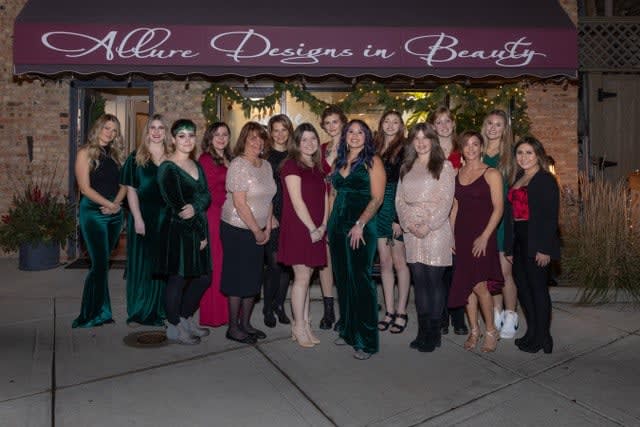
Shelly Malizola had tried lots of strategies to create a healthy team culture at Allure Designs in Beauty in Libertyville, IL. She developed core values reflecting her vision for the culture. She communicated with staff to let them know when they weren’t being team players. She’d been in business 25 years and felt she had tried everything, even switching to booth rental. Then she scrapped it all.
Harnessing Accountability
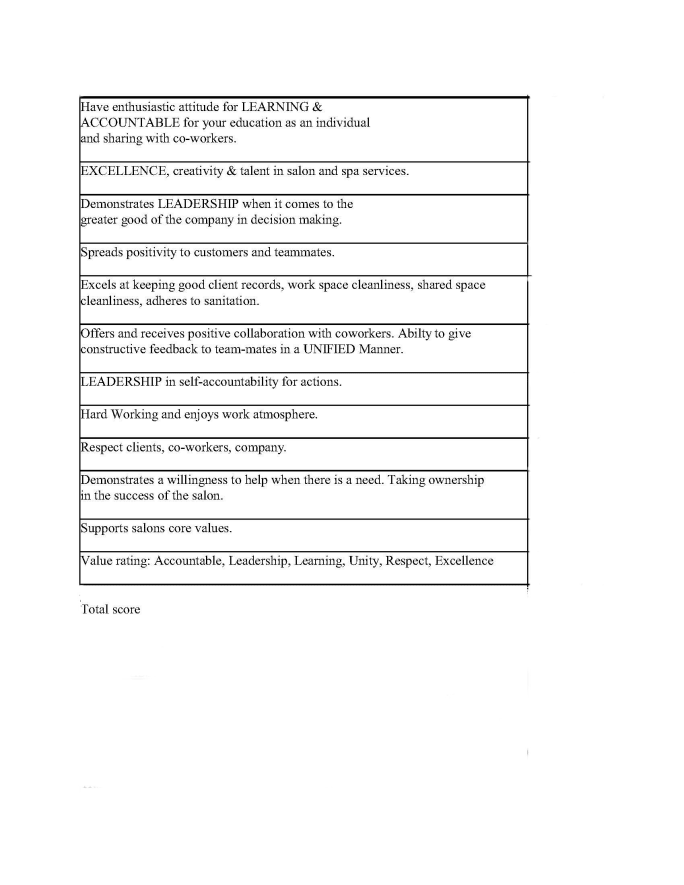
Malizola realized to get staff buy-in she needed staff participation. She sat down with a spreadsheet and her team to establish new core values that spoke to all team members. Then on the spreadsheet they plugged in 12 behaviors that tied to the core values, which they decided could work with the spelling of “ALLURE”: Accountability, Learning, Leadership, Unity, Respect, Excellence.
Ad Loading...
Before this, any criticism was hollow, because all Malizola had was her intuition. With the spreadsheet, she had a hard score—each behavior was rated 1 through 10, so 120 would be a perfect total score for the 12 behaviors. Malizola set 90 as the minimum score she wanted to see.
Even the score, though, could be arbitrary. The powerful piece was documenting each behavior score with the actions and incidents, both positive and negative, behind the rating. For that to happen in a busy salon, Malizola relied on technology.
“I put the spreadsheet into my Google drive so I could access it easily and quickly type notes in there,” Malizola says. “Later I could reference it to remind myself that, for example, the stylist stayed late to service a client. That would help me see why that stylist earned a 10 in that behavior. And it gave me an easy way to have notes ready when I sat down with team members for their evaluation. To see it in black and white and really think about it was different from just feeling what the score should be.”
This made a big difference with two staff members whose scores totaled only in the 80s. Now they could see how what they’d done or neglected to do did not align with Allure’s culture values.
“I’m an emotional person, and this took the emotion out of it,” Malizola says. “I could identify specific behaviors, go over the situation that happened, and tell them that this is what they did compared with what someone who scored a 10 would do. Both team members completely turned around their behavior!”
Ad Loading...
Digging Deeper
Malizola also requires team members to rate themselves.
“This provides meaty conversations,” she reports. “I show them how my rating compares with their rating. If they’re giving themselves all 10s, it may show a pattern of too much ego. If they’re scoring themselves too low, that could be a problem of confidence.”
This was the way the owner learned that someone on her leadership team was unhappy. The team member rated herself low on “hardworking and enjoys the atmosphere.” This came as a surprise to Malizola, but talking it through brought out the employee’s feeling that she was overworked. Malizola changed her hours and gave her Saturdays off. This type of dissatisfaction can slowly build while the person suffers silently.
“In our business, by the time someone has made the decision to leave, they’re at the point of no return,” Malizola notes. “This process helps me catch those things before it’s too late.”
Lessons from the Pandemic
In 2019, Allure brought in record revenue, but Malizola says it was the worst year for the team.
Ad Loading...
“I was putting out fires,” she recalls. “There was a lot of staff fighting and a toxic mix of individuals.”
When the pandemic hit and the salon closed, Malizola continued to pay her team even before receiving the PPE funding. She tried to generate revenue by creating an online store and making color kits. But with all of her good intentions, some staffers still left.
“I was the leader, but how was I leading?” Malizola asks. “I was listening to team members’ problems and trying to solve their issues. The pandemic has taught me that I am not their mother.”
She and her husband, who is a coach, sat down with her team to redefine her leadership role. Malizola’s main message was simple: “We’re here to support each other.” She would no longer be part of their drama. They would no longer have to sign a non-compete—they either wanted to work there or they were free to go.
Some toxic people were asked to leave; others quit on their own. Those who stayed, along with new hires, are 100% in, and finally Malizola has the team culture she's always wanted.
Ad Loading...
“As leaders, we sometimes point our fingers at other people,” Malizola says. “I think we have to look at ourselves.”
Discover how to create a true “WOW experience” for every client by first building a culture where your team feels engaged, empowered, and inspired. Drawing on Calvin Stovall’s Iconic Framework, this blog explores how salon, spa, and clinic leaders can strengthen culture, elevate customer experience, and build a business that stands out for the long term.
The wellness industry is growing fast, and salons and barbershops already are an important part of it. In her first blog, Tracy Rado shares where the wellness dollars are heading, and how salon's can grow with this movement.
While salon sales are increasing, owners often feel they're working harder for the same or less profit. Leverage Q2 data from The KIM Report, Alain Audet reveals some of the structural changes that are dampening your growth and why your region and your salon size matters.
Weaknesses in your business are amplified during the Holiday Season. Spark Pro Global's Lucy Randall shows you five things to do now to have the strongest holiday season yet.
In Kati Whitledge's latest blog, she shares how salons have moved away from dress codes and embraced appearance standards. But by removing strict dress codes, some businesses may have unintentionally lowered their appearance standards. Whitledge helps you explain to your team why an appearance standard is important and how to smoothly implement a new appearance policy.
The Small Business Health Care Tax Credit is a non-refundable tax credit for for-profit businesses that provides a financial incentive for eligible employers who offer health insurance coverage to their employees. Leticia Skrabut, Esq., walks you through how to claim that credit.
Developing strong work habits early in one's career supports long-term success in the salon industry. Jesse Linares offers new stylists his top five tips.
Most salon owners have no idea what these numbers are.
You can hit record sales and still have a profit problem. The difference comes down to four numbers almost nobody was taught to track.
At Janet St. Paul Studio for Hair and Beauty, Director of Operations Natasha McMillen helps bring her wife Janet St. Paul's vision to life, elevating every system from education to operations.
The strongest salons, spas, and med spas know which numbers tell the real story of their business. In this practical guide, Phorest breaks down the five essential KPIs every business should track to improve retention, boost revenue, and make smarter decisions with confidence.
At Bella Style Salon in Slidell, Louisiana, Director of Operations Angela Meyer tackles inventory, team management, and guest relations. Read all about her in our latest Meet the Manager.
Starting at Impressions front desk in 2006 when he was 19 years old, General Manager Paul Petrowsky is a seasoned professional who owner Sarah Taylor says is responsible for much of her own success.
Planning is in full swing for the most anticipated events and promotions for the 2026 holidays. As owners share their favorite ways to celebrate, they prove that a carefully planned event can also build culture, increase client loyalty, boost sales, and set a business up for a successful 2027.
When things run amok at Mane Attraction Salon, Owners Chris and Jenny Knudsen say General Manager Sami Hernandez is their go-to resource and ultimate sounding board. Meet Sami in this installment of Meet the Manager.