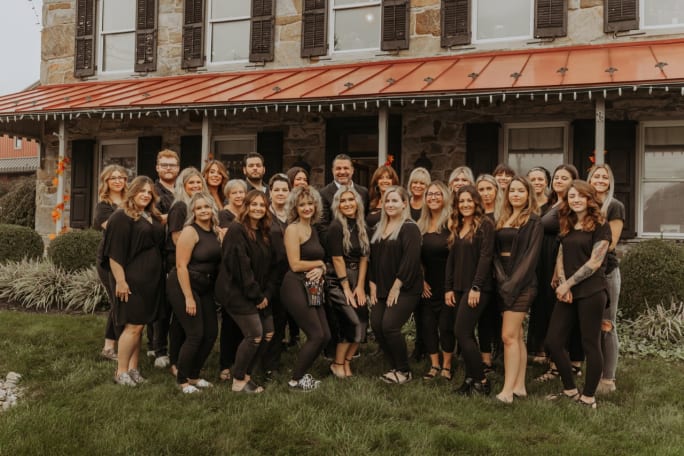
Lou DeCola had always offered his team benefits at DeCola Salon in Exton, PA, from health insurance and paid vacation to a retirement plan that has the salon matching the employee’s contributions up to 3% of the salary. But none of that helped last year when an employee was going through a particularly rough patch that required mental health services. And that person wasn’t the only employee who confided in DeCola about struggling to maintain mental health.
“The pandemic has taken a huge toll on many people’s mental health across the globe, and the salon industry is no exception,” DeCola says. “But the silver lining is that a mental health and wellness dialogue has become more accepted in everyday conversation. I began to notice this openness among my staff.”
Ad Loading...
The solution became obvious to DeCola. An Employee Assistance Program (EAP) could offer confidential assessments, short-term counseling, referrals, and follow-up services to employees who have personal or work-related problems. The trouble was that he couldn’t find a program with a perfect fit. He asked his Blue Cross/Blue Shield insurance agent, who discovered Uprise Health.
Through Uprise, DeCola Salon now offers:
6 in-person, one-on-one counseling sessions per year per employee
10 video peer support group sessions
24-hour crisis support line
Mobile app
The range of topics covers many personal issues, including legal problems, meditation guidance, financial services, child and adult eldercare challenges, home ownership programs, identity theft and more. The cost is $1,550 per year for 35-50 employees or $1,200 per year for fewer than 35 employees. DeCola Salon has 35+ employees, and the owner pays 100% of the cost.
“Now staff members have access to this all the time,” DeCola says. “Every person who works for me, regardless of their job title, qualifies for this at our salon. Maybe you have an addiction issue. Maybe you’re dealing with anxiety or depression. I think it’s really important to be able to have these resources.”
Ad Loading...
DeCola is no stranger to the discussion. After losing a nephew to opiate addiction, DeCola and his family established the Daniel K. Wepryk Foundation to help young people with addiction. DeCola also has a son with Attention Deficit Disorder (ADD) and says it was difficult when people didn't want to mention these things. He urges all owners to consider offering an EAP.
“Whether it’s physical health or mental health, it’s the same thing,” DeCola says. “Think about $1,550—your coffee bill is higher than that! If only five people use it, I’ve won. They will be better employees and happier people. Life is difficult to deal with, and hairdressers listen to clients’ problems every day. Giving them somebody to talk to creates a strong support system. You’ll get better work out of people who are mentally healthy.”
Are one of your traditional, handed-down salon management practices actually breaking the law. The pros from Paragon HR Consulting walk you through seven common Human Resources mistakes that could land you in hot water.
All beauty professionals should know how to identify when a client may need some health guidance. Tracy Rado discusses some common questions that clients ask in the chair, how to advise them, and when to refer them to a specialist.
From managing air traffic on busy days to handling frustrated guests' complaints, your front desk team often serves as the salon's emotional shock absorber. From a customer service lesson from the DMV to a list of strategies for caring for your front line, our experts offer ideas for alleviating stress, celebrating wins, and setting goals.
According to the KIM Report, top-line salon revenue appears steady or slightly up, but that growth is driven primarily by service price increases. Beneath the surface, retail performance and client visit frequency (appointment drift) are under real pressure. In his latest blog, Alain Audet offers strategies for keeping your salon's retail sales strong.
Putting your family to work in the salon offers some real tax benefits, but you have you have to play by the rules of the tax code to claim them. Azarvand Tax Law's Leticia Skrabut, Esq., shows you how.
Discover how to create a true “WOW experience” for every client by first building a culture where your team feels engaged, empowered, and inspired. Drawing on Calvin Stovall’s Iconic Framework, this blog explores how salon, spa, and clinic leaders can strengthen culture, elevate customer experience, and build a business that stands out for the long term.
The wellness industry is growing fast, and salons and barbershops already are an important part of it. In her first blog, Tracy Rado shares where the wellness dollars are heading, and how salons can grow with this movement.
While salon sales are increasing, owners often feel they're working harder for the same or less profit. Leverage Q2 data from The KIM Report, Alain Audet reveals some of the structural changes that are dampening your growth and why your region and your salon size matters.
Weaknesses in your business are amplified during the Holiday Season. Spark Pro Global's Lucy Randall shows you five things to do now to have the strongest holiday season yet.
In Kati Whitledge's latest blog, she shares how salons have moved away from dress codes and embraced appearance standards. But by removing strict dress codes, some businesses may have unintentionally lowered their appearance standards. Whitledge helps you explain to your team why an appearance standard is important and how to smoothly implement a new appearance policy.
The Small Business Health Care Tax Credit is a non-refundable tax credit for for-profit businesses that provides a financial incentive for eligible employers who offer health insurance coverage to their employees. Leticia Skrabut, Esq., walks you through how to claim that credit.
Developing strong work habits early in one's career supports long-term success in the salon industry. Jesse Linares offers new stylists his top five tips.
Most salon owners have no idea what these numbers are.
You can hit record sales and still have a profit problem. The difference comes down to four numbers almost nobody was taught to track.