BOA accounts for only half of Zona's
advisory board activity. He attends a second bimonthly meeting as the
only salon on an advisory board composed of local business owners.
These meetings are run by paid facilitators and outside experts
financed by annual board membership dues of $7,000. Although it's not
the purpose of an outside board to trade services, Zona says that
membership does offer him access to valuable resources. "I've tapped
into legal advice from the law firm and financial advice on two
different levels," he reports. "But I don't want these relationships to
become so familiar that we stop being blunt with each other."
With
ten salon and spa locations, a school, a product line and annual
receipts totaling nearly $20 million, Eveline Charles has few peers
among her fellow Canadian salon/spa owners but feels it's essential to
solicit feedback from a panel of knowledgeable business owners. To fill
this need, Charles pays three local businesspeople from other
industries to attend a full-day quarterly meeting focused only on the
Eveline Charles business. The three provide insight after Charles and
her four-member executive board deliver a report on the quarter's
budget figures, strategic plan progress and new developments.
The
timing of this year-old advisory board is no accident; Charles hopes to
enter semi-retirement in the not-too-distant future. She assembled the
advisory board and executive team with the intention that the two
bodies would work together and continue to grow the business without
her daily attention. She plans to add up to three more advisory board
members before she leaves.
"They serve as my sounding board,"
says Charles, who met her board members when she participated in a
business networking group. "A true board of directors makes the calls
on the company, but this is not a publicly traded company. These
advisory board members simply bring clarity. I've chosen people who are
able to understand my industry and help me get through the hurdles I
experience. We present our positives but also our weaknesses, and we
ask for suggestions. After hearing every member's input, our direction
becomes clearer."
Charles cites two currently pending decisions
regarding the next level of growth that her board is helping her to
weigh: Should she franchise salons or sell 50/50 partnerships, and
should the company make its beauty products available to other salons?
Strategy of the Game Peggy
Mitchusson, owner of The Face and The Body Spa in St. Louis, discovered
an instant outside-the-industry advisory board when she joined her
local chapter of the Women Presidents' Organization (WPO). Open to
women owners of businesses with revenues of $2 million or more, the
chapter holds three-hour monthly meetings for its 15 members to present
case studies in a specific format, followed by a question-and-answer
period.
"We go around the room, and everyone can offer
suggestions for handling the issue," explains Mitchusson, who estimates
that roughly once a year she's the case study presenter. "The advice
must come from personal experience of having dealt with the problem; we
do not simply offer opinions. Often you get your answer just by
carefully outlining the problem." Like other outside boards, the WPO
chapter requires members to sign a confidentiality agreement, and
Mitchusson represents the only spa business.
"We have an
attorney, a CPA, an owner of an interior design company, a computer
programmer, a banker," says Mitchusson. "It's very diverse." Chreky,
too, plans to develop an outside-the-industry board with her bank
president and other business-savvy locals to supplement the counsel she
receives from BOA. "I expect the outside board to be visionary and
focus on the economy," she notes.
Although Mitchusson observes
that being detached from your industry and your business gives outside
boards an advantage in objectivity, she also feels the need for
industry-centered discussion (see box). "My WPO group may offer advice
in customer service or marketing that has nothing to do with our
industry," she notes.
Benchmarks and nuances are more meaningful
within an industry-specific board, agrees Zona. "If my rent is at 7
percent, my industry board tells me how that compares with other
salons," he says. "And when these really smart people who have been
very successful in my industry are nodding as I'm talking about my
business, I know that I'm on the right track."
Board Mentality Even salons that are corporations and, therefore have legal obligations to establish a board of directors, tend to keep the boards informal and invite only owners to join. This was the case with Neill Corporation, until its current president, Edwin Neill III expanded and formalized the board of the multifaceted company, which includes an Aveda distributorship, Paris Parker Salons, Neill Quality College and SalonBiz and SpaBiz software.
An attorney with an MBA degree, Neill invited three outsiders-the president of a Neill Corp. affiliate, the CEO from another industry's distribution company and a professor from a nearby university-to complement his four-person management team as additional directors.
At formal board of directors meetings, decisions are made through binding votes, and someone is in charge of taking minutes for the meeting. Prior to the meeting, each director receives a "board book" listing the agenda items and previewing the discussion points.
Generally, Neill's four- to six-hour meeting, conducted by the president, is comprised of:
Ad Loading...
The President's Report, detailing the ongoing operations of the business and making the board aware of any unusual developments, such as litigation and new business opportunities.
Questioning, during which the outside directors have an opportunity to explore any gaps in logic or discrepancies with numbers.
New Business, which can range from exploring compensation plan options to asking for advice about negotiating a lease to selecting the site of the next salon location.
Future Outlook, a forecast of the coming months' P&L (profit and loss) picture.
Executive Session, which, when necessary, allows the president to meet with just the outside directors for guidance concerning a personnel, sensitive or confidential issue.
Cost involves the time the inside team spends on preparing the reports as well as per-meeting compensation for the outside directors. However, Neill says it's not necessary to meet more than twice a year or, at most, quarterly if there's some fast-changing activity. He sees a board of directors in the salon industry as operating no differently from any other industry's boards.
"When you bring in $10 million a year, you act like other businesses that bring in that kind of figure," Neill maintains. "And those companies rely on advice to analyze where their business is currently and how to grow and move forward. While a lot of what we do on the people side of our business departs from other industries, there's nothing that would change the way our boards of directors work. In addition, good directors know that every business has individual pieces, and often it's the very aspects that distinguish them from competitors that drive their success."
Much like advisory board members, Neill's directors are most helpful when they're being tough. "Your outside directors may grill you on your numbers until they're confident that what you're saying makes sense," says Neill. "That's critical, and it's why it's important to include on the board not only people whose paychecks you sign. In fact, even preparing the report is valuable in anticipation of those questions."
Minority shareholders are generally invited to the board meetings, although the typical salon operation has few if any minority shareholders, Neill sees that changing. "I know of a couple of salon groups now being run by the second generation," Neill observes. "Those companies have multiple shareholders. The corporate life cycle of a salon used to coincide with the life cycle of the founder, but today the industry is evolving to include more multi-generational companies. Do we need to act like other industries now that we've grown up? Yes, and a board of directors is a big part of that."
Discover how to create a true “WOW experience” for every client by first building a culture where your team feels engaged, empowered, and inspired. Drawing on Calvin Stovall’s Iconic Framework, this blog explores how salon, spa, and clinic leaders can strengthen culture, elevate customer experience, and build a business that stands out for the long term.
The wellness industry is growing fast, and salons and barbershops already are an important part of it. In her first blog, Tracy Rado shares where the wellness dollars are heading, and how salon's can grow with this movement.
While salon sales are increasing, owners often feel they're working harder for the same or less profit. Leverage Q2 data from The KIM Report, Alain Audet reveals some of the structural changes that are dampening your growth and why your region and your salon size matters.
Weaknesses in your business are amplified during the Holiday Season. Spark Pro Global's Lucy Randall shows you five things to do now to have the strongest holiday season yet.
In Kati Whitledge's latest blog, she shares how salons have moved away from dress codes and embraced appearance standards. But by removing strict dress codes, some businesses may have unintentionally lowered their appearance standards. Whitledge helps you explain to your team why an appearance standard is important and how to smoothly implement a new appearance policy.
The Small Business Health Care Tax Credit is a non-refundable tax credit for for-profit businesses that provides a financial incentive for eligible employers who offer health insurance coverage to their employees. Leticia Skrabut, Esq., walks you through how to claim that credit.
Developing strong work habits early in one's career supports long-term success in the salon industry. Jesse Linares offers new stylists his top five tips.
Most salon owners have no idea what these numbers are.
You can hit record sales and still have a profit problem. The difference comes down to four numbers almost nobody was taught to track.
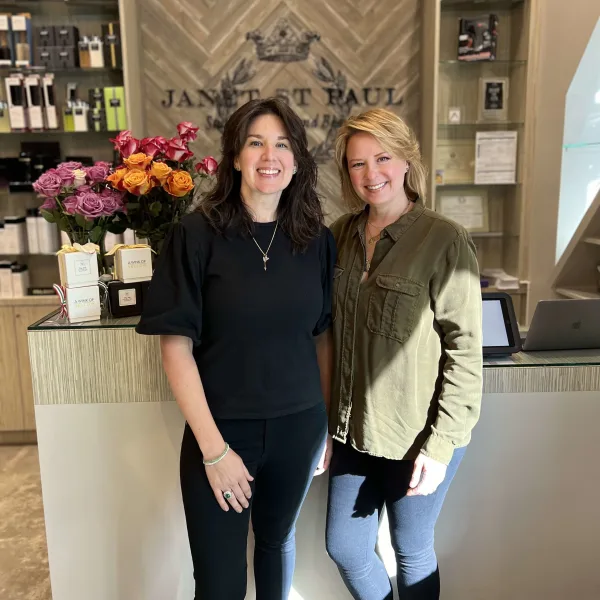
At Janet St. Paul Studio for Hair and Beauty, Director of Operations Natasha McMillen helps bring her wife Janet St. Paul's vision to life, elevating every system from education to operations.
The strongest salons, spas, and med spas know which numbers tell the real story of their business. In this practical guide, Phorest breaks down the five essential KPIs every business should track to improve retention, boost revenue, and make smarter decisions with confidence.
At Bella Style Salon in Slidell, Louisiana, Director of Operations Angela Meyer tackles inventory, team management, and guest relations. Read all about her in our latest Meet the Manager.
Starting at Impressions front desk in 2006 when he was 19 years old, General Manager Paul Petrowsky is a seasoned professional who owner Sarah Taylor says is responsible for much of her own success.
Planning is in full swing for the most anticipated events and promotions for the 2026 holidays. As owners share their favorite ways to celebrate, they prove that a carefully planned event can also build culture, increase client loyalty, boost sales, and set a business up for a successful 2027.
When things run amok at Mane Attraction Salon, Owners Chris and Jenny Knudsen say General Manager Sami Hernandez is their go-to resource and ultimate sounding board. Meet Sami in this installment of Meet the Manager.