






You Don't Own a Salon. You Own A Business.
In his latest blog, Leon Alexander Ph.D., challenges industry conventional thinking to help owners add more to their bottom lines.
 MENU
 SEARCH
Being a salon owner means managing the education of stylists, retention of staff, progress of profits and more. Inevitably, there are land mines in all of these areas and the path to success is not always clear. We've explored the Aveda Means Business blog and found stories of several salon owners who think outside the box to find solutions to common small-business struggles. Read about the areas where their businesses struggled and what they did to implement systems that work.

Being a salon owner means managing the education of stylists, retention of staff, progress of profits and more. Inevitably, there are land mines in all of these areas and the path to success is not always clear. We've explored the Aveda Means Business blog and found stories of several salon owners who think outside the box to find solutions to common small-business struggles. Read about the areas where their businesses struggled and what they did to implement systems that work.
1. There's more than one way to retail. Estheticians have a harder time selling retail than stylists because they typically don't chat with their clients during services. Instead, they are creating a quiet and serene environment in the treatment room. Tricia Ramsey, an esthetician at Elixir Salon and Day Maker, schedules out time at the end of her services to talk products and encourage clients to take some home and enhance their routine. An extra 15 minutes for every service may mean seeing fewer clients, but it is worth it to sell more retail, a major profit-builder that is not to be underestimated. Read more on her retailing strategy and how she weaves small comments into her service to prepare for end-of-appointment product education in the Aveda Means Business article, "Retailing in the Treatment Room: The Secret Ingredient."
2. Be the change you wish to see in legislation. Holly Vaught, corporate education director for K. Charles & Co. salons in the San Antonio, Texas area, found that the people who are writing and passing legislation are often not educated in the beauty industry, and she decided to be the voice that the industry needed in her area. She got involved by joining an association and she was nominated to be on the Professional Beauty Association's advisory board, where she is able to relay what's happening in state legislation that affects cosmetology schools and salon owners. Vaught has fought both for bills to be passed and more recently against deregulation of beauty schools. Becoming involved in the legislative process has made her aware of issues, and has allowed her to speak out on the topics that she feels passionate about. Read more of her advice on getting involved in the Aveda Means Business article, "Beauty and the Political Beast: How to Get Involved in Salon Legislation."
3. Strengthen in-salon education. In-house salon education programs create talented stylists that improve the salon as a whole. It also takes a huge amount of time and effort for salon owners to coordinate and execute such a program. Keri Davis-Duffy, the owner of Gila Rut salons in the San Diego area, figured out that she couldn't do it alone, but needed to delegate the job to others that could build a a structured program that would operate smoothly. This meant training the trainers. With her team, including salon partner and educator Karla Lopez-Martinez, and lead educator Jonatan Rizo, Davis-Duffy developed Train U a system to keep every educator in the salon consistent in everything from class preparation, to teaching methods, to specific lesson plans. Learn more about the smart education program in the Aveda Means Business article, "Educator Turnover: Breaking the Cycle."
4. Create an engaging work environment to retain stylists—and maximize the investment you've made in them. It is never easy for a salon to lose an employee who decides to give notice (or worse, walks out), but even more difficult is the high cost that comes with hiring a new employee. Heath Smith, co-owner of Ruiz Salons in Austin, Texas, points out that the costs associated with losing a stylist is often intangible, such as the lost training investment, loss of productivity, or increased re-dos when a junior employee takes over for a seasoned stylist. He advocated creating a culture that makes stylists feel invested in the salon and more likely to stay. He has done this by speeding up training and promotions so that stylists grow more quickly and are rewarded for their efforts more regularly. He also sits down with them at least once a year for "stay" interviews to go over what's working well and where they would like to see improvements in their day-to-day. Read more on Smith's strategies for prioritizing retention in the Aveda Means Business article, "Minimize Stylist Turnover to Maximize Salon Profit."
5. Motivate stylists and build profits by setting benchmarks for referrals in addition to retail. Many salon owners tie retail sales to whether or not a stylist can be promoted a level in the salon. Sandy Gallardo, owner of Free Spirit Salon in Alpharetta, Georgia, has taken this practice one step further by focusing on referrals as a profit-builder and step to getting promoted. Free Spirit stylists must have a minimum amount of referral cards come back to the salon in order to be eligible to move to the next level. Some senior stylists initially felt uncomfortable about the new criteria, but Gallardo had already implemented this type of system with retail years before, so she knew she could hold her stylists accountable and see profit growth if she provided them with the right tools to get clients to share referral cards. For more on how Sandy Gallardo implemented this system and set her stylists up for success, read the Aveda Means Business article, "Creating Accountability With Your Referral Program."
In his latest blog, Leon Alexander Ph.D., challenges industry conventional thinking to help owners add more to their bottom lines.

In her latest blog, Amy Pal helps you develop your own clear guidelines around complimentary free employee services.

From managing air traffic on busy days to handling frustrated guests' complaints, your front desk team often serves as the salon's emotional shock absorber. From a customer service lesson from the DMV to a list of strategies for caring for your front line, our experts offer ideas for alleviating stress, celebrating wins, and setting goals.

According to the KIM Report, top-line salon revenue appears steady or slightly up, but that growth is driven primarily by service price increases. Beneath the surface, retail performance and client visit frequency (appointment drift) are under real pressure. In his latest blog, Alain Audet offers strategies for keeping your salon's retail sales strong.

Putting your family to work in the salon offers some real tax benefits, but you have you have to play by the rules of the tax code to claim them. Azarvand Tax Law's Leticia Skrabut, Esq., shows you how.

Discover how to create a true “WOW experience” for every client by first building a culture where your team feels engaged, empowered, and inspired. Drawing on Calvin Stovall’s Iconic Framework, this blog explores how salon, spa, and clinic leaders can strengthen culture, elevate customer experience, and build a business that stands out for the long term.
Sponsored by Phorest Salon Software

The wellness industry is growing fast, and salons and barbershops already are an important part of it. In her first blog, Tracy Rado shares where the wellness dollars are heading, and how salons can grow with this movement.

While salon sales are increasing, owners often feel they're working harder for the same or less profit. Leverage Q2 data from The KIM Report, Alain Audet reveals some of the structural changes that are dampening your growth and why your region and your salon size matters.

Weaknesses in your business are amplified during the Holiday Season. Spark Pro Global's Lucy Randall shows you five things to do now to have the strongest holiday season yet.

In Kati Whitledge's latest blog, she shares how salons have moved away from dress codes and embraced appearance standards. But by removing strict dress codes, some businesses may have unintentionally lowered their appearance standards. Whitledge helps you explain to your team why an appearance standard is important and how to smoothly implement a new appearance policy.

The Small Business Health Care Tax Credit is a non-refundable tax credit for for-profit businesses that provides a financial incentive for eligible employers who offer health insurance coverage to their employees. Leticia Skrabut, Esq., walks you through how to claim that credit.

Developing strong work habits early in one's career supports long-term success in the salon industry. Jesse Linares offers new stylists his top five tips.

Most salon owners have no idea what these numbers are. You can hit record sales and still have a profit problem. The difference comes down to four numbers almost nobody was taught to track.
Sponsored by Strata Salon Systems™

A five-area audit every owner-dependent salon needs to run. You built something that looks successful. Now find out if it can survive without you.
Sponsored by Strata Salon Systems™

Every month you put off fixing the problem, it gets bigger, more expensive, and harder to solve.
Sponsored by Strata Salon Systems™
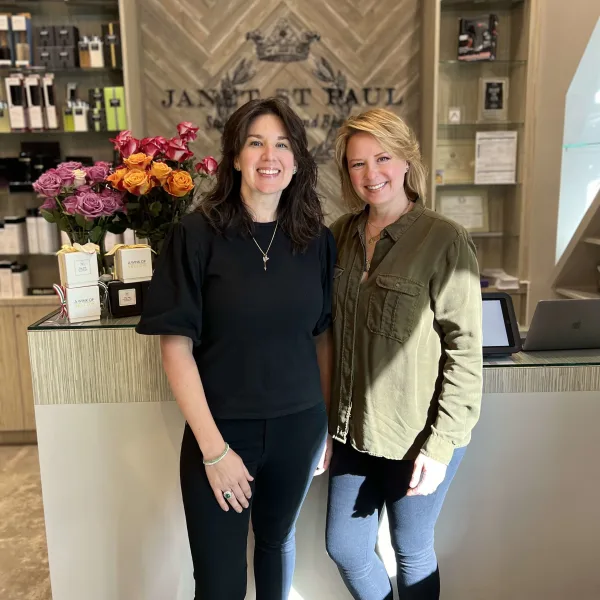
At Janet St. Paul Studio for Hair and Beauty, Director of Operations Natasha McMillen helps bring her wife Janet St. Paul's vision to life, elevating every system from education to operations.

Expand your color service menu with the Pinstripe technique. Brooks and Brooks' Marlon Hawkins walks you through the technique.