The team at Von Anthony Salon in the Dallas suburb of Frisco, Texas, knew who they were: established, highly skilled veteran stylists who had taught hair techniques all over the world. Like attracted like; reflecting the staff, the clientele was similarly established—a local “who’s who” of women at least 55 years old. They had money and spent it freely.
That Pandemic Problem Again
In Texas, salons were closed for nine weeks during COVID’s early reign. When the dust cleared, the chairs at Von Anthony were empty, the clients nowhere in sight.
Ad Loading...
“They didn’t come back,” sighs Kerry Hovland, who owns the salon with his wife, lead stylist Amy Hovland. “A lot of clients quit doing color and stretched hair cuts to two or three times a year. Some didn’t want to come into the salon with COVID still a factor, but generally it was that they looked around and realized that being gray and having less frequent haircuts was okay. So we had a hole to fill.”
All except three of the salon’s 25 stylists returned to work, but the stylists who left were at the highest level. Not only had they lost many of their clients, but the break also provided a natural end to their career behind the chair. So that premiere staff tier was a second hole the owners had to fill. They found the answer right in front of them.
Resetting the Salon Life Cycle
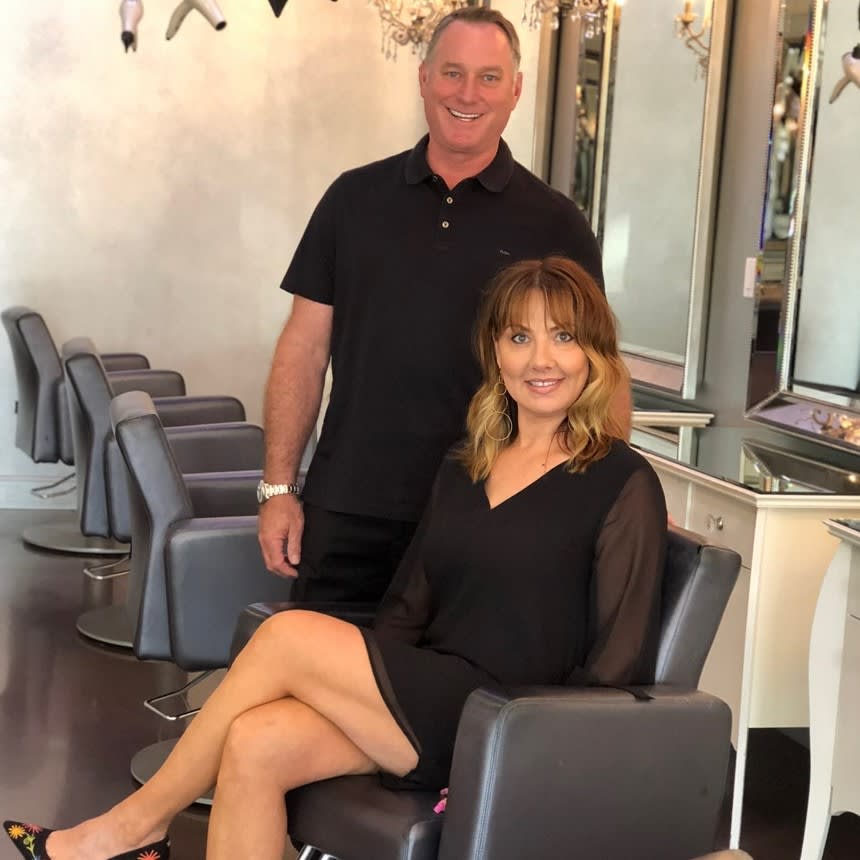
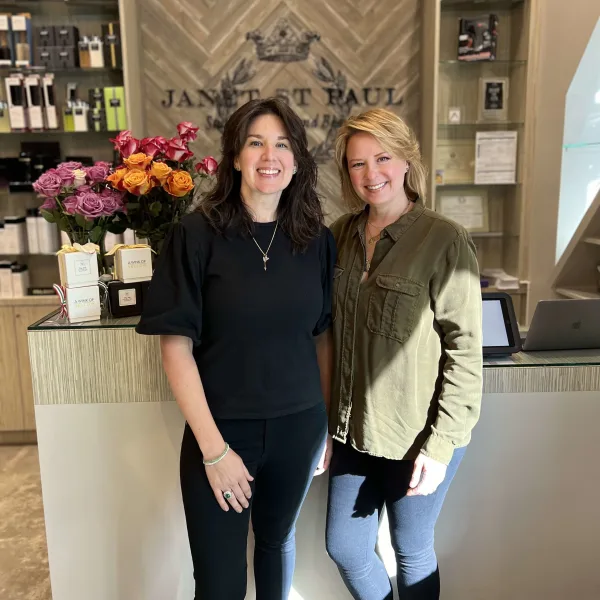
Kerry and Amy Hovland
“Losing three older stylists gave us an opportunity to celebrate our younger, but very skilled, stylists,” Hovland says. “Our culture evolved from ‘I’ve taught all over the world’ to ‘I learned from stylists who taught all over the world.’”
To replace the missing clients, the Hovlands hired a high-end marketing firm and decided to focus on a younger demographic.
“We had to fill a pipeline,” Hovland explains. “We wanted to build a new clientele for our younger stylists’ next 10 to 15 career years so that clients and stylists could spend a life cycle together. As the stylists grow, their prices go up. Simultaneously, their clients are rising in the ranks at work, and their income goes up. They can afford the higher pricing, so they become a long-term client for the young team member.”
Ad Loading...
The client target was specific—older than college students but decades away from retirement. “We wanted younger professionals who could appreciate our team’s expertise,” Hovland says. “We didn’t want to attract someone who would anonymously review us on Yelp and say we were too expensive.”
With social media the obvious vehicle to get the word out, the marketing team got busy, using sophisticated online marketing techniques to continuously expose the most likely candidates to the salon’s message. Individual stylists supported the efforts by amping up the postings on their own accounts, which kept current clients engaged.
While the social media initiative turned on the faucet, vastly increasing the salon’s visibility, it didn’t result in a flood of new clients walking in the door. It was more of a trickle—but that was all the salon needed.
Customer Service Generates Referrals
In the salon version of “build it and they will come,” over the years the key to building business hasn’t changed. Run a great salon, and your clients will market for you.
“When we’d get one new client, we’d turn it into five,” Hovland says. “We told our stylists they had time right now to focus on the single guest in their chair, nothing else. The guests felt the special attention and, experiencing that level of customer service, they brought in their friends. We’re a 13-year-old salon and now average six new guests a day just from word of mouth. In the past four months I’ve hired two new stylists from out of state, and both are already fully booked.”
Ad Loading...
A Shift in Stats
Walk into Von Anthony Salon in 2022, and you’ll discover a guest demographic that’s very different from the pre-pandemic makeup. Back then, 68% of clients were over age 55, and only 18% were men. Now you’ll see the first statistic flip—only 22% of clients are 55 or older—and the salon’s male clientele has surged to 34%.
“I think men like the salon because the team is younger and more vibrant,” Hovland speculates. “And their wives are sending them in for a good cut.” While he doesn’t expect the men to remain loyal to a stylist, continuing through that stylist’s career cycle with its inherent price raises, he believes the salon will keep the men because of the ease of moving to a newer, less pricey team member.
Other benchmarks—service upselling, retail, rebooking—have not yet caught up to pre-pandemic rates. The average ticket has dropped from $180 to $168, a figure that would be even lower without the price increase the salon implemented. With stylists more available, the respectable rebooking rate of about 75% is still several percentage points off the pre-COVID highs. While recent months have seen the salon’s gross revenue returning to previous levels, higher supply costs, wages, and other expenses are keeping net profits from doing the same just yet.
New Excitement, Consistent Rules
A good sign, Hovland says, is that younger guests ask for more complicated color, which has helped offset the profit loss. The work, in general, inspires more artistry.
“It’s not just cutting long layers and covering gray,” Hovland says. “Younger guests are doing face-framing, balayage—all sorts of things.”
Ad Loading...
One thing that hasn’t changed is the salon’s professional, bordering on formal, culture. That includes a dress code.
“The younger stylists have less income to spend on clothing,” Hovland reports. “We have to figure that out. On Saturdays, when clients come in from painting their bathroom, we make it a point to be more formal—to dress up for them. We want to be able to tell who works here and who is a guest. And on weekdays when guests come in after work? If they look sharper than you, the stylist, then you didn’t get dressed for work that day.”
While coaching plays a role in shaping the culture, Hovland says the team self-polices.
“We fill our salon with people who know they will be treated fairly and professionally,” Hovland says. “We refer to our culture as ‘the pool,’ and we want everyone to come in and swim and play. But everyone also is a guardian of the pool, making sure the boundaries are respected. So they let each other know when something’s not working.” This minimizes drama, limits turnover, and ensures that even when demographics vary as a fresh crop of clients fills the chairs, the established culture lives on.
Discover how to create a true “WOW experience” for every client by first building a culture where your team feels engaged, empowered, and inspired. Drawing on Calvin Stovall’s Iconic Framework, this blog explores how salon, spa, and clinic leaders can strengthen culture, elevate customer experience, and build a business that stands out for the long term.
The wellness industry is growing fast, and salons and barbershops already are an important part of it. In her first blog, Tracy Rado shares where the wellness dollars are heading, and how salon's can grow with this movement.
While salon sales are increasing, owners often feel they're working harder for the same or less profit. Leverage Q2 data from The KIM Report, Alain Audet reveals some of the structural changes that are dampening your growth and why your region and your salon size matters.
Weaknesses in your business are amplified during the Holiday Season. Spark Pro Global's Lucy Randall shows you five things to do now to have the strongest holiday season yet.
In Kati Whitledge's latest blog, she shares how salons have moved away from dress codes and embraced appearance standards. But by removing strict dress codes, some businesses may have unintentionally lowered their appearance standards. Whitledge helps you explain to your team why an appearance standard is important and how to smoothly implement a new appearance policy.
The Small Business Health Care Tax Credit is a non-refundable tax credit for for-profit businesses that provides a financial incentive for eligible employers who offer health insurance coverage to their employees. Leticia Skrabut, Esq., walks you through how to claim that credit.
Developing strong work habits early in one's career supports long-term success in the salon industry. Jesse Linares offers new stylists his top five tips.
Most salon owners have no idea what these numbers are.
You can hit record sales and still have a profit problem. The difference comes down to four numbers almost nobody was taught to track.
At Janet St. Paul Studio for Hair and Beauty, Director of Operations Natasha McMillen helps bring her wife Janet St. Paul's vision to life, elevating every system from education to operations.
The strongest salons, spas, and med spas know which numbers tell the real story of their business. In this practical guide, Phorest breaks down the five essential KPIs every business should track to improve retention, boost revenue, and make smarter decisions with confidence.
At Bella Style Salon in Slidell, Louisiana, Director of Operations Angela Meyer tackles inventory, team management, and guest relations. Read all about her in our latest Meet the Manager.
Starting at Impressions front desk in 2006 when he was 19 years old, General Manager Paul Petrowsky is a seasoned professional who owner Sarah Taylor says is responsible for much of her own success.
Planning is in full swing for the most anticipated events and promotions for the 2026 holidays. As owners share their favorite ways to celebrate, they prove that a carefully planned event can also build culture, increase client loyalty, boost sales, and set a business up for a successful 2027.
When things run amok at Mane Attraction Salon, Owners Chris and Jenny Knudsen say General Manager Sami Hernandez is their go-to resource and ultimate sounding board. Meet Sami in this installment of Meet the Manager.