







You Don't Own a Salon. You Own A Business.
In his latest blog, Leon Alexander Ph.D., challenges industry conventional thinking to help owners add more to their bottom lines.
 MENU
 SEARCH
Owner Lindsay Lowe starts a salon tradition of working with the Global Stylist Scholarship program to give underprivileged but eager beauty students in other countries the skills to make a good living.


Volunteer work brings surprises.
“You want to change and impact someone, and they end up changing and impacting you more than you imagined possible,” says Lindsay Lowe, owner of Platinum & Company Beauty Bar in Manhattan, Kansas. She’s still reflecting on her week of training hairdressers in Guatemala.
“In the United States, we might say that we live paycheck to paycheck,” Lowe continues. “In Guatemala, many live day to day. They just try to get enough food to feed their family today.”
Knowing how to cut and style hair can provide a sustainable income that lifts people out of that poverty cycle. When Lindsay Lowe learned about Global Stylist Scholarship, an organization committed to training, coaching, and supporting underprivileged men and women around the world in the trade of cosmetology, she signed up to help.
Created by Mandy Pulse, owner of Salon Inspire in Kansas City, the Global Stylist Scholarship program organizes teams of hairstylists to travel to a targeted site and teach a basic hair cutting class. Industry brands have been donating supplies, and hairdressers volunteer to be part of each team.
Lowe was all set to participate in 2019 until she found out she was pregnant, and her doctor urged her to stay home. Then the pandemic halted the program. Finally in February 2022, Lowe took her talents to Guatemala to share her knowledge. She was part of a team of six stylists, plus a young journalist, training 15 Guatemalans. It was gratifying.
“Watching the hairdressers unpack their kits brought back that feeling of unpacking our kits in cosmetology school,” Lowe reports. “But it was even more exciting because, to them, it was as if they’d won the lottery.”
In Guatemala, no license or training is required to cut hair. One Global Stylist Scholarship recipient, a man named Elder, was already cutting men’s hair but applied to the program to learn to cut women’s hair in order to increase his income. In turn, he wanted to train his daughter who, at 16 years old, was two years too young to apply for the scholarship herself.
“Elder was in his late 30s and had never left his village before coming to our training,” Lowe recalls. “He was the sole provider for his extended family household of eight, and he typically earned $50 a week. After we taught him how to cut women’s hair, he returned to his village and earned $70 in the first week.” Lowe and another stylist personally reimbursed Elder the week’s income that he’d lost. Elder left with a new confidence.
“This made him realize that he had a lot in him,” says Lowe, adding that the team provided business tips along with the technical instruction. “We did a goal-setting session, and Elder said it was the first time he’d ever set a goal.”
The team conducted complimentary haircuts at a coffee farm, a local church, and a “feeding center,” which was a sort of food pantry.
“At the coffee farm, there was so much demand that we couldn’t do everyone,” Lowe reports. “They were all saying, ‘Yes, try it on me!’ The most popular request was to ‘cut it in a V’—a sort of long shag.”
Lowe says that lice ran rampant.
“That’s just part of their daily life,” she says. “They’d apply some concoction that wouldn’t work, so we saw a lot of lice. We explained about sanitation—information they didn’t know. And we wore masks because of COVID.”
The instruction took place at a school that was in regular session at the time. Lowe says the education focused on trades even for young children.
“Girls there learn how to create clothing that they can sell,” she says. “Some go to school only on mornings, only on afternoons or even only on Saturdays. Seeing the Guatemalans’ love for their families was awesome. Women who work in grocery stores have to take their children with them as they work. It all made me realize that I have so much to be grateful for. Seeing those little girls already learning a trade has helped me teach my kids deep gratitude. It’s made me want to inspire my children, who are about the same age, to think about what they can do to give back to the world.”
As the week rolled on, Lowe was posting on social media and heard from several hairdressers wanting to volunteer for the next Global Stylist Scholarship event, whether that will be in Guatemala or a different location. Members of her own salon team, too, are eager to participate.
“These trips were supposed to be yearly,” Lowe says, “but so many people want to go and there’s so much need that Mandy might schedule them more often.”
In his latest blog, Leon Alexander Ph.D., challenges industry conventional thinking to help owners add more to their bottom lines.
In her latest blog, Amy Pal helps you develop your own clear guidelines around complimentary free employee services.
From managing air traffic on busy days to handling frustrated guests' complaints, your front desk team often serves as the salon's emotional shock absorber. From a customer service lesson from the DMV to a list of strategies for caring for your front line, our experts offer ideas for alleviating stress, celebrating wins, and setting goals.

According to the KIM Report, top-line salon revenue appears steady or slightly up, but that growth is driven primarily by service price increases. Beneath the surface, retail performance and client visit frequency (appointment drift) are under real pressure. In his latest blog, Alain Audet offers strategies for keeping your salon's retail sales strong.
Putting your family to work in the salon offers some real tax benefits, but you have you have to play by the rules of the tax code to claim them. Azarvand Tax Law's Leticia Skrabut, Esq., shows you how.

Discover how to create a true “WOW experience” for every client by first building a culture where your team feels engaged, empowered, and inspired. Drawing on Calvin Stovall’s Iconic Framework, this blog explores how salon, spa, and clinic leaders can strengthen culture, elevate customer experience, and build a business that stands out for the long term.
Sponsored by Phorest Salon Software

The wellness industry is growing fast, and salons and barbershops already are an important part of it. In her first blog, Tracy Rado shares where the wellness dollars are heading, and how salons can grow with this movement.

While salon sales are increasing, owners often feel they're working harder for the same or less profit. Leverage Q2 data from The KIM Report, Alain Audet reveals some of the structural changes that are dampening your growth and why your region and your salon size matters.

Weaknesses in your business are amplified during the Holiday Season. Spark Pro Global's Lucy Randall shows you five things to do now to have the strongest holiday season yet.

In Kati Whitledge's latest blog, she shares how salons have moved away from dress codes and embraced appearance standards. But by removing strict dress codes, some businesses may have unintentionally lowered their appearance standards. Whitledge helps you explain to your team why an appearance standard is important and how to smoothly implement a new appearance policy.

The Small Business Health Care Tax Credit is a non-refundable tax credit for for-profit businesses that provides a financial incentive for eligible employers who offer health insurance coverage to their employees. Leticia Skrabut, Esq., walks you through how to claim that credit.

Developing strong work habits early in one's career supports long-term success in the salon industry. Jesse Linares offers new stylists his top five tips.

Most salon owners have no idea what these numbers are. You can hit record sales and still have a profit problem. The difference comes down to four numbers almost nobody was taught to track.
Sponsored by Strata Salon Systems™

A five-area audit every owner-dependent salon needs to run. You built something that looks successful. Now find out if it can survive without you.
Sponsored by Strata Salon Systems™

Every month you put off fixing the problem, it gets bigger, more expensive, and harder to solve.
Sponsored by Strata Salon Systems™
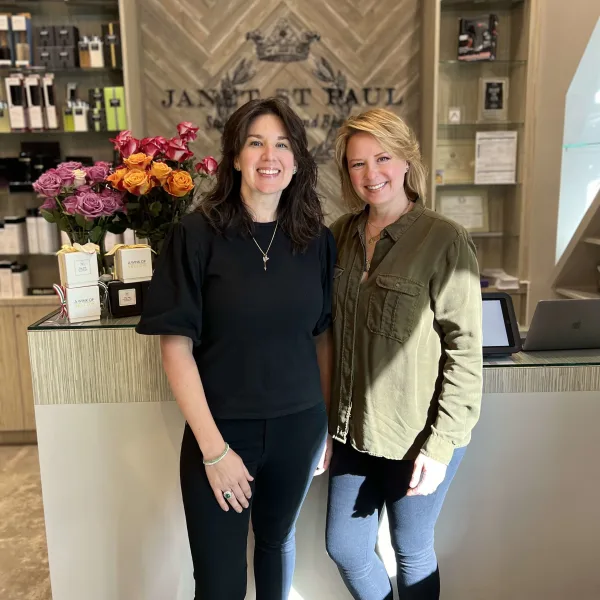
At Janet St. Paul Studio for Hair and Beauty, Director of Operations Natasha McMillen helps bring her wife Janet St. Paul's vision to life, elevating every system from education to operations.

Expand your color service menu with the Pinstripe technique. Brooks and Brooks' Marlon Hawkins walks you through the technique.