The owner of the west coast salon puts systems in place to manage both routines and surprises.
Lisa Musgrove-Kibler knows what will be going on in her salon tomorrow and has a good idea what next year will look like, too. On the heels of a pandemic that seemed to arrive out of the blue, not many business owners can say that.
“I’m trying to establish procedures—build up a whole village of us,” says Musgrove-Kibler, owner of LoneStar Salon & Spa in Tumwater, Washington. “But you also have to be willing to pivot all the time.”
Leveraging Brand Partners
It was certainly a pivot to reopen after the 11-week lockdown in 2020. To make up that lost revenue, Musgrove-Kibler looked first to the partnership she’d built with her primary brand, L’Oreal. As a Black Elite L’Oreal salon, LoneStar was able to take advantage of the SalonCentric LEVEL Loyalty program.
“When you are very loyal to a brand, I find they’re extremely loyal to you,” Musgrove-Kibler says. “L’Oreal knows we’re in it with them, not trying every new line out there. We were invited to be a Black Elite salon in the middle of the pandemic. It was an honor! So I began to use the loyalty points like nobody’s business. We were able to supply our team’s tools, something we’d never done before. And we can get any class we want; some are even gifted to us.”
Just Ask: Grants and Advice
Another partnership Musgrove-Kibler relies on is the camaraderie she enjoys with her local Chamber of Commerce. Through the Chamber, she learned about how to apply for small business grants.
“Connecting to other successful businesspeople has been huge for us,” she says. “They know how to take advantage of opportunities.”
Although it requires long days of crunching numbers and filling out the required paperwork, applying for grants has given LoneStar access to this reservoir of under-the-radar funds. In both 2020 and 2021, the salon secured $14,000 in grants through Pacific Mountain Workforce Development to invest in business courses for the staff.
“Through the Summit Salon Business Center, we strategized a yearly plan to unify our service and support teams, strengthen leadership, and create systems to increase our offerings and income,” Musgrove-Kibler explains. “These courses have given our support team, management, and leadership crucial skills to help us scale and grow.”
Today, people assume no one will help them, Musgove-Kibler says, but she has found the opposite to be true.
“Everyone wants to help!” she observes. “You just have to align yourself with those people. I had to do the legwork to secure the grants, but I had all the help and support I could ever want. This showed my team that we’re not only about doing hair. They saw me working hard to create opportunities for them. Now that I have that $14,000 for trainings, I can use the money from our profits in other ways.”
Returning the Favor
To show appreciation for all the help and also honor the salon’s core value of giving back, LoneStar selects a charity each year that supports the community. Guests can contribute to the effort, too, which the past two years has been creating beauty boxes. In 2021 the beauty box recipients were foster children, and this year they’re women coming out of domestic abuse situations.
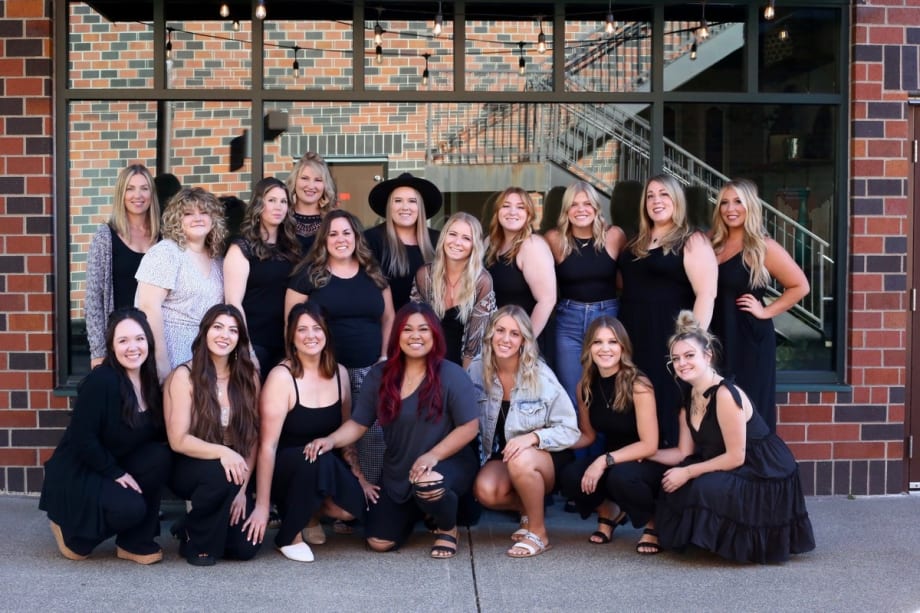
Musgrove-Kibler says her main focus, though, is always her own team. She demonstrates care for them in offering flexible schedules, plenty of education, opportunities to advance, photo shoots, and the latest additions—offers to save through a 401k and to purchase shares of the salon company.
Systems for the Team
It’s Musgrove-Kibler’s dream that stylists will start and end their careers at LoneStar Salon & Spa.
“I want to be a retirement salon for someone to work as an extern still in school right through to retirement,” she says. “Stylists don’t ‘legit’ retire. Their clientele begins to diminish, and they gradually work less and less. I want to have real retirement parties!”
It starts with a commitment to a training program, which now LoneStar operates for the esthetics side as well as the hair side. Musgrove-Kibler and her team devote a lot of time to cultivating relationships at the local cosmetology school.
“‘Grow your own,’ we say,” she reports. “Our experienced stylists can bring on an associate and train the new stylist. While the new stylists are showing us cool things they do with hair, we’re teaching them the soft skills—how to be confident, get through a stressful day, handle a challenging client.” Fortified with this training for six to nine months, the new hires are able to build their books quickly.
A post-pandemic relaxation of shift rules has encouraged retention. Stylists can work a full 32-hour schedule or much less if they choose. They can work on Saturdays or not, and they can pick mornings or afternoons.
“Do what works well for your life at home, and we will provide you a schedule,” Musgrove-Kibler says.
Photo shoots take place twice a year, offering all levels of stylists to collaborate, expand their creativity, and just have fun. The shoots result in images the salon then uses for promoting services.
“We work with local photographers and makeup artists we want to support,” Musgrove-Kibler says. “This has been great for morale. The team feels so much pride in what we produce.”
As of this year, the LoneStar team can contribute to a 401k to save for retirement, and the owner offered two longtime staffers the opportunity to purchase shares. Now each of those two team members owns 4% of LoneStar, and Musgrove-Kibler says they’re eager to see their investment grow.
“In the future, I may offer them a few more shares or, as the company expands, we’ll offer this to other team members,” predicts Musgrove-Kibler, who just purchased space to open a second location. “You need your team to do well. If there are people who have shown time and time again that they’re in it through thick and thin, it’s an exciting thing to let them feel that they have true ownership in the company.”