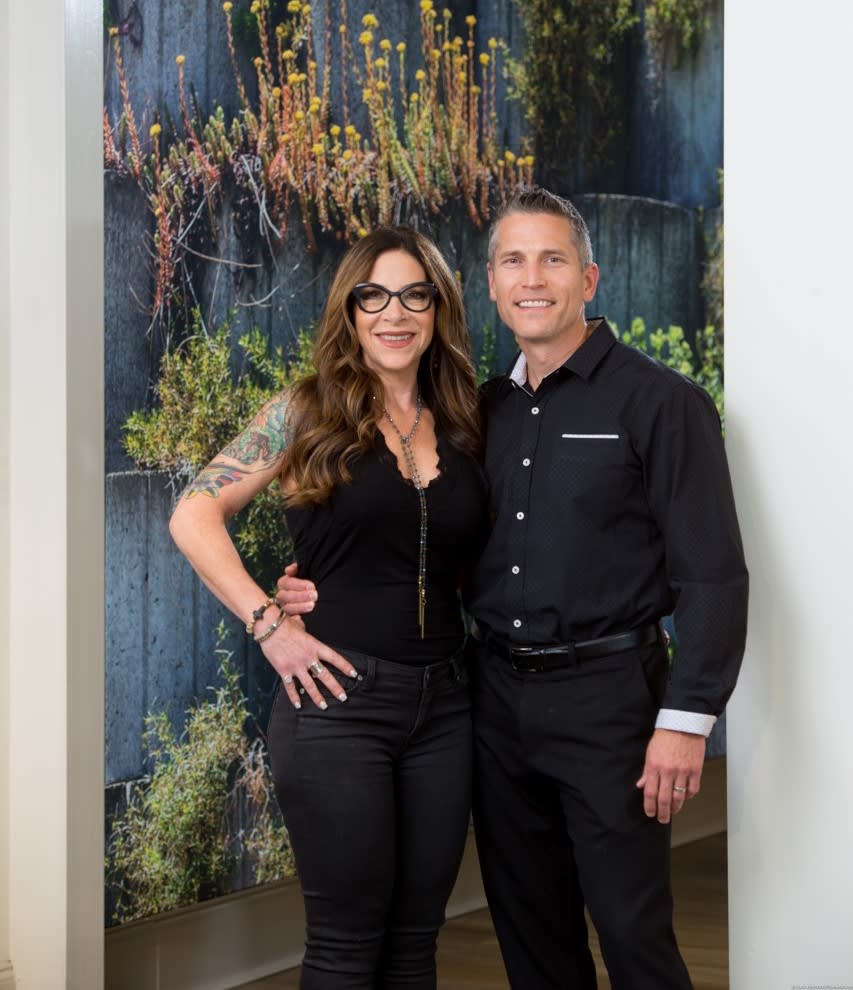
At Jyl Craven Hair Design in Canton, GA, owners Jyl and Jason Craven struggled with what can only be called “a good problem to have.” Three of their stylists were topping out at the highest level, Level 6. They were making good money in the six figures, but who’s to say they shouldn’t be able to earn even more? When the six-week Covid lockdown pushed "pause" on daily salon work, the owners stayed in touch with their staff and had time to brainstorm.
“Like most salons, we had a level system, and at each level the stylist hits certain KPIs (key performance indicators) to get promoted to the next level,” Jason Craven explains. “Jyl and two more stylists were at their highest price point. We considered adding a Level 7, but then what happens when they top out of that? Where does it stop?”
Ad Loading...
Level 6 Premiere Stylist
They decided instead to establish an open-ended tier—Level 6 Premiere Stylist. At that level, the stylist and owners work together to set prices reflecting the stylist’s skills, preferences, and recent performance. The result is a customized menu of services.
“Maybe the stylist has been doing a lot of balyage services at a high price point,” Jason says. “We might decide together to increase that price by $15 or even just $5 while keeping the stylist’s other services at the current price.”
Craven reports that the shift has given his top performers a sense of autonomy and freedom. “They feel more independent and in control of what they’re ultimately able to earn,” he says, adding that he expects this to lead to greater retention as lower-level stylists see that there’s no end to what someone can charge at the salon.
"At this new pricing tier, we let the market determine what the stylist can charge," Craven says. "If a stylist is able to create enough demand at a new price point for one, or all, of their services, then we'll work together to support them. The new model has structure but no ceiling."
Growth Drives Pricing
Every quarter, the owners sit down with each Level 6 Premiere stylist to review that quarter’s numbers. To increase prices, the stylist must show two consecutive quarters of achieving their total sales growth goal or hitting their client count and ticket average KPIs. It has to be one or the other, but it doesn’t have to be both.
Ad Loading...
As an example, Craven cites his premiere stylist Blake, who was doing a lot of hair extensions and expressed the desire to focus on extensions.
“Once she started specializing, her client count was down, because extensions take a long time,” Craven says. “But the ticket average is so high that it makes up for it. Her first quarter of focusing on hair extensions crushed her previous quarter! It would be the same for hair loss applications. We don’t want to penalize our stylists for doing a highly profitable service that’s also time-consuming.”
Presenting to Guests
When first-time clients call to make an appointment and indicate they want a Premiere Level stylist, the front desk staff understands the need to quickly identify that stylist's unique pricing model. Unlike the other levels, which each have a standard pricing structure for all the stylists in that level, the Premiere Stylist prices may differ. Other than that, these stylists are booked the same way as the rest. Raising prices is always viewed as a celebration for the stylist, Craven says. When getting promoted to a new level, regardless of the level, the salon sees this opportunity as a time to recognize the stylist's achievement and hard work.
“At checkout, if a guest questions the new higher prices, our front desk team is able to honor the stylist’s old prices," Craven notes. "They’ll then explain to the client that their stylist was promoted to the next level and proceed to let the client know of that stylist's new prices.”
Results are Good
About one year after implementing this change, the Cravens are pleased. The three Level 6 Premiere stylists have continued to grow both their total sales and their guest count. Even at their higher and gradually increasing prices, they are attracting new clients.
Ad Loading...
“We've been careful about our communication around pricing, and we are careful not to outprice ourselves,” Craven says. “The decision to add this new level has been beneficial for our team and culture. It was the right time for our company to make this change and has had a positive impact on our business.”
Discover how to create a true “WOW experience” for every client by first building a culture where your team feels engaged, empowered, and inspired. Drawing on Calvin Stovall’s Iconic Framework, this blog explores how salon, spa, and clinic leaders can strengthen culture, elevate customer experience, and build a business that stands out for the long term.
The wellness industry is growing fast, and salons and barbershops already are an important part of it. In her first blog, Tracy Rado shares where the wellness dollars are heading, and how salon's can grow with this movement.
While salon sales are increasing, owners often feel they're working harder for the same or less profit. Leverage Q2 data from The KIM Report, Alain Audet reveals some of the structural changes that are dampening your growth and why your region and your salon size matters.
Weaknesses in your business are amplified during the Holiday Season. Spark Pro Global's Lucy Randall shows you five things to do now to have the strongest holiday season yet.
In Kati Whitledge's latest blog, she shares how salons have moved away from dress codes and embraced appearance standards. But by removing strict dress codes, some businesses may have unintentionally lowered their appearance standards. Whitledge helps you explain to your team why an appearance standard is important and how to smoothly implement a new appearance policy.
The Small Business Health Care Tax Credit is a non-refundable tax credit for for-profit businesses that provides a financial incentive for eligible employers who offer health insurance coverage to their employees. Leticia Skrabut, Esq., walks you through how to claim that credit.
Developing strong work habits early in one's career supports long-term success in the salon industry. Jesse Linares offers new stylists his top five tips.
Most salon owners have no idea what these numbers are.
You can hit record sales and still have a profit problem. The difference comes down to four numbers almost nobody was taught to track.
At Janet St. Paul Studio for Hair and Beauty, Director of Operations Natasha McMillen helps bring her wife Janet St. Paul's vision to life, elevating every system from education to operations.
The strongest salons, spas, and med spas know which numbers tell the real story of their business. In this practical guide, Phorest breaks down the five essential KPIs every business should track to improve retention, boost revenue, and make smarter decisions with confidence.
At Bella Style Salon in Slidell, Louisiana, Director of Operations Angela Meyer tackles inventory, team management, and guest relations. Read all about her in our latest Meet the Manager.
Starting at Impressions front desk in 2006 when he was 19 years old, General Manager Paul Petrowsky is a seasoned professional who owner Sarah Taylor says is responsible for much of her own success.
Planning is in full swing for the most anticipated events and promotions for the 2026 holidays. As owners share their favorite ways to celebrate, they prove that a carefully planned event can also build culture, increase client loyalty, boost sales, and set a business up for a successful 2027.
When things run amok at Mane Attraction Salon, Owners Chris and Jenny Knudsen say General Manager Sami Hernandez is their go-to resource and ultimate sounding board. Meet Sami in this installment of Meet the Manager.