






You Don't Own a Salon. You Own A Business.
In his latest blog, Leon Alexander Ph.D., challenges industry conventional thinking to help owners add more to their bottom lines.
 MENU
 SEARCH
Through Ultimate Teams, a companywide competition league, each location’s staff came together to step up their game.

The Gordon Salon team after hours.

Tony and Pam Gordon had a big idea.
At one of their four Gordon Salon locations in the Chicago area, two of the senior stylists didn’t get along. They just didn’t. The owners hoped their big idea would solve the problem.
Big ideas were nothing unusual at Gordon Salon—they came along every quarter, and not by accident. The husband-and-wife owners disrupted the salon status quo every three months by implementing something new. Following procedures explained by author John Doerr in his book Measure What Matters, they regularly implemented OKRs—objectives and key results—and expanded that to launch “moonshot OKRs” The moonshot idea is to set goals that seem so bold and out-of-reach that it’s like aiming for the moon. A recent Gordon Salon moonshot OKR, for example, was to open a fifth location. It’s that level of big change, and it’s every quarter.
Maybe the Gordons could design a moonshot OKR that would make peace between the two incompatible team members. What would that moonshot look like? They thought about what brings people together. The answer could lie in creating competition among teams, with the two stylists who normally butt heads now cooperating to score for the same team.
“We theorized that an outside force would allow the two to find common ground by working together in an effort to fight off an adversary,” Tony Gordon explains. “We figured a contest against an opposing force would drive these two people together—two people who loved the company but disliked each other. Much like political parties that are always bickering, when opponents are threatened by an outside force, they eventually cross the aisle and come together. The idea was to create a subculture within the greater salon culture.”
And Ultimate Teams was born.
Ultimate Teams was the league, and the four salon locations were the teams. Each salon team picked a name, mascot, and uniform, created their own scoreboard and, although they were asked, Tony Gordon laments that “we couldn’t get them to make a team song.” Despite that last missing piece, Ultimate Teams already was becoming fun and exciting—and, just maybe, the league might forge a new connection between two particular stylists on the same team.
It was fall, so scoring was based on the football point system; later, in a second round of Ultimate Teams, scoring would mimic basketball. In both cases, teams earned points for achievements like prebooking, Instagram posting, upselling, and retail sales. The owners made sure to provide up-to-date numbers on the standings.
“We targeted what we wanted to improve,” Tony Gordon says. “It had been a struggle to get staff to post on Instagram, so those posts were one of the metrics.” Touchdown! The teams began to achieve their hard-to-hit goals; revenue increased, and client engagement skyrocketed.
“Overall, the teams had a blast in motivating each other to succeed, and each location gained a strong sense of unity,” Gordon reports. But something else happened, too, that surprised the owners. Leadership strengths and weaknesses became crystal clear. The Gordons discovered how well some managers’ styles were effective in meeting certain challenges; the most motivated teams had salon leaders who adapted well to the game. The opposite pattern emerged as well.
“It became obvious that one salon team needed coaching on the engagement level,” Tony Gordon says. “They have emerged now, more than a year later, as great leaders. Through Ultimate Teams, we were able to determine whose leadership was lacking, and we coached and even compensated around that. It was a neat exercise.”
Compensation wasn’t involved in the winners’ rewards, though. The locations that landed on top in the competition enjoyed celebrations and trophies, proving that working as a team can motivate as much as money. The Gordons promotes the idea of TEAM as standing for “Together Everyone Achieves More.”
But alas, this moonshot didn’t land on the moon. The warring stylists never did make peace. Since then, one has left the salon, so the problem resolved itself in another way. But the OKR was still highly successful, moving the salon company forward in the targeted metrics and then some. The full adage bears the lesson: Shoot for the moon, and even if you miss you’ll still land among the stars.
“We wanted a team orientation with people committed to their location,” Gordon says in post-game analysis. “And it worked.”
Without the incentive of developing a peacemaker tool, the Gordons may never have tried Ultimate Teams. And that would have been a shame, because it was so popular that staffers have been asking for a third round. Tony figures it’s about to be baseball season, so his players had better suit up.
In his latest blog, Leon Alexander Ph.D., challenges industry conventional thinking to help owners add more to their bottom lines.

In her latest blog, Amy Pal helps you develop your own clear guidelines around complimentary free employee services.
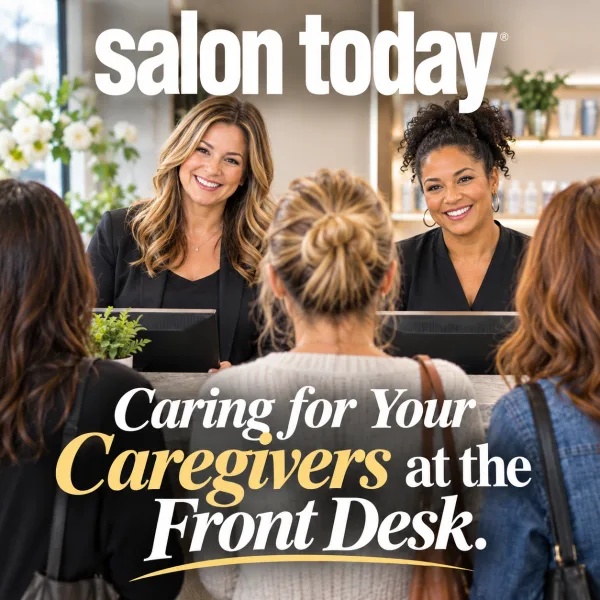
From managing air traffic on busy days to handling frustrated guests' complaints, your front desk team often serves as the salon's emotional shock absorber. From a customer service lesson from the DMV to a list of strategies for caring for your front line, our experts offer ideas for alleviating stress, celebrating wins, and setting goals.

According to the KIM Report, top-line salon revenue appears steady or slightly up, but that growth is driven primarily by service price increases. Beneath the surface, retail performance and client visit frequency (appointment drift) are under real pressure. In his latest blog, Alain Audet offers strategies for keeping your salon's retail sales strong.

Putting your family to work in the salon offers some real tax benefits, but you have you have to play by the rules of the tax code to claim them. Azarvand Tax Law's Leticia Skrabut, Esq., shows you how.

Discover how to create a true “WOW experience” for every client by first building a culture where your team feels engaged, empowered, and inspired. Drawing on Calvin Stovall’s Iconic Framework, this blog explores how salon, spa, and clinic leaders can strengthen culture, elevate customer experience, and build a business that stands out for the long term.
Sponsored by Phorest Salon Software

The wellness industry is growing fast, and salons and barbershops already are an important part of it. In her first blog, Tracy Rado shares where the wellness dollars are heading, and how salons can grow with this movement.

While salon sales are increasing, owners often feel they're working harder for the same or less profit. Leverage Q2 data from The KIM Report, Alain Audet reveals some of the structural changes that are dampening your growth and why your region and your salon size matters.
Weaknesses in your business are amplified during the Holiday Season. Spark Pro Global's Lucy Randall shows you five things to do now to have the strongest holiday season yet.

In Kati Whitledge's latest blog, she shares how salons have moved away from dress codes and embraced appearance standards. But by removing strict dress codes, some businesses may have unintentionally lowered their appearance standards. Whitledge helps you explain to your team why an appearance standard is important and how to smoothly implement a new appearance policy.

The Small Business Health Care Tax Credit is a non-refundable tax credit for for-profit businesses that provides a financial incentive for eligible employers who offer health insurance coverage to their employees. Leticia Skrabut, Esq., walks you through how to claim that credit.

Developing strong work habits early in one's career supports long-term success in the salon industry. Jesse Linares offers new stylists his top five tips.

Most salon owners have no idea what these numbers are. You can hit record sales and still have a profit problem. The difference comes down to four numbers almost nobody was taught to track.
Sponsored by Strata Salon Systems™
A five-area audit every owner-dependent salon needs to run. You built something that looks successful. Now find out if it can survive without you.
Sponsored by Strata Salon Systems™

Every month you put off fixing the problem, it gets bigger, more expensive, and harder to solve.
Sponsored by Strata Salon Systems™
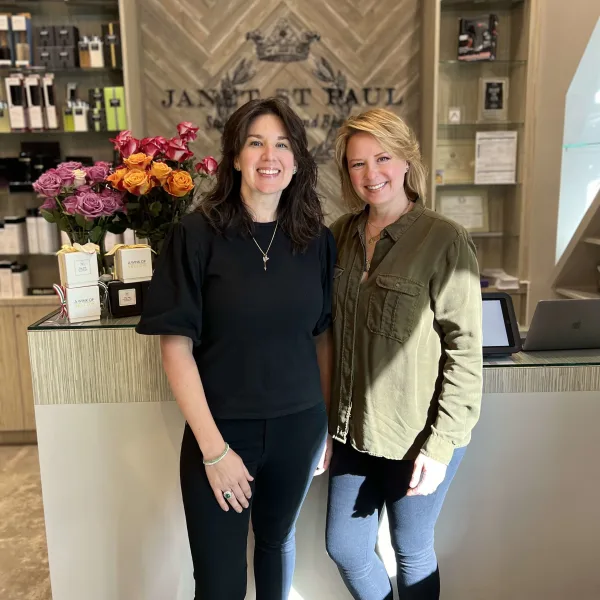
At Janet St. Paul Studio for Hair and Beauty, Director of Operations Natasha McMillen helps bring her wife Janet St. Paul's vision to life, elevating every system from education to operations.

Expand your color service menu with the Pinstripe technique. Brooks and Brooks' Marlon Hawkins walks you through the technique.