Salon software goes beyond inventory control to help you ring in consistently strong retail sales—from decoding marketing strategies to motivating your staff to sell.
Salon software goes beyond inventory control to help you ring in consistently strong retail sales-from decoding marketing strategies to motivating your staff to sell.
It's retail's turn. Finally.
Ad Loading...
Automation came to the salon industry not only late but little by little. Now, with the rest of their administrative tasks largely computerized, salon owners are ready to clear the brush on the final frontier of business operations. That would be retail.
"Nine times out of 10, inventory management is the very last thing people automate," says Jon Maple, CEO and president of Salon Transcripts. "First it's payroll, then marketing to clients, then the appointment book. But retail inventory is where all the money is."
Retail software has been around as long as other programs but, like everything else about retailing in the salon-merchandising, benchmarking, staff training-it gets no respect, to channel the late comedian Rodney Dangerfield. Maple has fought this tendency since 1991, conducting a class in reaping the benefits of his STX program's retail capabilities, while Milano Software President Paul Pagliaro observes, "Most people use only 35 to 40 percent of the applications their software offers, and retail and inventory are high on the list of applications they don't use."
Matthew Scudder, operations manager for Harms Software's Millennium family of software products, now notices an awakening in the industry. "There's been a huge paradigm shift in the mentality of salon owners," Scudder comments. "Owners want to know all sorts of specifics about retail sales. They'll say, ‘show me people who've had a facial but have never bought a product,' and the software becomes the heartbeat of the business."
While it may be coming through the door last, the tail may indeed end up wagging the dog. Thanks to smart software, the ideal service/retail ratio of 70/30 may at long last become attainable for the average salon.
Ad Loading...
"Salons earn seven percent for services on average but 35 percent on retail," notes Valerie Reavis, marketing manager for Shortcuts Salon and Spa Management Software. "So anyone interested in profitability should be paying close attention to retail."
Inventory Management
Often owners' first area of retail-minded attention is inventory. With increasing sophistication, software is transforming traditional inventory control (simply policing quantities needed to stock shelves) into true inventory management, a distinction Maple says is pivotal in gaining a retail edge.
Inventory management is more complicated and varies from program to program. For example, STX software breaks down retail sales into four percentage categories, listing products that account for 60 percent, 20 percent, 15 percent and 5 percent of total retail sales. Maple sees too many salons ordering extra inventory in the last category, even though those products account for such a small piece of the pie. Until Maple runs the reports for salon owners, they typically have no idea they're tying up their money in slow-moving items. Meanwhile, all of the older products are losing potency on the shelf and often baking in the sunlit window.
"It's the old 80/20 rule," he says. "Usually 20 percent of your products are generating 80 percent of your money. You should be basing your minimum quantities on sales history. Otherwise it's just haphazard."
Ad Loading...
Pagliano explains that a good way to forecast what will sell best in your salon in the next two weeks is simply by looking at what sold best in the past two weeks. Milano Retail Software calculates any change in the period that you designate and automatically recommends quantities based on the product's "growth factor."
Newer software programs focus on the other end of the spectrum, too, helping you identify your poor sellers. For example, Harms offers the Slow-Moving Inventory Wizard. If looking at the numbers convinces you to drop the product altogether, with a push of the button you can ask the "Wizard" to price the item at a discount and, eventually, faze it out.
Responding to a user request, Harms recently added a program that monitors how many people bought an item once, how many twice and so forth," Scudder explains. Those figures can help you plan a promotion or determine whether people who use the product once are likely to purchase it again. >
In addition to addressing the decision-making and strategy, software can aid in the mechanics of ordering the products. Milano's program sets up an SKU code list identical to the distributor's list.
"The systems can talk to each other," explains Pagliaro. "The product number is the same; there's little room for error and salons start off with accurate inventory and coding. Then the salons place their orders electronically, leaving the distributor's sales consultant plenty of time to truly consult and educate instead of spending all of his time in the salon writing up the order."
Ad Loading...
Elite Software further relieves distributor sales people of having to inform owners of price hikes, because it compares the previous cost of product with the current cost. "Owners don't have to go through invoices to figure out that the price has gone up," notes Brad Mace, sales manager of the company's Salon & Spa Management software.
And they don't have to guess about theft and loss. It's pretty obvious that something is amiss if the computer indicates that you should have more product than you see on the shelf.
"Being able to access inventory information in a quick report is very important," says Kirsten Hall, director of marketing for The Neill Corporation's SalonBiz software. "The owner may see no hairspray on the shelf and assume that the salon is selling a ton of hairspray when really someone is stealing it!"
Consumer Behavior
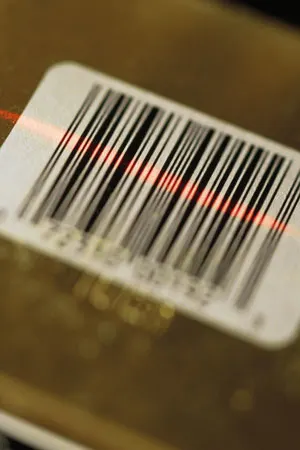
Owners aren't the only ones who have it easier with retail software. What client wouldn't appreciate a speedier, more accurate checkout process made possible by software that reads the product's bar code?
Ad Loading...
Many programs also work hand-in-hand with a salon's "favored clients" loyalty club. Clients are more likely to sign up for such programs when everything is computerized and runs smoothly. "Our salons can establish a client loyalty system that automatically awards points for spending a certain amount of money at the salon," Maple says.
But the beauty of tracking the client's every move is really about target marketing, and in-salon marketing is part of the fabric of every software package. SalonBiz, which tests its software in real salons run by The Neill Corporation, uses "The Traveler," a hardcopy list generated for each client that travels around the salon with the customer.
"It includes the appointment history for that day and a product and service purchase history," Hall says. "The stylist can say, ‘I see you're probably out of your favorite shampoo, so I'll have a bottle waiting for you when you leave,' or ‘I see you've never purchased a styling product, so I'd like to introduce you to one today.'"
The front desk is an important component in maximizing retail sales, explains Catherine Renaud, president of Software Creations, which rewrote its longstanding software program in order to offer the Virtual Salon and Spa as a web-based, touch-screen package. "Our Recommend Retailing Systems creates a tag team comprising the front desk and the technician on the floor," Renaud explains. At each visit, the system issues a paperless "ticket" that lists every product the technician used that has a retail counterpart. Because it removes any responsibility for selling from the technician's shoulders, the system is popular with stylists and estheticians who cringe at having to sell. Plus, that "tag-team" approach can increase retail sales by 20 to 30 percent, according to Renaud.
To easily log products on the sales ticket, stylists can each carry a PDA (personal data assistant) that talks to the software system. Salons also can install one or more workstations for technicians to use.
Ad Loading...
All of the recommended products become part of the client's history. Those that the client does not choose to purchase go into a type of "rejected products" category that may be useful to the stylist in future visits. For example, Renaud explains, "The technician can review the client's purchase history and say, ‘I see that your color faded a little. Remember I recommended these products? You might want to think about it.'"
Outside Marketing and Promotion
Between appointments, your marketing machine can continue to run at high speed. Any software program worth its salt can pair your selected set of demographics with a targeted product history and send, for example, a Mother's Day color shampoo and conditioner promotion to every client in your database who is a mom, has had a hair color service within the past six months and has never bought a color-safe shampoo at the salon.
"You should be able to customize an e-mail and table promotion that identifies all clients who've purchased your leading line in the past three months," Pagliaro notes. "What if you bring in a new line of color shampoo? Identify all clients who've had a color service within the past year and market first to them. How about a new high-end line? Go into your e-mail and promote only to clients who spend over a certain dollar amount."
To that end, Shortcuts offers a "Set and Forget" feature. "We sit down with salon owners and go over all of their promotions," says Reavis. "We set it up so they can do e-mail, text messages, post cards-whatever they decide. Then when Valentine's Day rolls around they don't have to do anything; the postcard template, e-mail or text message they've chosen goes out to all the women 35-50 within this zip code who have had skin care services."
Ad Loading...
All of this is opt-in marketing; the client must agree to be contacted. "Shortcuts has options that say, ‘Do not e-mail' and ‘Do not text message,'" Reavis says, adding that salons should be specific when they ask clients how they want to be contacted about promotions.
If you confirm an appointment by e-mail, SalonBiz can make that double as a little marketing piece. "You can mention any event or special," says Hall. "It's HTML-compatible so it can look cool with photos, images and different fonts." Hall adds that her company's WebBiz feature provides both online booking and e-commerce, enabling the salon to promote retail products to someone making an appointment or purchasing a gift certificate.
Staff Training and Motivation
Even when we're talking about technology and hands-free operation, so much of success in the salon still depends upon personal interaction. Software companies address this by building staff motivation right into their systems.
"You can set up commission programs to motivate your staff to sell more," comments Mace. "For example, you can have a stylist receive a five-percent commission if she sells one product per day and a seven-percent commission if she sells two products a day."
Ad Loading...
Pagliaro recommends setting retail goals both for the entire business and for each staffer. "Track your goals weekly, not monthly," he advises. "If you track monthly, you have less opportunity to make changes if necessary. Tracking weekly lets staffers know they need to do better next week. We've seen that this works."
Goal setting, however, can take place just once a year. "Fill in 19 numbers in our software, and that will give you a daily target for both service and retail for the year," Pagliaro explains. "But in all cases, make sure their retail performance is frequently discussed."
It's the old saying, "What gets measured gets done," agrees Renaud. "Our software tracks how many clients the stylist saw, how many of those clients were recommended retail products and then how many of the recommended clients had those sales close," Renaud says. "This allows your staff training to be very targeted."
Reavis suggests programming your goal-setting in units rather than dollar amounts. "Stylists can visualize bottles," she notes. "Percentages and ratios are the worst way to introduce the concept; you can develop that culture, but it takes time. At the beginning, have your staff aim that for every two hair cuts they do, they will sell one bottle. Now they're applying retail to something they can relate to."
Coming Next
Ad Loading...
Leadership always counts in the salon industry, and so it is with retail: It's probably more critical for the owner to master the retail software system than for anyone else on staff. Notes Scudder, "A ‘power user' still uses only 60 percent of our system."
And before you know it, there will be more to learn. New developments are surfacing all the time to drive business growth. Many are salon adaptations of advancements that have shown success in other retail venues.
"As online booking increases, I can see retail being more available online," forecasts Mace. "The client could order the products at the time of booking so that everything is ready when she checks out."
Other forms of self-service may also be on the horizon. Software Creations already has a kiosk in place at some salons that lets clients input their own information into their client profile. "When they do it themselves, the information goes in correctly," says Renaud. "This is a forward-thinking opportunity that makes a salon look high-tech and professional."
Renaud also predicts that PDAs for stylists will become commonplace. The latest innovation in that regard is the PDA equipped with a credit card slide and a receipt printer. Renaud notes, "Toward the end of the day, the front desk staff can walk over to the remaining clients and say, ‘I'll ring you out right now so that you won't be rushed and your stylist can take her time finishing.'" Another method implemented by one of Renaud's salon customers has a concierge walking from station to station with her PDA and inputting what the stylist is recommending so that the stylist can seamlessly continue educating the client. Meanwhile, salon owners have enough going on with today's technology that Pagliaro reports Milano's accounts increasing retail by an average of 29 percent the year the salon begins using the software's full capabilities.
Ad Loading...
"The stylist knows the client, knows her hair and has the product knowledge," says Pagliaro. "All of the software's components, together with the stylist's expertise, will help to retain the sales within the professional industry. When salons can maximize sales and maximize the productivity of their space, everyone wins."
PROGRAMS WE RECOMMEND
More than inventory-control, these sophisticated software programs are a smart (and headache-free) way to manage your salon.
Elite Salon and Spa Management
This software from Elite calculates sales transactions, appointments, inventory updates and client histories. It also provides marketing payroll and financial reports.
This training collection from Harms Software consists of three components: a set of 10 education DVDs, eight workbooks and a master key booklet-all are designed to educate users an all aspects of the software.
Your service staff can use the information accessible through SalonBiz (client birthdays, favorite cuts, color formulas, etc.) to build relationships and personalize each guest's experience.
STX Salon and Spa Management Software from Salon Transcripts features online appointment booking, POS, sales and inventory tracking, payroll and client marketing.
Discover how to create a true “WOW experience” for every client by first building a culture where your team feels engaged, empowered, and inspired. Drawing on Calvin Stovall’s Iconic Framework, this blog explores how salon, spa, and clinic leaders can strengthen culture, elevate customer experience, and build a business that stands out for the long term.
The wellness industry is growing fast, and salons and barbershops already are an important part of it. In her first blog, Tracy Rado shares where the wellness dollars are heading, and how salon's can grow with this movement.
While salon sales are increasing, owners often feel they're working harder for the same or less profit. Leverage Q2 data from The KIM Report, Alain Audet reveals some of the structural changes that are dampening your growth and why your region and your salon size matters.
Weaknesses in your business are amplified during the Holiday Season. Spark Pro Global's Lucy Randall shows you five things to do now to have the strongest holiday season yet.
In Kati Whitledge's latest blog, she shares how salons have moved away from dress codes and embraced appearance standards. But by removing strict dress codes, some businesses may have unintentionally lowered their appearance standards. Whitledge helps you explain to your team why an appearance standard is important and how to smoothly implement a new appearance policy.
The Small Business Health Care Tax Credit is a non-refundable tax credit for for-profit businesses that provides a financial incentive for eligible employers who offer health insurance coverage to their employees. Leticia Skrabut, Esq., walks you through how to claim that credit.
Developing strong work habits early in one's career supports long-term success in the salon industry. Jesse Linares offers new stylists his top five tips.
Most salon owners have no idea what these numbers are.
You can hit record sales and still have a profit problem. The difference comes down to four numbers almost nobody was taught to track.
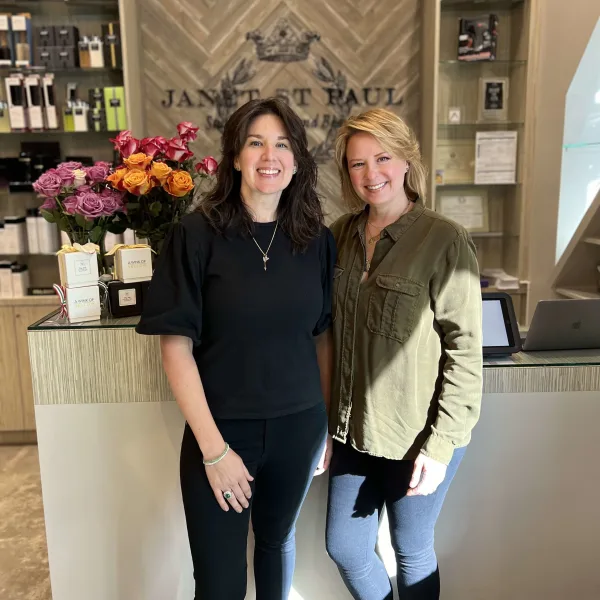
At Janet St. Paul Studio for Hair and Beauty, Director of Operations Natasha McMillen helps bring her wife Janet St. Paul's vision to life, elevating every system from education to operations.
The strongest salons, spas, and med spas know which numbers tell the real story of their business. In this practical guide, Phorest breaks down the five essential KPIs every business should track to improve retention, boost revenue, and make smarter decisions with confidence.
At Bella Style Salon in Slidell, Louisiana, Director of Operations Angela Meyer tackles inventory, team management, and guest relations. Read all about her in our latest Meet the Manager.
Starting at Impressions front desk in 2006 when he was 19 years old, General Manager Paul Petrowsky is a seasoned professional who owner Sarah Taylor says is responsible for much of her own success.
Planning is in full swing for the most anticipated events and promotions for the 2026 holidays. As owners share their favorite ways to celebrate, they prove that a carefully planned event can also build culture, increase client loyalty, boost sales, and set a business up for a successful 2027.
When things run amok at Mane Attraction Salon, Owners Chris and Jenny Knudsen say General Manager Sami Hernandez is their go-to resource and ultimate sounding board. Meet Sami in this installment of Meet the Manager.