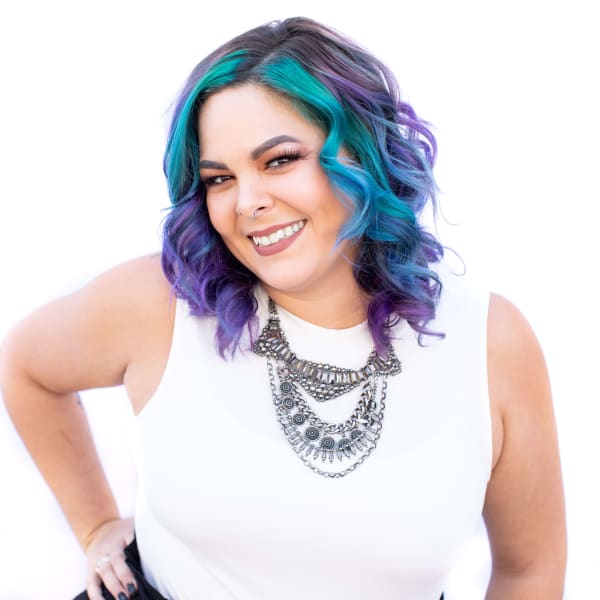
As the director of technical and business development for Zano Salons, Sara Aikens’ biggest challenge is communicating a consistent message to employees at the salon’s four locations surrounding Naperville, Illinois. With 150 ...
Use Snapchat in your business. (photo credit: Getty Images)
Getty Images
3 min to read
As the director of technical and business development for Zano Salons, Sara Aikens’ biggest challenge is communicating a consistent message to employees at the salon’s four locations surrounding Naperville, Illinois. With 150 employees to motivate, manage and support, Aikens knows the best way to communicate with each one is with through the communication vehicle each individual interacts with best.
“I’ve learned to communicate four times in four different ways—so in addition to any group meeting or face-to-face conversation, I also use email, text message, private professional Facebook pages, and Snapchat,” says Aikens. “It pays off quicker for me to embrace different communication vehicles than it does if I were trying to get everyone to bend to one way of communication.”
Ad Loading...
Of these, Snapchat is probably the most novel for use in communicating to employees. But Aikens feels the photo messaging application which allows users to send photos, videos, messages and drawings which disappear after a few seconds, is most similar to an actual face-to-face conversation.
“If you put something on Facebook, it’s there forever,” she says. “But Snaps disappear, so it seems much more authentic.”
About 40 of the Zano employees prefer the Snapchat communications from Aikens, and she says this group also tends to be the less-seasoned stylists who benefit from more encouragement. Aikens, who believes she has a mentor-based personality, says using Snapchat makes her very relatable for these newer team members, even though she’s been with Zano’s for more than 15 years.
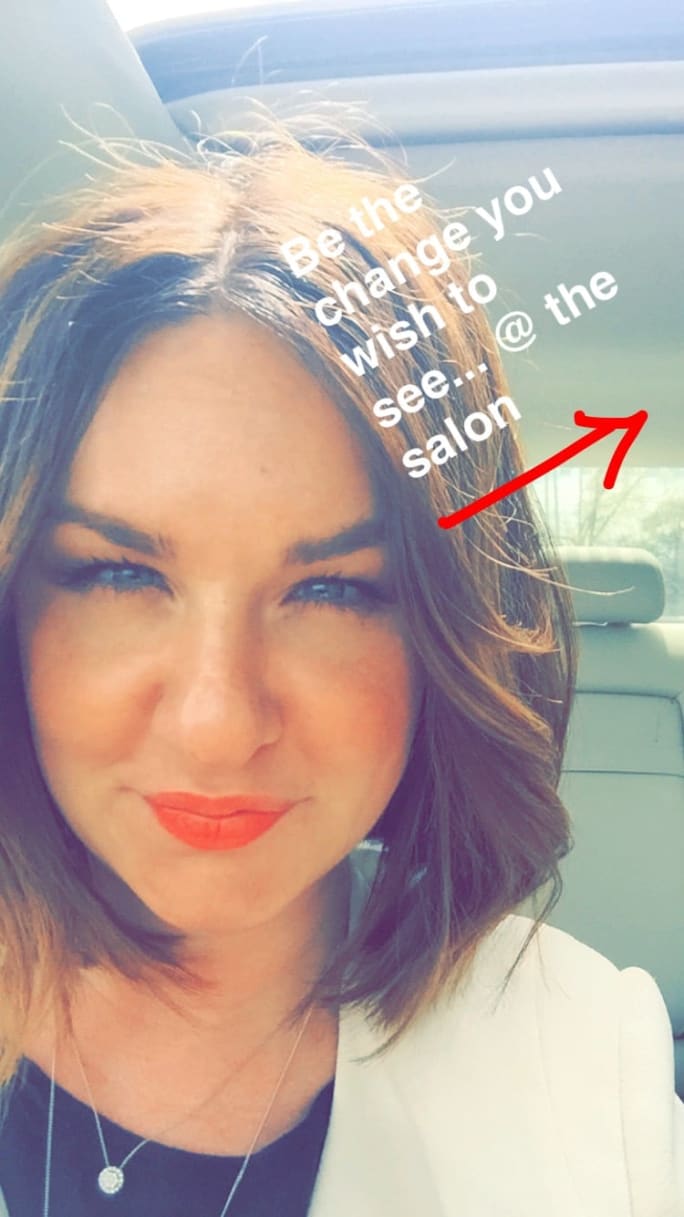
“This group also is the most comfortable with the selfie, and I’ve found sending a selfie with a quick message to be a very encouraging,” says Aikens. “In the salon, it’s fostered a conversation of ‘Did you get Sara’s Selfie today?’”
Because Snapchat limits the number of characters in a message, Aikens uses Snaps as quick messages of reinforcement, celebration or encouragement. Here’s some examples of how she’s used Snapchat:
Ad Loading...
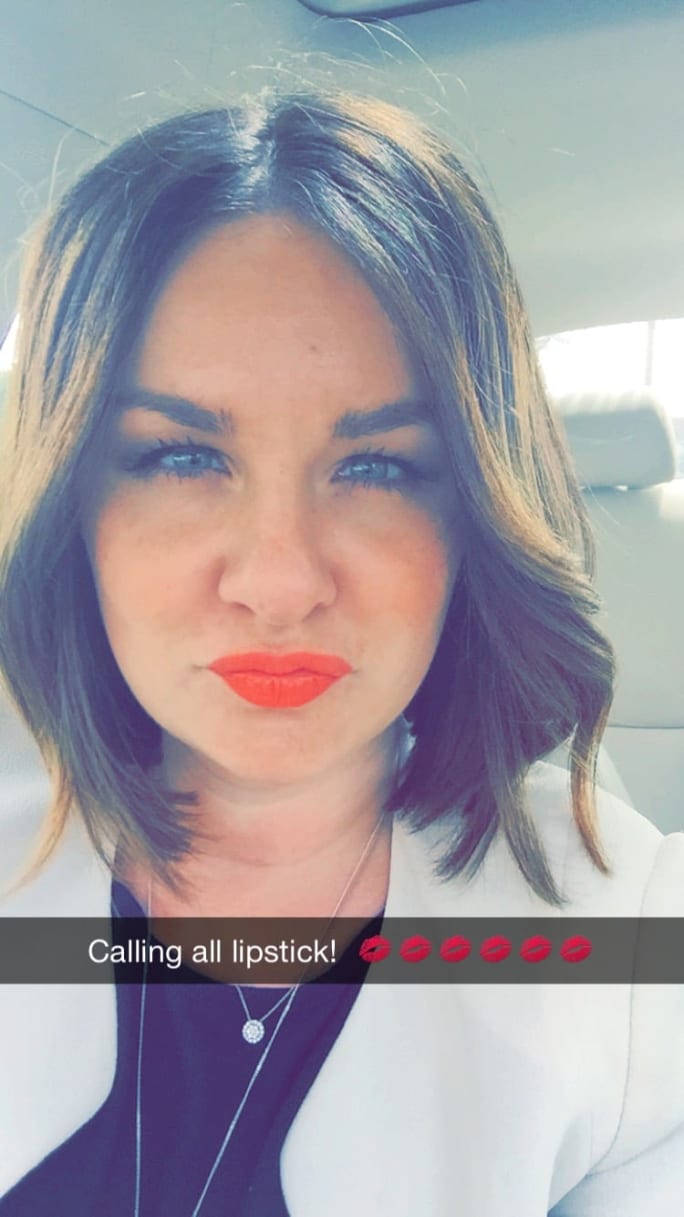
At a recent staff meeting, Aikens made it a requirement that all female employees wear lipstick at all times. “We are in a beauty business, and the typical Zano woman definitely wears lipstick,” she stresses. “It’s important to play the part.” So Aikens shot a selfie of herself putting on lipstick and sent if with the friendly message, “Get Your Lips On.” Her team quickly responded with a fun-filled video with all the stylists in the breakroom putting on their lipstick.
The salon recently launched Olaplex and took a ‘groupie’—a selfie of a group of people as a Snapchat—of the team. Through social media, the salon reposted the picture hashtagging the company, and Olaplex responded with a message that reads, “Thanks for your support, your hair looks great!”
In addition to using Snapchat to reinforce management messages, Aikens also uses it to send a special message of congratulations to a single individual when she hits her numbers or shares the news of a stylist’s promotion with the entire team.
Since Aikens divides her time among all four locations, she’ll use Snapchat as a virtual morning huddle to the employees at the salon where she’ll be each day. “For example, I’ll send a Snap that reads, “I’m coming for you today, get ready to pre-schedule,” she says. “It’s an innovative way to get in their heads at the start of the day—once they start meeting with clients, often they’re too busy for you.”
For more articles on multi-location salon managment, visit salonspanetwork.org.
Aikens used this Snapchat message to encourage all female employees to don their lipstick.
Discover how to create a true “WOW experience” for every client by first building a culture where your team feels engaged, empowered, and inspired. Drawing on Calvin Stovall’s Iconic Framework, this blog explores how salon, spa, and clinic leaders can strengthen culture, elevate customer experience, and build a business that stands out for the long term.
The wellness industry is growing fast, and salons and barbershops already are an important part of it. In her first blog, Tracy Rado shares where the wellness dollars are heading, and how salon's can grow with this movement.
While salon sales are increasing, owners often feel they're working harder for the same or less profit. Leverage Q2 data from The KIM Report, Alain Audet reveals some of the structural changes that are dampening your growth and why your region and your salon size matters.
Weaknesses in your business are amplified during the Holiday Season. Spark Pro Global's Lucy Randall shows you five things to do now to have the strongest holiday season yet.
In Kati Whitledge's latest blog, she shares how salons have moved away from dress codes and embraced appearance standards. But by removing strict dress codes, some businesses may have unintentionally lowered their appearance standards. Whitledge helps you explain to your team why an appearance standard is important and how to smoothly implement a new appearance policy.
The Small Business Health Care Tax Credit is a non-refundable tax credit for for-profit businesses that provides a financial incentive for eligible employers who offer health insurance coverage to their employees. Leticia Skrabut, Esq., walks you through how to claim that credit.
Developing strong work habits early in one's career supports long-term success in the salon industry. Jesse Linares offers new stylists his top five tips.
Most salon owners have no idea what these numbers are.
You can hit record sales and still have a profit problem. The difference comes down to four numbers almost nobody was taught to track.
At Janet St. Paul Studio for Hair and Beauty, Director of Operations Natasha McMillen helps bring her wife Janet St. Paul's vision to life, elevating every system from education to operations.
The strongest salons, spas, and med spas know which numbers tell the real story of their business. In this practical guide, Phorest breaks down the five essential KPIs every business should track to improve retention, boost revenue, and make smarter decisions with confidence.
At Bella Style Salon in Slidell, Louisiana, Director of Operations Angela Meyer tackles inventory, team management, and guest relations. Read all about her in our latest Meet the Manager.
Starting at Impressions front desk in 2006 when he was 19 years old, General Manager Paul Petrowsky is a seasoned professional who owner Sarah Taylor says is responsible for much of her own success.
Planning is in full swing for the most anticipated events and promotions for the 2026 holidays. As owners share their favorite ways to celebrate, they prove that a carefully planned event can also build culture, increase client loyalty, boost sales, and set a business up for a successful 2027.
When things run amok at Mane Attraction Salon, Owners Chris and Jenny Knudsen say General Manager Sami Hernandez is their go-to resource and ultimate sounding board. Meet Sami in this installment of Meet the Manager.