Salon Today
MenuMENU
SearchSEARCH

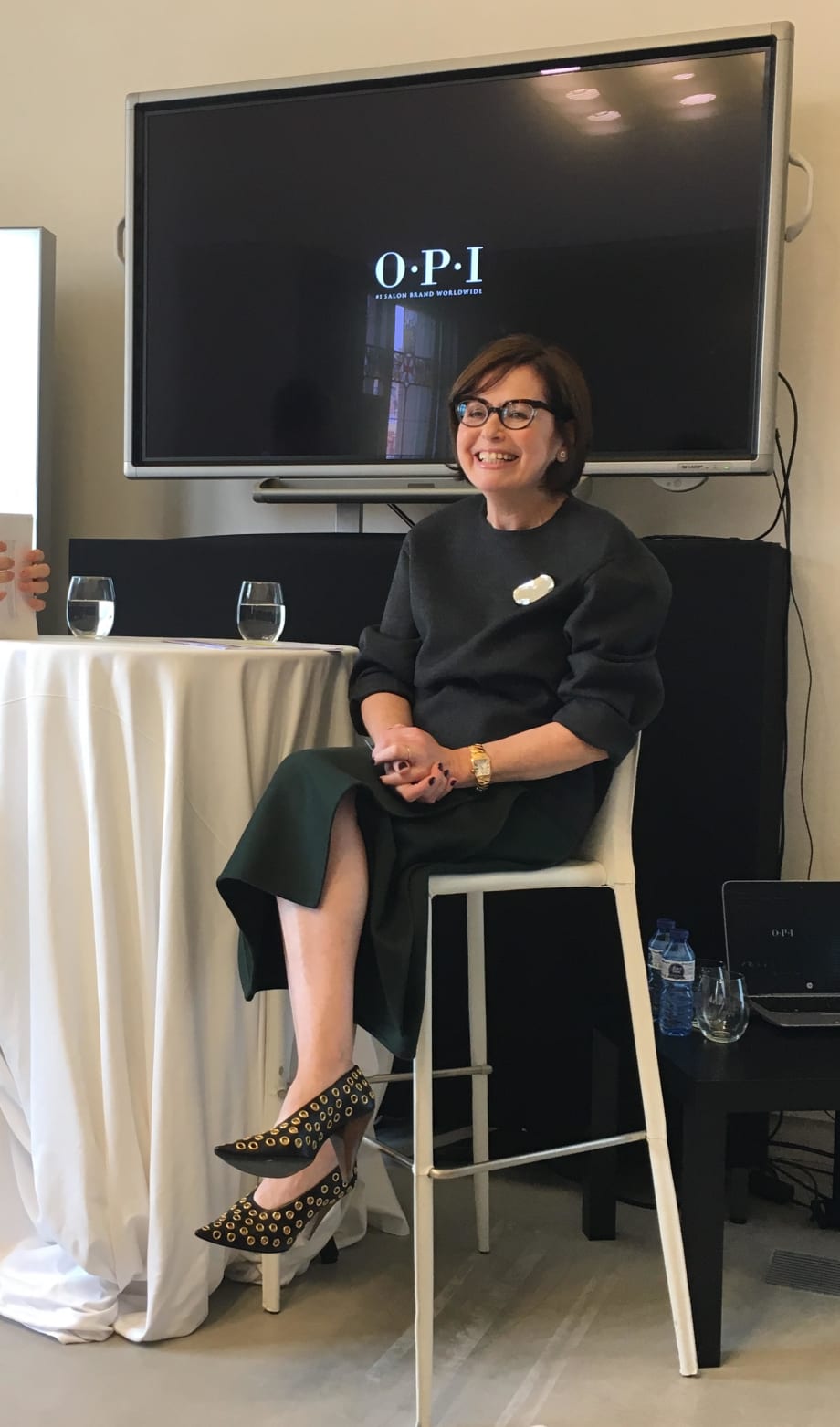
OPI’s Brand Beginnings: An Interview with The First Lady of Nails Suzi Weiss-Fischmann

The OPI success story began not as a professional nail care brand, but as a dental supply company. Realizing that dentures and artificial nail extensions share the same chemistry, OPI co-founder Suzi Weiss-Fischmann saw an opening in the market and ran with it.

Alison Alhamed
Alison AlhamedEditor in Chief, MODERN SALON
Read Alison's Posts
November 4, 2016
OPI’s Brand Beginnings: An Interview with The First Lady of Nails Suzi Weiss-Fischmann


3 min to read


 The OPI success story began not as a professional nail care brand, but as a dental supply company. Realizing that dentures and artificial nail extensions share the same chemistry, OPI co-founder Suzi Weiss-Fischmann saw an opening in the market and ran with it.

“We started by dropping off our Rubberband Special, which was a jar of powder, liquid and powder rubber-banded together,” says Hungary-raised Weiss-Fischmann, while at Wella Trend Vision 2016, which brought together the Coty professional beauty brands in Barcelona. “It was a huge hit, giving OPI its start in the professional nail industry, and eventually became the OPI traditional acrylic system.”

Ad Loading...

The original space for OPI (which actually stands for Odontorium Products Inc, thank you dental industry) was 1,200 sq feet where Weiss-Fischmann found herself doing it all: making the products, answering the phones, taking orders, packing boxes, shipping orders and sweeping floors.

“Work wasn’t glamorous but I learned so much about how the business works—it really helped me understand my employees and their roles in the years that follow,” she says.

When Weiss-Fischmann started exploring the world of nail lacquer, she felt that the category was missing the mark with women.

“It wasn’t personal or meeting the needs and desires of women,” Weiss-Fischmann says. “We needed quick beauty solutions and a spark of color that could lift spirits plus nails we could be proud of. As women we are employees, employers, managers of the home, spouses, mothers, caregivers of aging parents—and sometimes simultaneously. I have found myself juggling many of these roles and it’s with that understanding that OPI has been able to create products that resonate with women.”

When the brand launched, it debuted 30 shades with now-iconic names that women still talk about [editor’s note: our favorites include You Don’t Know Jacques and I’m Not Really a Waitress]. And many of those 30 shades are still popular today.

Ad Loading...

“Color serves as a visual cue that allows us to feel connected to the world around us,” she says.

“From biological reactions that ensure survival, like being able to tell when food is ripe, or seeing the seasons change—color influences our brainwaves and nervous system. OPI serves as a powerful communication tool that allows for self-expression from the colors I wear to the colors I surround myself with.

“Women empower themselves daily through the choices they make for themselves and their families. Color can be used to reflect personal style, preference and mood. Color cannot only change your look, but your outlook. OPI is more than the sum of its parts: our name, our logo, our iconic bottle and colorful content have become a messenger of beauty and inspiration.

Our customers love us because of our shared love of color.”

Originally posted on Modern Salon

Subscribe to Our Newsletter

More Salon Management

Paul Petrowsky, manager of Impressions

The Constant

Starting at Impressions front desk in 2006 when he was 19 years old, General Manager Paul Petrowsky is a seasoned professional who owner Sarah Taylor says is responsible for much of her own success.

Ad Loading...
Headshot of Sophie Galabru

How Women are Rewriting the Rules of Grey Hair

At a panel discussion hosted by L’Oréal Professionnel in Paris in early July, French Philosopher Sophie Galabru explored the cultural shift where women are increasingly choosing natural, personalized color results over traditional grey coverage. In an exclusive interview with SALON TODAY, Galabru and L’Oréal Professionnel Colorist Pierrick Beringer discuss this shift and how salons and colorists respond.

Ad Loading...
Cover of whitepaper

How AI Is Closing Revenue Gaps for Salons and Spas

The beauty and wellness businesses pulling ahead aren’t just working harder—they’re using AI to capture demand, personalize pricing, and convert more of every guest interaction into revenue. Here’s what the benchmark data reveals about the growing gap between AI adopters and everyone else.

Sponsored by Zenoti

copy of the whitepaper cover

The Premium Talent Magnet: The Modern Salon Playbook for Attracting Six-Figure Stylists

Stop chasing recruitment ghosts on generic job boards and start curating an elite team. Discover the framework that top-tier salons use to bypass phone tag, automate visual portfolio vetting, and attract high-earning, culture-first beauty professionals directly through real-time messaging. Turn your recruitment process into an exclusive brand invitation that keeps your highest-ticket chairs permanently filled.

Sponsored by Beautista

Cover of the whitepaper

Five Revenue Leaks Hiding in Your Salon

Your calendar looks full, but is all of that demand actually converting to revenue? From phantom rebookings to underpriced peak hours, the 2026 Benchmark Report exposes five revenue leaks that most beauty and wellness businesses don’t even know they have.

Sponsored by Zenoti

Nicki Wenz (above) and Allison Stock of Zandi K Salon

The Heartbeat of Zandi K's Success

After moving to Colorado and teaching at a cosmetology school, Allison Stock joined Zandi K as a stylist, eventually becoming part of the Leadership Team, Education Team and Master Bridal Team. Today, as Director of Operation, Stock is Owner Nicki Wenz's right hand, managing human resources and operations, education and career development, and coaching and culture.

Ad Loading...