




You Don't Own a Salon. You Own A Business.
In his latest blog, Leon Alexander Ph.D., challenges industry conventional thinking to help owners add more to their bottom lines.
 MENU
 SEARCH
Hiring promising new talent in today's competitive marketplace is one thing, keeping them is another. If you want a high-performing, loyal, future-proof team, you must design it, teach it, and measure it on purpose.


Onboarding is not bureaucracy. It is the creative act of shaping how your brand welcomes, trains, and unleashes talent every single time.
Bringing a new stylist onto your team should feel like fresh energy, fresh ideas, and a future leader in the making. Yet for many salons and spas, onboarding is where momentum dies off. Promising hires spend months sweeping, folding, and “helping out” while their skills stall, their confidence fades, and their enthusiasm finds the door next to you.
This isn’t a talent problem. It’s a plan problem.
Onboarding is leadership. If you want a high-performing, loyal, future-proof team, you must design it, teach it, and measure it on purpose.
Salons everywhere are wrestling with the same problem: recruiting and retention. But there’s a paradox we don’t talk about enough and that is, many salons say they’re hiring before they’re ready to employ. Ten years ago, you could train by allowing the new hire to soak in everything they’ll naturally be exposed to in your environment. Today’s workforce won’t accept that, and neither can your margins.
A new hire who isn’t learning and earning isn’t just costing you payroll; they’re costing you belief. Belief that joining your team means growth. Belief that your brand invests in people, not just stations. Belief that hairdressing is still a craft worth mastering.
Great onboarding restores that belieffor them and for you.
Imagine a salon owner interviewing a 19-year-old apprentice who arrived with her mom. After a year in the industry, the apprentice had done little more than sweep, fold towels, and load the dishwasher—no structured training, no clear path to the floor. At the end of the interview the mother asked, calmly and directly:
Do you have a written training program?
What will my daughter be able to do in 6 months? 12 months?
When will she start seeing her own clients?
What education and marketing support will you provide?
The owner felt offended until a business friend asked them: If it were your daughter, what would you expect?
Here’s the truth: those are not unreasonable questions. They are the minimum viable expectations of any serious professional pathway. If we can’t answer them, we’re not ready to hire.
Onboarding is not bureaucracy. It is the creative act of shaping how your brand welcomes, trains, and unleashes talent every single time.
Let’s “build the plane while flying” without crashing. Start with a lean framework you can implement this month and iterate quarterly.
0–30 Days: Orientation & Brand Experience
Goal: Belonging + brand standards
Welcome kit & day-one plan: Tools, logins, schedule, mentor assignment, education calendar.
Culture & standards: Your story, values, non-negotiables, and guest journey. Walk it, role-play it, model it.
Service experience training: Greeting, consultation flow, chair-side conversation, beverage service (and how to fix a “whoops”), retail handoff, rebooking close, gracious goodbyes.
Shadowing checklist: Front desk, dispensary, sanitation, backbar, photo station, social capture, content tagging.
Hands-on start: Models for shampoo/finish, treatments, blow-dry finishing; junior support on color applications with an educator nearby.
Benchmarks: Attendance, professionalism, guest etiquette, sanitation, and 100% mastery of the brand’s guest experience sequence.
31–90 Days: Technical Foundations & Early Productivity
Goal: Core skills + first column activity
Cutting fundamentals: Define the 6–8 shapes your salon must master before solo work (e.g., one-length, long layers, graduated bob, classic bob, short crop, men’s classic with taper, basic hair-up).
Color fundamentals: Regrowth application, global color, partial/half head foils, foundational balayage placement, toning theory.
Weekly assessments: Short, focused skill checks with pass/fail criteria and feedback same day.
Model nights & pricing: 1–2 weekly model sessions, tiered model pricing to normalize value.
Marketing support: Owner runs first “New Talent Spotlight” push—2-3 social posts, a short reel, email to guests, and 10 warm referrals from team.
Benchmarks: 50% of model cuts/colors meeting time and finish standards, 25–35% rebooking, baseline take-home conversation on every guest (yes, every guest).
91–180 Days: Build a Book & Broaden Capability
Goal: Controlled autonomy + brand consistency
Service menu unlocks: Add services as competencies are verified (e.g., full foil, corrective glossing, advanced blow-dry, basic hair-up for events).
Speed & finish: Time targets introduced; photo-worthy finish on all cuts/colors.
Guest development plan: Personalized “Top 20” list (friends, family, local micro-influencers, partner businesses); monthly offer crafted by marketing with the stylist’s story front-and-center.
Social rhythm: 3 posts/week minimum (1 before/after, 1 education tip, 1 lifestyle/personal brand), with in-salon content capture support.
Benchmarks: 50–60% utilization on available hours, 40%+ rebooking, consistent take-home dialogue with 12–15% take-home rate, 1 review per week.
181–365 Days: Specialization & Leadership Seeds
Goal: Confidence, consistency, and direction
Choose a lane: Curly, short hair, blonding, lived-in color, extensions, men’s modern, finishing/up-styles—pick one and build an annual learning plan.
Advanced modules: Color correction decision tree, texture theory, short-hair nuance, face-framing + suitability consultations.
Peer mentorship: New talent assists a newer teammate on one training night per month; learning compounds when we teach.
Performance conversation: A formal review at 6 and 12 months—data plus dreams. Set next year’s targets and education roadmap.
Benchmarks: 70%+ utilization, 50%+ rebooking, rising average service ticket, rising frequency of visit, sustained take-home rate, and a track record of five-star reviews.
Owners, it’s imperative to define your brand standards first. Not to create clones, but to ensure a consistent baseline every guest can count on. Think of Starbucks or Apple—every experience is personal, yet unmistakably theirs.
Document these minimums:
Arrival & greeting (name usage, eye contact, tone)
Consultation structure (lifestyle, hair history, suitability, maintenance, budget)
Expectation setting (today’s plan, time, cost, aftercare)
Chair-side rituals (beverage, scalp massage, cape & comfort checks)
Service transitions (to bowl, to photo station, to front desk)
Take-home dialogue (one care, one style—tailored to goals)
Rebooking language (recommendation by result, not by script)
Recovery steps (how to fix a slip with grace—no “whoops” and walk away)
Train it. Model it. Measure it. Celebrate it.
Consumers expect Level-3 outcomes from Day-1 stylists. That doesn’t mean lowering your standards; it means raising clarity. Decide which cutting and color competencies matter for your clientele and organize them:
Cutting Readiness (examples)
One-length & blunt precision
Long layers with face-framing
Graduated bob & classic bob
Short crop with internal texture
Men’s classic with taper; modern scissor-over-comb
Basic finishing and iron work
Color Readiness (examples)
Regrowth & global color application
Partial/half-head foiling
Foundational balayage & blending
Toning theory and formulation
Grey coverage decision-making
Consultation & suitability for maintenance
Owners and mentors should observe, score, and debrief quickly--fast feedback builds fast skill.
New talent can’t “market their way” out of skill gaps, but they can fill a column faster with coordinated support. Build marketing into onboarding:
Launch week announcement: Meet-the-stylist post + a 30-second reel; link to “New Talent Collection” pricing.
Email & SMS: Invite existing guests to support your newest team member; include a simple offer and booking link.
Local partners: Gyms, boutiques, coffee shops—one intro together per week for 8 weeks.
Review engine: QR code at the chair; goal = 1 authentic review/week.
Content capture: Teach framing, lighting, and posing; schedule a 20-minute capture block on heavy color days so content doesn’t fight with service timing.
Remember that social media is a team sport. Provide templates, hooks, and content inspiration. Hold the standard without stifling their voice.
When you invite a new stylist or provider to join your team, you’re not offering a job, you’re offering a journey. The promise of growth is magnetic to today’s professionals, but it only sticks if the path is mapped, the teaching is consistent, and the standards are lived.
Onboarding isn’t paperwork. It’s culture in motion. It’s your brand made teachable. It’s leadership you can see.
Design it. Teach it. Measure it. Refine it. And watch new talent become the future of your salon and spa faster than you thought possible.
About The Author: Kati Whitledge is a trailblazer in salon and spa marketing. She’s the Founder and CEO of mya—a powerful client recruitment and marketing platform built specifically for beauty and wellness pros. As a dynamic speaker, podcast host, and author, Kati is on a mission to transform how salon and spa businesses grow.
Kati partners with top industry businesses to deliver smart, scalable solutions that improve retention, elevate client relationships, and drive profitability. Her no-fluff style, realness, and commitment to community make her a trusted voice and visionary leader in the industry.
Follow @mya and @beyondthetechnique on Instagram.
In his latest blog, Leon Alexander Ph.D., challenges industry conventional thinking to help owners add more to their bottom lines.
In her latest blog, Amy Pal helps you develop your own clear guidelines around complimentary free employee services.
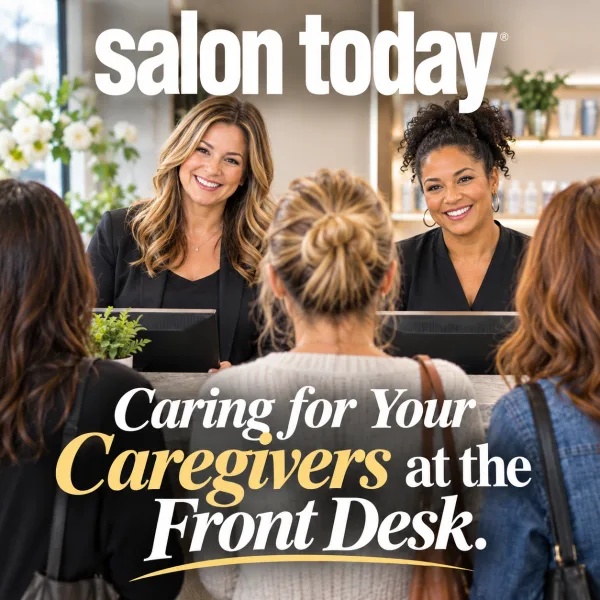
From managing air traffic on busy days to handling frustrated guests' complaints, your front desk team often serves as the salon's emotional shock absorber. From a customer service lesson from the DMV to a list of strategies for caring for your front line, our experts offer ideas for alleviating stress, celebrating wins, and setting goals.

According to the KIM Report, top-line salon revenue appears steady or slightly up, but that growth is driven primarily by service price increases. Beneath the surface, retail performance and client visit frequency (appointment drift) are under real pressure. In his latest blog, Alain Audet offers strategies for keeping your salon's retail sales strong.

Putting your family to work in the salon offers some real tax benefits, but you have you have to play by the rules of the tax code to claim them. Azarvand Tax Law's Leticia Skrabut, Esq., shows you how.

Discover how to create a true “WOW experience” for every client by first building a culture where your team feels engaged, empowered, and inspired. Drawing on Calvin Stovall’s Iconic Framework, this blog explores how salon, spa, and clinic leaders can strengthen culture, elevate customer experience, and build a business that stands out for the long term.
Sponsored by Phorest Salon Software
The wellness industry is growing fast, and salons and barbershops already are an important part of it. In her first blog, Tracy Rado shares where the wellness dollars are heading, and how salons can grow with this movement.

While salon sales are increasing, owners often feel they're working harder for the same or less profit. Leverage Q2 data from The KIM Report, Alain Audet reveals some of the structural changes that are dampening your growth and why your region and your salon size matters.
Weaknesses in your business are amplified during the Holiday Season. Spark Pro Global's Lucy Randall shows you five things to do now to have the strongest holiday season yet.

In Kati Whitledge's latest blog, she shares how salons have moved away from dress codes and embraced appearance standards. But by removing strict dress codes, some businesses may have unintentionally lowered their appearance standards. Whitledge helps you explain to your team why an appearance standard is important and how to smoothly implement a new appearance policy.

The Small Business Health Care Tax Credit is a non-refundable tax credit for for-profit businesses that provides a financial incentive for eligible employers who offer health insurance coverage to their employees. Leticia Skrabut, Esq., walks you through how to claim that credit.

Developing strong work habits early in one's career supports long-term success in the salon industry. Jesse Linares offers new stylists his top five tips.

Most salon owners have no idea what these numbers are. You can hit record sales and still have a profit problem. The difference comes down to four numbers almost nobody was taught to track.
Sponsored by Strata Salon Systems™

A five-area audit every owner-dependent salon needs to run. You built something that looks successful. Now find out if it can survive without you.
Sponsored by Strata Salon Systems™

Every month you put off fixing the problem, it gets bigger, more expensive, and harder to solve.
Sponsored by Strata Salon Systems™
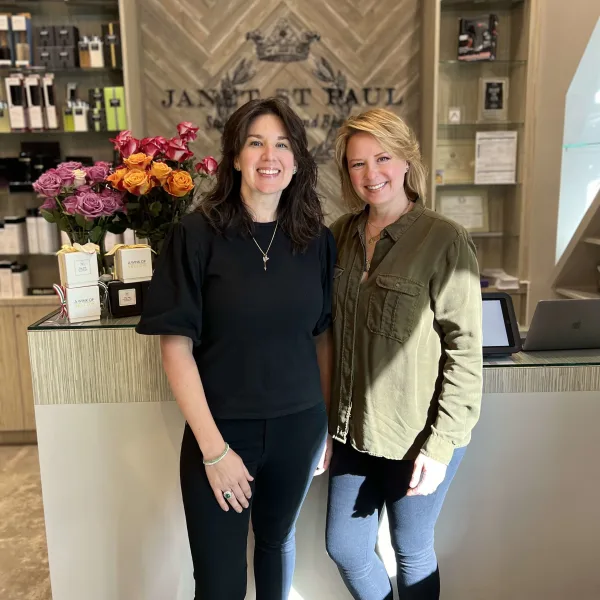
At Janet St. Paul Studio for Hair and Beauty, Director of Operations Natasha McMillen helps bring her wife Janet St. Paul's vision to life, elevating every system from education to operations.

Expand your color service menu with the Pinstripe technique. Brooks and Brooks' Marlon Hawkins walks you through the technique.