





You Don't Own a Salon. You Own A Business.
In his latest blog, Leon Alexander Ph.D., challenges industry conventional thinking to help owners add more to their bottom lines.
 MENU
 SEARCH
As legislation about non-compete agreements heats up and a possible ban looms, InfinitiHR's Eva Dupont looks at the difference between non-compete agreements and non-solicitation agreements and how to protect your business.

Over the years, working closely with salon owners, I’ve witnessed firsthand the challenges and frustrations when a key stylist decides to branch out on their own. For instance, a thriving salon I work with faced a significant setback when their top stylist left to open her own establishment just a few blocks away. Almost overnight, a substantial portion of the clientele followed her, drawn by personal loyalty and enticing offers. This situation not only impacted the salon’s revenue but also its morale. Such experiences underscore the critical need for protective measures within the industry.
Important Update on Non-Compete Agreements: It's crucial for salon owners to note that unless any of the legal challenges to the non-compete ban are successful, the ban on these agreements will become effective on September 4, 2024. This means that employers, including salon owners, will need to retract existing non-compete agreements. Understanding this change and preparing for it now is essential for ensuring compliance and adjusting your business strategies accordingly.
As a salon owner, safeguarding your business's unique clientele and talented staff is paramount. Two legal tools commonly used to protect these assets are non-solicitation and non-compete agreements. While they might seem similar, they serve distinct purposes and offer different types of protection. Understanding the differences between these agreements is essential for effectively securing your salon’s interests.
Non-Compete AgreementsDefinition: A non-compete agreement prevents an employee from working for a competitor or starting a competing business within a certain geographic area and for a specified period after leaving your salon.
Purpose: The primary goal of a non-compete agreement is to protect your salon from direct competition. By restricting former employees from joining or establishing rival salons nearby, you mitigate the risk of losing clients to a competitor.
Advantages:
Reduces direct competition: Limits the chances of a former employee starting a competing salon or joining an existing competitor.
Protects trade secrets: Safeguards proprietary techniques, business strategies, and confidential information.
Maintains market share: Helps in retaining a significant share of the local market by limiting competition.
Challenges:
Enforceability: Courts often scrutinize non-compete agreements for reasonableness in terms of duration, geographic scope, and necessity. Overly restrictive clauses may not hold up in court.
Employee Relations: Potential employees might view non-compete agreements as a barrier, affecting recruitment and employee morale.
It’s important to mention that several states already prohibit non-competes or limit their use, typically to high-wage earners. This makes it crucial to understand the specific regulations in your state to ensure compliance and effectiveness of your agreements.
Non-Solicitation AgreementsDefinition: A non-solicitation agreement restricts a former employee from soliciting or contacting your clients or staff for business purposes after leaving your salon.
Purpose: This agreement aims to protect your client base and workforce from being poached by former employees. It ensures that your former stylists or other staff members cannot entice your clients to follow them to a new salon or persuade current employees to leave.
Advantages:
Client Retention: Ensures that your loyal clients remain with your salon, even if their preferred stylist leaves.
Staff Stability: Prevents former employees from recruiting your current staff, maintaining team cohesion and stability.
Easier Enforcement: Generally considered more enforceable than non-compete agreements because they are less restrictive.
Challenges:
Limited Scope: Unlike non-compete agreements, non-solicitation agreements do not prevent former employees from working for competitors or starting their own business.
Proof of Violation: You need clear evidence that a former employee has solicited your clients or staff, which can sometimes be challenging to obtain.
Choosing the Right Agreement for Your Salon When deciding between a non-compete and a non-solicitation agreement, consider your salon’s specific needs and goals. If your primary concern is preventing direct competition, a well-drafted non-compete agreement might be the best option. However, if maintaining your client base and staff integrity is your main priority, a non-solicitation agreement may provide sufficient protection without overly restricting your former employees’ future opportunities.
Crafting Effective Agreements To ensure that your non-compete or non-solicitation agreements are enforceable and tailored to your salon’s needs, consider the following tips:
Consult Legal Experts: Work with an attorney who specializes in employment law to draft agreements that comply with state laws and industry standards.
Be Reasonable: Ensure that the terms of the agreements are reasonable in duration, geographic scope, and necessity to protect legitimate business interests.
Communicate Clearly: Clearly explain the terms of these agreements to your employees before they sign, ensuring they understand the restrictions and their implications.
Conclusion Both non-solicitation and non-compete agreements play crucial roles in protecting your salon’s interests. By understanding the distinctions and strategically implementing these agreements, you can safeguard your client base, retain your talented staff, and maintain your salon’s competitive edge.
About the Author: Eva Dupont, who has more than 16 years of experience in business management and HR, continues to guide salon owners toward thriving, employee-friendly environments through InfinitiHR, a company that helps small businesses manage complex, HR-related services, such as payroll, health benefits, workmans' comp claims, employee relations and human resource outsourcing. Stay tuned to SALON TODAY for more insights on becoming the top choice for both clients and employees.
In his latest blog, Leon Alexander Ph.D., challenges industry conventional thinking to help owners add more to their bottom lines.

In her latest blog, Amy Pal helps you develop your own clear guidelines around complimentary free employee services.
From managing air traffic on busy days to handling frustrated guests' complaints, your front desk team often serves as the salon's emotional shock absorber. From a customer service lesson from the DMV to a list of strategies for caring for your front line, our experts offer ideas for alleviating stress, celebrating wins, and setting goals.

According to the KIM Report, top-line salon revenue appears steady or slightly up, but that growth is driven primarily by service price increases. Beneath the surface, retail performance and client visit frequency (appointment drift) are under real pressure. In his latest blog, Alain Audet offers strategies for keeping your salon's retail sales strong.

Putting your family to work in the salon offers some real tax benefits, but you have you have to play by the rules of the tax code to claim them. Azarvand Tax Law's Leticia Skrabut, Esq., shows you how.

Discover how to create a true “WOW experience” for every client by first building a culture where your team feels engaged, empowered, and inspired. Drawing on Calvin Stovall’s Iconic Framework, this blog explores how salon, spa, and clinic leaders can strengthen culture, elevate customer experience, and build a business that stands out for the long term.
Sponsored by Phorest Salon Software

The wellness industry is growing fast, and salons and barbershops already are an important part of it. In her first blog, Tracy Rado shares where the wellness dollars are heading, and how salons can grow with this movement.

While salon sales are increasing, owners often feel they're working harder for the same or less profit. Leverage Q2 data from The KIM Report, Alain Audet reveals some of the structural changes that are dampening your growth and why your region and your salon size matters.

Weaknesses in your business are amplified during the Holiday Season. Spark Pro Global's Lucy Randall shows you five things to do now to have the strongest holiday season yet.

In Kati Whitledge's latest blog, she shares how salons have moved away from dress codes and embraced appearance standards. But by removing strict dress codes, some businesses may have unintentionally lowered their appearance standards. Whitledge helps you explain to your team why an appearance standard is important and how to smoothly implement a new appearance policy.

The Small Business Health Care Tax Credit is a non-refundable tax credit for for-profit businesses that provides a financial incentive for eligible employers who offer health insurance coverage to their employees. Leticia Skrabut, Esq., walks you through how to claim that credit.

Developing strong work habits early in one's career supports long-term success in the salon industry. Jesse Linares offers new stylists his top five tips.

Most salon owners have no idea what these numbers are. You can hit record sales and still have a profit problem. The difference comes down to four numbers almost nobody was taught to track.
Sponsored by Strata Salon Systems™

A five-area audit every owner-dependent salon needs to run. You built something that looks successful. Now find out if it can survive without you.
Sponsored by Strata Salon Systems™

Every month you put off fixing the problem, it gets bigger, more expensive, and harder to solve.
Sponsored by Strata Salon Systems™
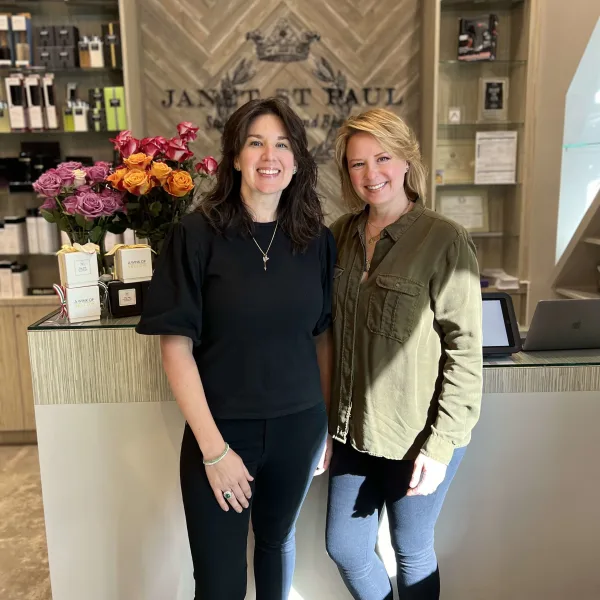
At Janet St. Paul Studio for Hair and Beauty, Director of Operations Natasha McMillen helps bring her wife Janet St. Paul's vision to life, elevating every system from education to operations.

Expand your color service menu with the Pinstripe technique. Brooks and Brooks' Marlon Hawkins walks you through the technique.