Milady has been the #1 provider of beauty and wellness education for the past 85 years. But did you know Milady also provides business education for licensed stylists, salon owners and salon managers?
Milady has been the #1 provider of beauty and wellness education for the past 85 years. But did you know Milady also provides business education for licensed stylists, salon owners and salon managers? We offer online business coaching courses to help you boost profitability, improve soft skills, and train your staff. But that’s not all—we have been working hard to unveil our newest creation, the Milady Education Network, an online community and education hub for all your business needs.
Ad Loading...
WHY WE’RE DIFFERENT: In order to have career longevity you must continue your education after first entering this industry. We’re fortunate to be able to provide helpful and relevant education each and every day to ensure success for all those who are striving for it.
HOW WE WORK: Simply put, our goal is to bring education to you at an affordable price. Created by industry coaches and professionals who understand the needs of stylists and salon owners, our online courses equip the individual with systems and solutions to solve everyday challenges. We are pleased to bring the business acumen needed for success and profitability in a brand new online course, “Business Principles and Practices for the Salon and Spa.” We’re also launching “Front Desk Training for the Salon and Spa,” as well as “Branding Strategies for the Salon and Spa,” to name a few.
CATCH US AT: Online at miladyednet.com
WORDS OF WISDOM: Milady Professional Development Manager Steve Gomez shares this: “Create ‘Reflection Time!’ As a business leader, nothing is more important than you giving your business and all of its nuances and complexities the time and attention it needs from you. Block out at least three hours each week where you can be uninterrupted. With this time, reflect on sales, marketing, operations, finance and, your team. Get out of the daily grind, think larger and long term. Your business and our team are counting on it.”
BETTER BOTTOM LINE IN 2013: Gomez suggests a price increase: “Mark it up! Analyze your retail inventory. Look for what SKUs or items are not moving and create a 30- to 60- day plan to turn them around. While you are working on underperforming products, take your top 10 sellers and mark them up 10 percent. This increase will be minimal in terms of dollars and cents and will have little notice from your clients. This slight increase may increase your sales by 50 to 75 cents an item. However, when you add that amount into your overall sales volume, you will increase sales to cover the amount you have been spending on slow movers, giving you the cushion you need to make the right decisions with regard to keeping certain products on your shelves.”
Are one of your traditional, handed-down salon management practices actually breaking the law. The pros from Paragon HR Consulting walk you through seven common Human Resources mistakes that could land you in hot water.
All beauty professionals should know how to identify when a client may need some health guidance. Tracy Rado discusses some common questions that clients ask in the chair, how to advise them, and when to refer them to a specialist.
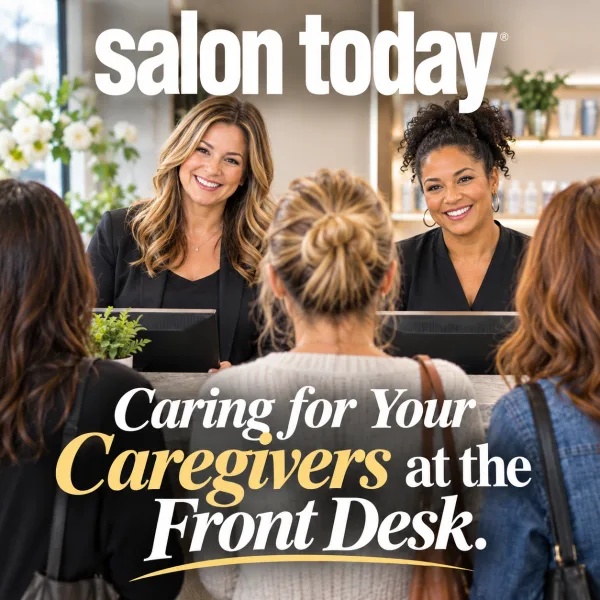
From managing air traffic on busy days to handling frustrated guests' complaints, your front desk team often serves as the salon's emotional shock absorber. From a customer service lesson from the DMV to a list of strategies for caring for your front line, our experts offer ideas for alleviating stress, celebrating wins, and setting goals.
According to the KIM Report, top-line salon revenue appears steady or slightly up, but that growth is driven primarily by service price increases. Beneath the surface, retail performance and client visit frequency (appointment drift) are under real pressure. In his latest blog, Alain Audet offers strategies for keeping your salon's retail sales strong.
Putting your family to work in the salon offers some real tax benefits, but you have you have to play by the rules of the tax code to claim them. Azarvand Tax Law's Leticia Skrabut, Esq., shows you how.
Discover how to create a true “WOW experience” for every client by first building a culture where your team feels engaged, empowered, and inspired. Drawing on Calvin Stovall’s Iconic Framework, this blog explores how salon, spa, and clinic leaders can strengthen culture, elevate customer experience, and build a business that stands out for the long term.
The wellness industry is growing fast, and salons and barbershops already are an important part of it. In her first blog, Tracy Rado shares where the wellness dollars are heading, and how salons can grow with this movement.
While salon sales are increasing, owners often feel they're working harder for the same or less profit. Leverage Q2 data from The KIM Report, Alain Audet reveals some of the structural changes that are dampening your growth and why your region and your salon size matters.
Weaknesses in your business are amplified during the Holiday Season. Spark Pro Global's Lucy Randall shows you five things to do now to have the strongest holiday season yet.
In Kati Whitledge's latest blog, she shares how salons have moved away from dress codes and embraced appearance standards. But by removing strict dress codes, some businesses may have unintentionally lowered their appearance standards. Whitledge helps you explain to your team why an appearance standard is important and how to smoothly implement a new appearance policy.
The Small Business Health Care Tax Credit is a non-refundable tax credit for for-profit businesses that provides a financial incentive for eligible employers who offer health insurance coverage to their employees. Leticia Skrabut, Esq., walks you through how to claim that credit.
Developing strong work habits early in one's career supports long-term success in the salon industry. Jesse Linares offers new stylists his top five tips.
Most salon owners have no idea what these numbers are.
You can hit record sales and still have a profit problem. The difference comes down to four numbers almost nobody was taught to track.