






You Don't Own a Salon. You Own A Business.
In his latest blog, Leon Alexander Ph.D., challenges industry conventional thinking to help owners add more to their bottom lines.
 MENU
 SEARCH
According to Jesse Linares, any spare moment is an opportunity to learn. Share his tips with your team members during your next staff meeting, and add some suggestions of your own.

Jesse Linares suggests filling your 'down time' so your working time is more productive.
Whether you have a new stylist whose building her book or a busy salon veteran, each will encounter “down time”—time during which nothing is immediately required of them.
For many stylists, this time is often spent relaxing in the break room on our mobile devices until we are needed again, e.g., our next guest arrives, another stylist needs assistance, the laundry needs to be folded…
While moments of rest are necessary during any work shift, it’s important to get your team members to actively analyze how they spend their “down time” in the salon. Making productive use of this time not only makes individuals more valuable to our team—but it will also result in a more satisfying day. Offer these tips by Sam Villa ArTeam member Jesse Linares in your next staff meeting.
Arrive Early and Prepare for The Day
The benefits of getting to work 15-20 minutes prior to a shift cannot be overstated. Having time to see the salon schedule in advance allows us to identify down time—and plan for it.
No matter a stylist’s level or experience, it’s advisable to view down time as a chance to learn something. The little details of what we do at the chair are often overlooked, and much can be gained by observing a fellow stylist in their day-to-day routines. Which products to use for which texture hair, what brushes/tools to use and why, how to make retail recommendations, how they perform certain techniques, etc. These decisions are being made in the salon all day long! If we’re curious, all we must do is get involved.
Seeing the salon schedule in advance allows us to assess what needs stylists will have during their shifts. Pockets of down time may be obvious even before the day starts. If so, we could “schedule” ourselves to assist a teammate on the floor.
Many stylists are open to discussing their process with an interested person; it allows them to share their knowledge, and they look cool in front of their guest. Handing foils, shampooing, assisting with the blowout—these are ways we can closely observe and ask questions. Not only will we make a fellow stylist’s day run more smoothly for a little while, but we will gain knowledge in the process.
There are always a million things to be done in the salon. Stylists who experience cancellations could donate their unexpected down time by doing laundry or sweeping—thereby freeing up another stylist to have a learning experience with someone on the floor. If we wait until we are idle to take stock of how much down time we have available, it’s easy to let opportunities pass us by. Being prepared in advance will ensure we capitalize on these moments - instead of wasting them.
Stay in “Busy Mode”
Down time will happen. If we are idle too long, our energy and enthusiasm can bottom out, leaving us feeling unmotivated and even irritated at the prospect of getting back to the job. The best way to combat this is to stay in “Busy Mode”—keeping ourselves productive and occupied until the day is done.
It’s a mistake to think of our profession as “work” or “job.” With those words come perceptions of subjection, obligation, and burden. As hairdressers, our responsibilities expand far beyond the job description.
Our team functions best when each member joyfully contributes to the salon vision. Junior stylists endeavor to learn; senior stylists seek to share—we all serve the public, and we each do our part. And we all do laundry.
Keep in mind that every moment during our shift is an opportunity to contribute to the guest experience and to the culture of our salon. Preparing for down time, transforming it into “housekeeping time” or “class time” will keep us engaged and active, support the business, and encourage the team.
In his latest blog, Leon Alexander Ph.D., challenges industry conventional thinking to help owners add more to their bottom lines.
In her latest blog, Amy Pal helps you develop your own clear guidelines around complimentary free employee services.
From managing air traffic on busy days to handling frustrated guests' complaints, your front desk team often serves as the salon's emotional shock absorber. From a customer service lesson from the DMV to a list of strategies for caring for your front line, our experts offer ideas for alleviating stress, celebrating wins, and setting goals.

According to the KIM Report, top-line salon revenue appears steady or slightly up, but that growth is driven primarily by service price increases. Beneath the surface, retail performance and client visit frequency (appointment drift) are under real pressure. In his latest blog, Alain Audet offers strategies for keeping your salon's retail sales strong.

Putting your family to work in the salon offers some real tax benefits, but you have you have to play by the rules of the tax code to claim them. Azarvand Tax Law's Leticia Skrabut, Esq., shows you how.

Discover how to create a true “WOW experience” for every client by first building a culture where your team feels engaged, empowered, and inspired. Drawing on Calvin Stovall’s Iconic Framework, this blog explores how salon, spa, and clinic leaders can strengthen culture, elevate customer experience, and build a business that stands out for the long term.
Sponsored by Phorest Salon Software

The wellness industry is growing fast, and salons and barbershops already are an important part of it. In her first blog, Tracy Rado shares where the wellness dollars are heading, and how salons can grow with this movement.

While salon sales are increasing, owners often feel they're working harder for the same or less profit. Leverage Q2 data from The KIM Report, Alain Audet reveals some of the structural changes that are dampening your growth and why your region and your salon size matters.

Weaknesses in your business are amplified during the Holiday Season. Spark Pro Global's Lucy Randall shows you five things to do now to have the strongest holiday season yet.

In Kati Whitledge's latest blog, she shares how salons have moved away from dress codes and embraced appearance standards. But by removing strict dress codes, some businesses may have unintentionally lowered their appearance standards. Whitledge helps you explain to your team why an appearance standard is important and how to smoothly implement a new appearance policy.

The Small Business Health Care Tax Credit is a non-refundable tax credit for for-profit businesses that provides a financial incentive for eligible employers who offer health insurance coverage to their employees. Leticia Skrabut, Esq., walks you through how to claim that credit.

Developing strong work habits early in one's career supports long-term success in the salon industry. Jesse Linares offers new stylists his top five tips.

Most salon owners have no idea what these numbers are. You can hit record sales and still have a profit problem. The difference comes down to four numbers almost nobody was taught to track.
Sponsored by Strata Salon Systems™

A five-area audit every owner-dependent salon needs to run. You built something that looks successful. Now find out if it can survive without you.
Sponsored by Strata Salon Systems™

Every month you put off fixing the problem, it gets bigger, more expensive, and harder to solve.
Sponsored by Strata Salon Systems™
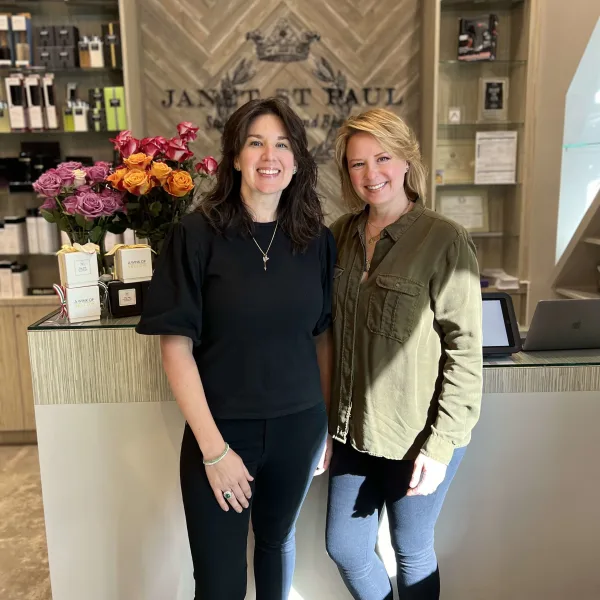
At Janet St. Paul Studio for Hair and Beauty, Director of Operations Natasha McMillen helps bring her wife Janet St. Paul's vision to life, elevating every system from education to operations.

Expand your color service menu with the Pinstripe technique. Brooks and Brooks' Marlon Hawkins walks you through the technique.