Managing Change in the Salon: Heath Smith of Ruiz Salons on Creating Systems That Work
Heath Smith, co-founder of Ruiz Salons in Austin, Texas, has experienced his fair share of salon change since going into business with Allen Ruiz in 1988. In the process, he's discovered a solid system for managing it.
April 6, 2022
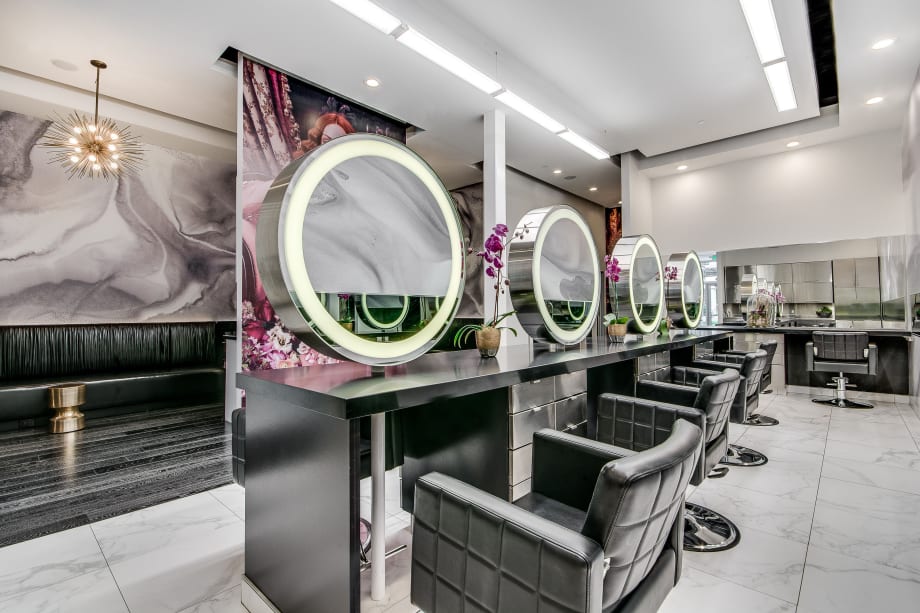
Ruiz Salons: Color Gallery
In partnership with
7 min to read
Heath Smith, co-founder of Ruiz Salons in Austin, Texas, has experienced his fair share of salon change since going into business with Allen Ruiz in 1988. In the process, he's discovered a solid system for managing it.
"What did Vidal Sassoon say—an overnight success takes 15 years?" Smith says. "We've found that anything we roll out to our team actually takes about six months to really entrench into our culture, no matter how simple or complex the change is."
Ad Loading...
Whether launching new services, a new education program or new technology, the path to success is fundamentally the same, he explains. With about 40 active service professionals at two Ruiz Salons, plus another 8-10 stylists-in-training at any time, the critical factors, he says, "are communication and collaboration, over and over, clearly, and at very specific intervals."
"As a salon owner and leader, I've found that the initiatives that fail are the ones where we didn't do the early communication work," Smith says. "In those situations, the salon team feels like the changes management wants to make are coming at them like a Mack truck."
Heath Smith, co-founder of Ruiz Salons in Austin, Texas.
Three Steps to Success
To keep the change-vibe positive and moving forward, Smith and the Ruiz Salons leadership team follow a model first introduced by psychologist Bruce Tuckman in the 1960s, based on "forming, storming and norming."
"The idea is that if you can get ahead of the change you're trying to introduce and work backwards, you'll get your team enrolled," he explains.
Phase 1—Forming. This is where you're introducing change and start talking about it, explaining what we're trying to do and why. "We spell out the details and benefits clearly to all stakeholders—the guests, the team, the business leadership. If we don't nail it here, in the forming phase, the entire process will shut down," Smith says. Be patient, purposeful and persistent, and the positive results and profits you planned for will happen.
Phase 2—Storming. This is the phase where the team is really feeling it, the disruption of learning and putting a new system in play. "The clouds are roiling, then comes the rain and thunder. I love this analogy of feeling the wind and the storm pushing us," Smith says. "As leaders we have to go back in and redirect, coach, nurture and keep the focus on the why through any chaos or resistance." To get through storming requires constant, positive engagement with the team, to identify problems and solve them. It's a lot of work but gets you to the payoff.
Phase 3—Norming. The sun's coming back out, the birds are tweeting, the storm has subsided. Make it this far, usually at about six months, and no one even remembers when we did things the other way, Smith says. "Norming happens when the new system is running smoothly enough that you can loop back around, refine, adjust and really button up the changes to ensure you've built a sustainable new system."
Ad Loading...
The team at Ruiz Salons has successfully navigated through these three phases repeatedly.
"This model keeps me sane," Smith admits. "It's easy as a salon leader to get discouraged when you're in the middle of a big change and everyone is pointing out all the problems. But if you know what phase is coming next—forming, storming or norming—you can prepare.”
"We're going to go through all three of those cycles, but it's up to us how gracefully we get through them," Smith tells his leadership team.
Good Habits, Finding Profits
One of Smith's favorite outcomes that evolved out of a norming process came after Ruiz Salons beta-tested the Vish color management system in 2016. From day one, as an owner, Smith embraced the vision and possibilities the innovation offered. He appreciated how easy Vish made it for the team to understand, adopt and “norm” the new process—and see even more ways to grow.
"Vish had tips and resources to help us establish the easy habit of color management for our team,” he says. “And it opened our eyes to other ways we could use the process to be even more efficient and profitable," he says.
Ad Loading...
Thanks to the Vish onboarding program, the system was quickly being used automatically and as intended. Then, Smith found, he had the creative space to ask and think, ‘what if?’
"We'd right-sized our color formulas and right-priced our color services, sure, but we’d still left some very high-level treatments—$100 bottles—as a free-for-all on the backbar," Smith explains.
Smith and team realized they could simply add all the treatment and smoothing inventories to their existing system.
"We just went back to the Vish onboarding system and our service menu, and said, 'okay, these are the services with products we want to measure consistently.'” So simple. And beneficial to the bottom line.
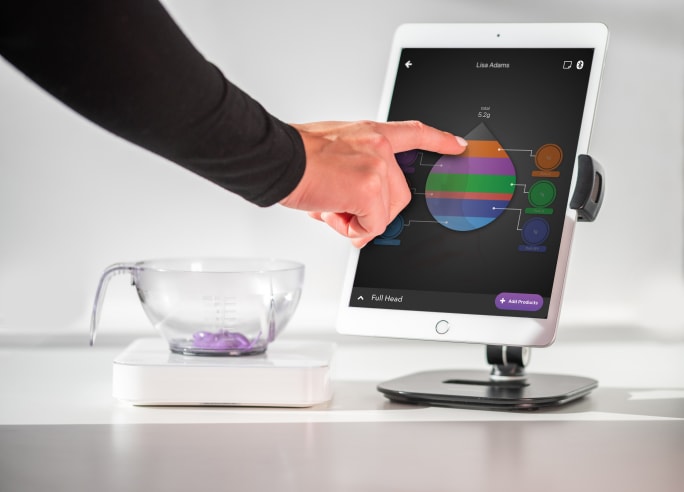
Ruiz Salons now use Vish exclusively as its scale system. "We are a specialized salon, and our colorists are interacting with the Vish scale non-stop through the day, with every appointment," Smith says. "And our non-color technicians interact with it when applying treatments. We also use it now for any of our smoothing systems, really any product application that can—or should— be weighed. It's automatic, a habit."
Ad Loading...
"The system is wonderful for treatments like the ones we offer as an Aveda salon but would also work well if you use Kerastase or really any specialized treatments at the shampoo bowl or chair," Smith adds. "We love it for the Olaplex system. Quite honestly, it's great for any of the more expensive products our professionals apply for clients."
Maintaining a Positive Salon Vibe Through Change
As a former salon owner himself and through his ongoing work with Smith and other salon customers, Vish Chief Innovation Officer Tim Howard sees how enthusiastic salon business leaders can get about change and new systems. He also knows first-hand that many need extra support and resources to keep their staff engaged, so a new program can succeed.
Vish Chief Innovation Officer Tim Howard
"Anything new is going to take time to implement," he says, “Building in a realistic timeline has to be part of the onboarding strategy, no matter what you're investing in for your team." Fortunately, Vish provides that extra support, practical advice, and guidelines.
To recap, whether it's a new hair color technique, new foils, or new software:
Have a plan that involves your team (and any support your partner brand offers)
Communicate the plan to your team
Collaborate on the plan
Repeat as needed
Ad Loading...
"At Vish, we have a whole system built on the understanding that all changes can be challenging, and we leverage our expertise to help streamline and focus the process to be simple, easy and immediately rewarding,” Howard says. "We dive deep with our salons to ensure everyone gets the support they need to help manage any questions or push-back. In our experience, the three-month mark is where you hit your stride and the team can see the increase in revenue and return on effort."
"At six months, the impact is even greater and more apparent," he adds. “Vish analytics and our milestone coaching sessions help you and your team uncover even more efficiencies and profits.”
Howard and Smith agree that one of the best ways to initiate big changes in salon processes is to identify the right stylists or team members to help lead it.
"Change that your team participates in is change they will support," Smith says. "You know your team. You know who will be best, most efficient, most excited and responsible about rolling out a change."
In some cases, senior artists or leaders make the most sense or have the experience and skills. In other scenarios, junior stylists are eager to prove themselves, or can be best suited to embrace something new, like technology. Think about who has the most influence and who will use it most productively.
Ad Loading...
"When we soft-launched Vish, we started with senior and master colorists only," recalls Smith. "They were trained and were the only ones who had access codes to use on the new scales and iPad. The rest of team became curious, watching. A month later, we introduced our intermediates and ultimately our juniors."
Smith had a few different objectives with this strategy, including fostering culture and leveraging leadership, but the main point was to keep everyone—especially the juniors—running on time through the "storming" phase.
“By the time they were using the scales, if they were struggling at all, there was always a more senior artist who could look over their shoulder and say, 'oh, just hit that button.'"
Ultimately, Smith says, taking good care of the team is always his mission, and that's always what drives any change he envisions for the salon business.
"We are partners. Having a great work environment, culture and morale go hand-in-hand with profitability and success. I can't generate growth, profit or even my own salary unless my clients have great experiences, and our team members have great careers.
Ad Loading...
“They have to have the success first. If I can help them embrace change to do that well, then growth will come.”
To learn more about creating the perfect system in your salon, click here.
Discover how to create a true “WOW experience” for every client by first building a culture where your team feels engaged, empowered, and inspired. Drawing on Calvin Stovall’s Iconic Framework, this blog explores how salon, spa, and clinic leaders can strengthen culture, elevate customer experience, and build a business that stands out for the long term.
The wellness industry is growing fast, and salons and barbershops already are an important part of it. In her first blog, Tracy Rado shares where the wellness dollars are heading, and how salon's can grow with this movement.
While salon sales are increasing, owners often feel they're working harder for the same or less profit. Leverage Q2 data from The KIM Report, Alain Audet reveals some of the structural changes that are dampening your growth and why your region and your salon size matters.
Weaknesses in your business are amplified during the Holiday Season. Spark Pro Global's Lucy Randall shows you five things to do now to have the strongest holiday season yet.
In Kati Whitledge's latest blog, she shares how salons have moved away from dress codes and embraced appearance standards. But by removing strict dress codes, some businesses may have unintentionally lowered their appearance standards. Whitledge helps you explain to your team why an appearance standard is important and how to smoothly implement a new appearance policy.
The Small Business Health Care Tax Credit is a non-refundable tax credit for for-profit businesses that provides a financial incentive for eligible employers who offer health insurance coverage to their employees. Leticia Skrabut, Esq., walks you through how to claim that credit.
Developing strong work habits early in one's career supports long-term success in the salon industry. Jesse Linares offers new stylists his top five tips.
Most salon owners have no idea what these numbers are.
You can hit record sales and still have a profit problem. The difference comes down to four numbers almost nobody was taught to track.
At Janet St. Paul Studio for Hair and Beauty, Director of Operations Natasha McMillen helps bring her wife Janet St. Paul's vision to life, elevating every system from education to operations.
The strongest salons, spas, and med spas know which numbers tell the real story of their business. In this practical guide, Phorest breaks down the five essential KPIs every business should track to improve retention, boost revenue, and make smarter decisions with confidence.
At Bella Style Salon in Slidell, Louisiana, Director of Operations Angela Meyer tackles inventory, team management, and guest relations. Read all about her in our latest Meet the Manager.
Starting at Impressions front desk in 2006 when he was 19 years old, General Manager Paul Petrowsky is a seasoned professional who owner Sarah Taylor says is responsible for much of her own success.
Planning is in full swing for the most anticipated events and promotions for the 2026 holidays. As owners share their favorite ways to celebrate, they prove that a carefully planned event can also build culture, increase client loyalty, boost sales, and set a business up for a successful 2027.
When things run amok at Mane Attraction Salon, Owners Chris and Jenny Knudsen say General Manager Sami Hernandez is their go-to resource and ultimate sounding board. Meet Sami in this installment of Meet the Manager.