








You Don't Own a Salon. You Own A Business.
In his latest blog, Leon Alexander Ph.D., challenges industry conventional thinking to help owners add more to their bottom lines.
 MENU
MENU SEARCH
While today’s salons stretch themselves to recruit and retain top talent, some key management practices with current staff members may help on both fronts.

At a recent conference I attended, the attendees were buzzing about the number one problem in the salon industry—a shortage of stylists. I listened as a CEO of a very large organization explained the reason for this shortage is a combination of: 1) For-profit schools and cosmetology schools have been defunded, so fewer students are attending; 2) The aging baby boomers have not been replaced by enough workers; and 3) The economy is so good that we’re at full employment. These are all valid points and realities.
Later the same night, I spoke to a salon owner who dejectedly told me he couldn’t compete with his larger competitor because “they had more resources, including a full-time recruiter and HR professional.”
By the end of the night I wondered how anybody made it in the beauty industry. Is there really a shortage of staff? Is all lost?
The truth is there are more stylists available to work for you than you could ever hire – they just work for someone else. And guess what? Many are just one bad day away from leaving their current salon. I’m not suggesting you go on a raiding spree, but if the large competitor mentioned above was such a good organization, why do they need a full-time recruiter? They have one because their staff keeps leaving and they need constant replenishment.
In his book The Truth about Employee Engagement, Author Patrick Lencioni describes job misery as the combination of anonymity (not being understood and appreciated by someone in a position of authority), irrelevance (everyone needs to know that their job matters, to someone), and immeasurement (not being able to gauge their progress and level of contribution).
Workforce expectations are changing, and the change has a lot to do public praise and timeliness versus raises and bonuses. Simply put, your staff wants to know what is expected (measured) and then they want to be noticed and appreciated – and quickly, because of the prevalence of social media, they are eager to share the good news. When they accomplish the goal, they want to hear from leadership that they notice the achievement, immediately. The annual review no longer cuts it.
There’s also been a pivot in reputation management. Most people think of reputation management (Yelp reviews, customer satisfaction comments) as something reserved for customers. However, those same principals apply to attracting and retaining a great workforce. In today’s world, potential employees check a salon’s web presence and where the business appears in search.
One of the speakers at the upcoming Data Driven Salon Summit is Stefanie Jackson, a bright, energetic thought leader who speaks about what she calls the “epidemic of mass comparison.” It’s the pressure people feel because they are constantly comparing their lives through the lens of social media. That doesn’t sound so good, but organizations can take the cue and use social media to demonstrate kindness, recognition and appreciation for their staff.
Today’s employers should blend social media with employee recognition. So how does that convergence happen? Recently, we coordinated a nationwide contest for a chain of salons where employees received a raffle ticket each day they “hit” a target. For example, if they sold a unit of retail, they got a raffle ticket into the grand prize drawing. Once a week we conducted a Facebook live interview of the stylist who had the most raffle tickets for that week. Almost without exception, the stylist’s immediate family, friends and co-workers shared, commented or reposted the accomplishment. Measurable, relevant, public – and fast.
While I agree it’s as challenging as ever to attract and retain employees, I am confident success will follow those organizations who set clear targets and focus on “catching” their staff hitting those targets. They’re also building a great reputation as <I>the place to work<I> and word travels – especially on social media!
While at the conference, I played in a golf tournament. The course was in the desert, and it wasn’t long before my cart partner and I were thirsty. We only saw one water station along the course, and we were so thirsty we washed out the nasty coffee cup we had from earlier in the morning and shared water out of the cup. We were impressed that the two other players in our foursome had planned ahead, and we jealously watched as they drank out of their water bottles. As we finished the day, my partner was laughing. I was parched, then stunned as he lifted the cover of the small cooler we both somehow overlooked. In the cooler? You guessed it, ice cold water bottles—right under our noses the entire time - just like your available talent pool. Think about it.
Chris Nedza is the founder of ZeeZor, a real-time data analytics and employee engagement app for salons and spas. Visit zeezor.net.
In his latest blog, Leon Alexander Ph.D., challenges industry conventional thinking to help owners add more to their bottom lines.

In her latest blog, Amy Pal helps you develop your own clear guidelines around complimentary free employee services.
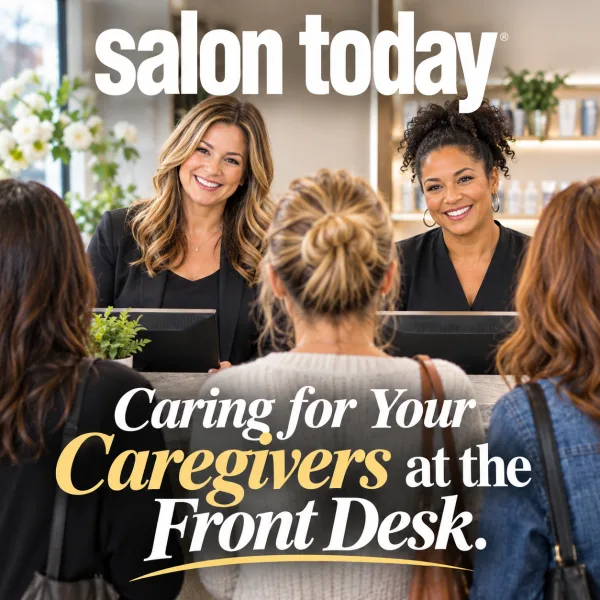
From managing air traffic on busy days to handling frustrated guests' complaints, your front desk team often serves as the salon's emotional shock absorber. From a customer service lesson from the DMV to a list of strategies for caring for your front line, our experts offer ideas for alleviating stress, celebrating wins, and setting goals.

According to the KIM Report, top-line salon revenue appears steady or slightly up, but that growth is driven primarily by service price increases. Beneath the surface, retail performance and client visit frequency (appointment drift) are under real pressure. In his latest blog, Alain Audet offers strategies for keeping your salon's retail sales strong.

Putting your family to work in the salon offers some real tax benefits, but you have you have to play by the rules of the tax code to claim them. Azarvand Tax Law's Leticia Skrabut, Esq., shows you how.

Discover how to create a true “WOW experience” for every client by first building a culture where your team feels engaged, empowered, and inspired. Drawing on Calvin Stovall’s Iconic Framework, this blog explores how salon, spa, and clinic leaders can strengthen culture, elevate customer experience, and build a business that stands out for the long term.
Sponsored by Phorest Salon Software

The wellness industry is growing fast, and salons and barbershops already are an important part of it. In her first blog, Tracy Rado shares where the wellness dollars are heading, and how salons can grow with this movement.

While salon sales are increasing, owners often feel they're working harder for the same or less profit. Leverage Q2 data from The KIM Report, Alain Audet reveals some of the structural changes that are dampening your growth and why your region and your salon size matters.

Weaknesses in your business are amplified during the Holiday Season. Spark Pro Global's Lucy Randall shows you five things to do now to have the strongest holiday season yet.

In Kati Whitledge's latest blog, she shares how salons have moved away from dress codes and embraced appearance standards. But by removing strict dress codes, some businesses may have unintentionally lowered their appearance standards. Whitledge helps you explain to your team why an appearance standard is important and how to smoothly implement a new appearance policy.

The Small Business Health Care Tax Credit is a non-refundable tax credit for for-profit businesses that provides a financial incentive for eligible employers who offer health insurance coverage to their employees. Leticia Skrabut, Esq., walks you through how to claim that credit.

Developing strong work habits early in one's career supports long-term success in the salon industry. Jesse Linares offers new stylists his top five tips.

Most salon owners have no idea what these numbers are. You can hit record sales and still have a profit problem. The difference comes down to four numbers almost nobody was taught to track.
Sponsored by Strata Salon Systems™

A five-area audit every owner-dependent salon needs to run. You built something that looks successful. Now find out if it can survive without you.
Sponsored by Strata Salon Systems™

Every month you put off fixing the problem, it gets bigger, more expensive, and harder to solve.
Sponsored by Strata Salon Systems™
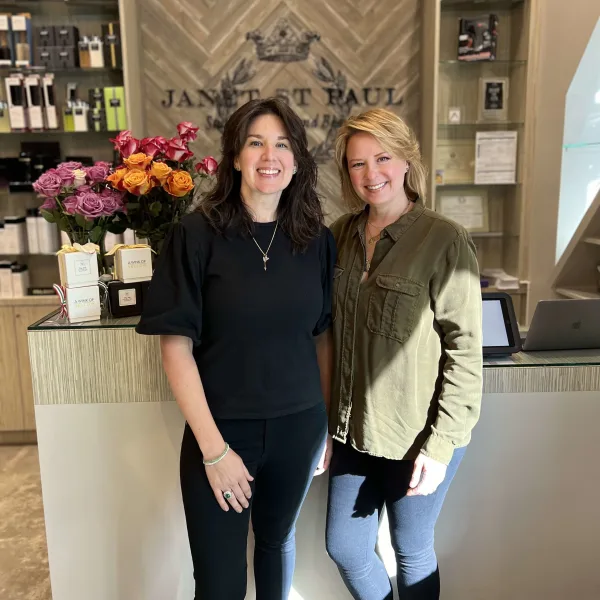
At Janet St. Paul Studio for Hair and Beauty, Director of Operations Natasha McMillen helps bring her wife Janet St. Paul's vision to life, elevating every system from education to operations.

Expand your color service menu with the Pinstripe technique. Brooks and Brooks' Marlon Hawkins walks you through the technique.