Both salons and clients have dubbed new eyelash extension services “addictive,” and now, take-home alternatives are taking off, too. This month’s In Depth report investigates the growth opportunities and potential pitfalls in the eyelash market.
Both salons and clients have dubbed new eyelash extension services "addictive," and now, take-home alternatives are taking off, too. This month's In Depth report investigates the growth opportunities and potential pitfalls in the eyelash market.
Ad Loading...
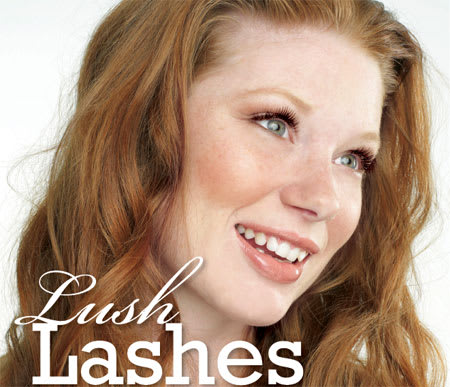
The beauty of these lashes? They look real, but aren't. She paid good money to a salon to give her what nature didn't.
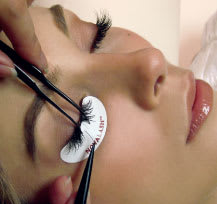
"Individual lashes are very different from the clusters or strips that are adhered to the eyelid. Single lash extensions are adhered to existing lashes, one by one. As the natural lashes grow and shed, the technician performs fills," explains Sophy Merszei, a molecular biologist and cosmetic chemist who is president of NovaLash (novalash.com).
Now, those tiny lashes are big business. In fact, Xtreme Lashes (xtremelashes.com) estimates the U.S. lash extension industry represents $15 to $20 million in manufacturer dollars and $500 million at the salon level. That gap is due to a high cost-to-service-fee ratio, with per-service product costs ranging from $1 to $5 and the average service fee at $350.
Extended Issues
Lash extensions take about 1½ to 2½ hours to complete and bring in $250 to $450 a set. The work is exacting and meticulous, requiring professional training and serious "hands-on" experience before offering the service.
Rhonda Cavner, owner of ROCA Salon and Spa (rocasalon.com) in Kansas City, Missouri, has offered lash extensions for four years. "Like hair extensions, they aren't for everyone," she says. "The service is more tedious than most technicians expect and it's not appropriate for clients with weak lashes. Before you consider it, survey your existing clientele. Ask if they want the service and what they would be willing to pay."
Some companies recommend a minimum of 40 to 60 lashes be used for each eye; others advise adhering a faux lash to every natural one. Most of the lashes themselves are durable synthetic polyester, which holds shape and curl but repels oils. Marketers offer lashes in various lengths, weights, curl tightness, colors and circumferences. The choices allow for artistic "eye design" and account for differing opinions on whether or not small or weaker natural lashes can support a faux partner.
After-service care involves avoidance of water, sweat or contact-lens wearing for 24 hours post-service. Then, you can't pull on the lashes or use oil-based products on them, which is why most marketers have their own, compatible eye make-up remover.
The Glue That Binds
There is some controversy regarding formaldehyde and the various adhesives (primarily medical-grade cyanoacrylates) used to adhere the extensions. In general, the stronger the bond, the stronger the fumes; some adhesives are "fume-free." Oxidation releases formaldehyde gas in the adhesives.
"Once you open the bottle, formaldehyde formation begins, but you can vaporize an entire bottle of our HP-A adhesive in a 10-by-10-foot room and still have less formaldehyde than the room's furniture creates," says Noor Daoudi, director of education for Xtreme Lashes. "All cyanoacrylates release some formaldehyde in minute parts per million; it's a byproduct of chemical breakdown. When choosing an adhesive, look for flexibility, level of bond strength, odor and how fast it sets. There is a relationship of compromises, and an experienced technician may prefer a faster-drying adhesive, while a less experienced technician may prefer one that sets a bit more slowly."
designing eyes
Artful application of lash extensions ensures repeats. According to Sophia Navarro, a trainer and celebrity lash artist at NovaLash:
Ad Loading...
Adding longer lashes in the outer corner "lifts" the eye, taking off 10 years, and widens close-set eyes. Avoid placing long lashes in the inner corner.
Using longer lashes in the center of the eye opens up deep-set eyes.
If natural lashes grow downward, use a semi-curly extension.
Work ergonomically. Use a chair with no back support, sit behind the client and lean forward. Rest your palms lightly on the forehead for stability. (The technique is two-handed; you separate the lashes with one tool and hold the special tweezers with the lash in the opposite hand.)
Practice as much as possible on different clients.
Besides a high-quality adhesive, she adds, the application is key. Lashes should not stick together; the appropriate amount of adhesive should be applied and the extension selected must precisely complement the natural lash and the length goal.
"Be concerned with safety, because no one has done research on the effect of unpurified adhesives used near the eyes and mucus membranes," says Merszei. "NovaLash's rubberized, Platinum Bond is pharmaceutical grade, made in an FDA-inspected facility and distilled four times before it's bottled. As packaged, it's 100-percent formaldehyde free."
Cavner says she eventually switched to using private-label lash products at her ROCA salon, increasing her already high profit margin. She requested several samples and meticulously tested each. "Safety is important," she says, "You cannot get adhesive in the eye, which is why you can't add bottom lashes."
Training Tactics
Major marketers offer limited training and certification to cosmetologists, estheticians and make-up artists, based on what State Boards allow. (Check with yours.)
There are currently about 20 companies offering lash products and some level of training, from a DVD to a four-day advanced course for the experienced. The initial investment involves both the training and a product kit, which allows 400 to 500 lash applications. The average cost for both: $1,100.
"We didn't do much initial research but our rep, who introduced us to lash extensions, offered on-site training," says Shannon Schultz, co-owner of Salon Ultimo (salonultimo.com) in Woodbury, Minnesota. "Our esthetician had to show before-and-after photos of three full applications and four fills to get certified. Now, after three years, two of our estheticians are certified. We see about two new clients a month and do four fills a week."
Having more than one trained technician is important because the certification is the service provider's, not the salon's-if you have just one specialist who leaves, the business does, too.
Crystal Mullenix, owner of Crystal's Salon and Spa (crystalspa.com) in Ithaca, New York, says two years ago, she invested about $2,500 to get into the business and recouped her investment quickly. Now, she says, she does just two lash-extension services a month.
"This is a unique service that requires the right market," says Mullenix. "In our area, the economy has impacted demand. However, women still want great lashes for special occasions, and we do quite a few semi-permanent lash applications, charging a minimum of $15. I wish there was a lash service in-between the two."
Eyelash Conditioners
At Natural Beauty (naturalbeautysalon.com) in Twinsburg, Ohio, owner Millie Haynam says the demand for lash extensions lessened with the economic downturn. As a cost-effective alternative, she added lash tinting, paired with retail lash conditioners.
"We got samples from our distributor and fell in love," says Haynam of her lash conditioner. "At $70 cost, $135 retail, it's a bit expensive to stock, so we special order or offer discounts. We do 15 vegetable-dye lash tints and sell four of the conditioners monthly."
Ultimo's Schultz says she's had no fall-off in demand for the extensions or her lash conditioner.
"We've sold more than 200 for $120 each and haven't had a single return," says Schultz. "Many clients get both the extensions and conditioner." According to NeuLash (neulash.com), lash conditioning products are expected to represent $50 million to $100 million a year in the next three-to-five years.
The lash conditioner market was created when Allergan discovered a drug (bimatoprost or generically, prostaglandin) that grew lashes. The only product currently allowed to contain it, Latisse, is sold through physicians. Initially, two of the original lash conditioners contained the drug or an analogue of it before voluntarily recalling and reformulating.
Multiple Choices
Dermaquest, which markets Dermalash; Jan Marini, Marini Lash; Mirabella Beauty, Lash Therapy Conditioner; NeuLash and Revitalash all confirmed in interviews with SALON TODAY that their products do not contain any prostaglandin analogs or derivatives, but other ingredients that condition lashes and encourage growth.
Says Adrienne C. Kramer, president of Mirabella Beauty (mirabellabeauty.com), "The salon market for mascara is about $15 million at retail. Between women realizing the need to change their mascara more frequently and new products in the category, it's definitely growing. We estimate the lash treatment business to be about $5 million to $10 million at professional retail."
Marketers stress that the best way to introduce lash extensions and conditioners is to have employees wear or use them. A substantial amount of new extension business is web driven, through manufacturer's salon listings.
Discover how to create a true “WOW experience” for every client by first building a culture where your team feels engaged, empowered, and inspired. Drawing on Calvin Stovall’s Iconic Framework, this blog explores how salon, spa, and clinic leaders can strengthen culture, elevate customer experience, and build a business that stands out for the long term.
The wellness industry is growing fast, and salons and barbershops already are an important part of it. In her first blog, Tracy Rado shares where the wellness dollars are heading, and how salon's can grow with this movement.
While salon sales are increasing, owners often feel they're working harder for the same or less profit. Leverage Q2 data from The KIM Report, Alain Audet reveals some of the structural changes that are dampening your growth and why your region and your salon size matters.
Weaknesses in your business are amplified during the Holiday Season. Spark Pro Global's Lucy Randall shows you five things to do now to have the strongest holiday season yet.
In Kati Whitledge's latest blog, she shares how salons have moved away from dress codes and embraced appearance standards. But by removing strict dress codes, some businesses may have unintentionally lowered their appearance standards. Whitledge helps you explain to your team why an appearance standard is important and how to smoothly implement a new appearance policy.
The Small Business Health Care Tax Credit is a non-refundable tax credit for for-profit businesses that provides a financial incentive for eligible employers who offer health insurance coverage to their employees. Leticia Skrabut, Esq., walks you through how to claim that credit.
Developing strong work habits early in one's career supports long-term success in the salon industry. Jesse Linares offers new stylists his top five tips.
Most salon owners have no idea what these numbers are.
You can hit record sales and still have a profit problem. The difference comes down to four numbers almost nobody was taught to track.
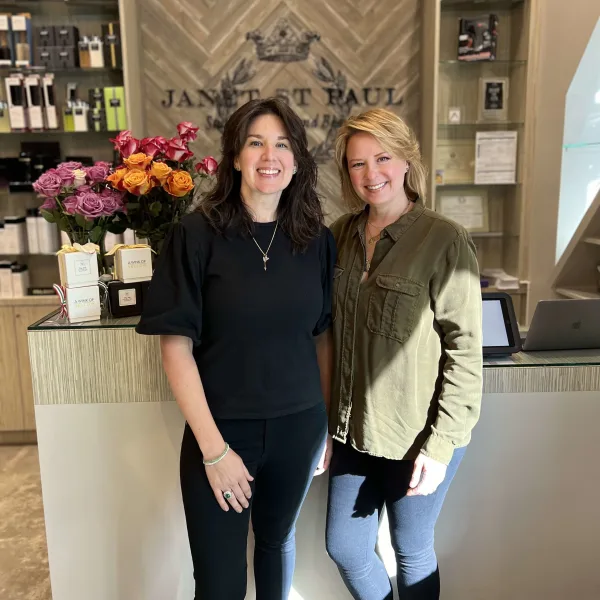
At Janet St. Paul Studio for Hair and Beauty, Director of Operations Natasha McMillen helps bring her wife Janet St. Paul's vision to life, elevating every system from education to operations.
The strongest salons, spas, and med spas know which numbers tell the real story of their business. In this practical guide, Phorest breaks down the five essential KPIs every business should track to improve retention, boost revenue, and make smarter decisions with confidence.
At Bella Style Salon in Slidell, Louisiana, Director of Operations Angela Meyer tackles inventory, team management, and guest relations. Read all about her in our latest Meet the Manager.
Starting at Impressions front desk in 2006 when he was 19 years old, General Manager Paul Petrowsky is a seasoned professional who owner Sarah Taylor says is responsible for much of her own success.
Planning is in full swing for the most anticipated events and promotions for the 2026 holidays. As owners share their favorite ways to celebrate, they prove that a carefully planned event can also build culture, increase client loyalty, boost sales, and set a business up for a successful 2027.
When things run amok at Mane Attraction Salon, Owners Chris and Jenny Knudsen say General Manager Sami Hernandez is their go-to resource and ultimate sounding board. Meet Sami in this installment of Meet the Manager.