The future of your business constantly depends on your ability to hire the best team members possible, and the stronger your interviewing skills, the more successful you'll be. Akari's Allan Labos offers seven basic steps to conducting an effective interview, as well as a wealth of tips.
My team likes to say that I am a terrible interviewer. My typical response: “I can’t be that bad, I hired you!”
I can understand where they are coming from though, since I purposely never use a rigid format in my approach to their personal interviews. In fact, I believe that's the trick to a great interview—to not be seen as going through the standard motions. You need to maintain a smooth flow with the conversation, presenting your questions in an effortless manner...
Ad Loading...
7 BASIC STEPS TO AN INTERVIEW
Step 1: Before the interview begins, review the candidate’s application and make notes, highlighting key information you want to elaborate further during the meeting. Your candidate will become more comfortable in answering your questions if you are not distractedly reading their application throughout the interview. The more eye contact you make, the more you are likely to learn. Remember, the candidate is also interviewing you. They are trying to assess if your business model is going to provide the right environment for them. Having your face buried in their resume sends the wrong signal and may impact their future willingness to invest in you as their leader, should they get the position. At the very least, being disorganized for the interview is guaranteed to negatively impact how much information an applicant divulges.
Step 2: Determine how you can best get the candidate to feel comfortable and relax their guard. When their guard is down, answers to questions quickly become more open-ended and revealing. As the interviewer, you should be aware of your own body language and state of mind. It’s best to be perfectly relaxed, amusing (to a point), and completely focused on the individual in front of you. Even if you instantly know that this particular candidate is not suitable for the position, please be mindful of the fact that they invested time and money to be present at this meeting. Chances are they commuted, paid for gas and parking, and possibly bought a new outfit, all in preparation for this occasion. Show respect for these sacrifices by remaining engaged for the total duration of the interview.
Try to help job applicants feel comfortable during the interview–they'll be more likely to let down their guard and give you more revealing responses.
Step 3: Before diving into their resume and skill sets, find out exactly why the candidate is here. You need to discover what their motivations are for wanting to join your team. If their response is something like, “This is the best place to make money,” or “I don’t know, a relative/acquaintance insisted I apply,” then the interview is quickly over. Instead, I am interested in answers along these lines: “I have always aspired to be part of this team;” - “Once I am trained, I will be fully committed to helping the team expand and grow the brand;” - “I love the challenge of a fast-paced work environment;” - “I feel confident that my talents and people skills, will contribute to the growth of this establishment;” or “I am new to the area and you come highly recommended, so I did some research and this is now my first choice for placement!”
Ad Loading...
Step 4: Next, I’m trying to assess their fundamental professional principles and character attributes. How did they choose this career path? What technical skills have they acquired? Are they grounded? Will they consistently show up on time? What are their financial constraints/living situation until they are able to be hired? Do they have any professional challenges or other prior commitments? do they have any professional challenges, or other prior commitments. After all, you don’t want them taking off on a three month world tour on their second day of work!
Step 5: Now, ask the difficult questions. I always like to know the answers to these two questions: What are your expectations for this position? And, what concerns you? To the first question, their response should be in line with our company's culture and mission. As to the latter question, I hope it will prompt them to answer, “Nothing really worries me professionally, but here are some of my challenges / aspirations…” Sometimes I wonder who is interviewing who. Provide the time at various intervals, during the process, to encourage their questions and concerns. Provide detailed answers, remember that their perception of the interview process will be their realty of the outcome.
Step 6: Get down to the nitty-gritty details. As the interview progresses, start to discuss their technical skills in order to determine their level of expertise, an appropriate pay scale, and if additional training is required. Assuming a candidate gets to this stage in the conversation, be sure to inform the applicant that there will be a practical interview or a scheduled day for job shadowing. A follow-up, hands-on session benefits both parties. For us, it enables us to see their technical skills and how they blend with the team. For them, it is a chance to get a good feel for our environment and how we operate. This process needs to be scheduled at the end of their initial interview. Set a time and day to occur within a week of the initial interview.
Step 7: After the practical interview or job shadowing, have a final chat and place an offer in writing. Make sure their expectations align with the reality of the position. Resolve any misunderstandings now, so that you can both begin your business relationship on a mutual path for success.
ADDITIONAL INTERVIEWING TIPS
Ad Loading...
Invest in some books on the art of interviewing; there are also some apps that are useful. Perform some role playing exercises with your key team.
Have an application form available online, as well as hard copies at the front desk, for those applying in person.
Prior to conducting an interview, make sure a manager or senior team member is present, preferably the person who will be responsible for overseeing the candidate’s performance on a daily basis.
Conduct your interview on time, in a private setting, and cap the meeting at a half hour or forty-five minutes—tops.
Always give a tour of your facility with a focus on the department the applicant is applying to join.
As you are heading into the interview, make sure you introduce the candidate to all the team members you encounter along the way.
If the candidate is currently associated with a competitor, apply confidentiality up front and limit your questions to their own personal performance, skills and abilities. Never put the candidate in the awkward position of explaining the politics or business practices of your competitor.
Ask open-ended questions and do not let the candidate respond in generalities. If you do not get an acceptable answer, rephrase your question in a different manner.
Be prepared to be honest with the candidate if there are other applicants who are better qualified. In the long run, it is better to be realistic with candidates regarding their chances of being hired, so that they do not get their hopes up, or miss out on other existing opportunities more suitable to their skills.
Make sure a candidate's certifications are current.
If you know someone in your community for whom this candidate is better suited, feel free to refer your applicant to them. The favor will likely be returned in the future, and the referral could result in a good hire. Even if it isn’t at your business—it’s a win for us all.
Once you have selected the most qualified individual, notify all the other candidates that the position has been filled and thank them for their time. However, keep their applications on file, just in case things do not work out with the new hire or a similar position becomes available in the near future.
Discover how to create a true “WOW experience” for every client by first building a culture where your team feels engaged, empowered, and inspired. Drawing on Calvin Stovall’s Iconic Framework, this blog explores how salon, spa, and clinic leaders can strengthen culture, elevate customer experience, and build a business that stands out for the long term.
The wellness industry is growing fast, and salons and barbershops already are an important part of it. In her first blog, Tracy Rado shares where the wellness dollars are heading, and how salon's can grow with this movement.
While salon sales are increasing, owners often feel they're working harder for the same or less profit. Leverage Q2 data from The KIM Report, Alain Audet reveals some of the structural changes that are dampening your growth and why your region and your salon size matters.
Weaknesses in your business are amplified during the Holiday Season. Spark Pro Global's Lucy Randall shows you five things to do now to have the strongest holiday season yet.
In Kati Whitledge's latest blog, she shares how salons have moved away from dress codes and embraced appearance standards. But by removing strict dress codes, some businesses may have unintentionally lowered their appearance standards. Whitledge helps you explain to your team why an appearance standard is important and how to smoothly implement a new appearance policy.
The Small Business Health Care Tax Credit is a non-refundable tax credit for for-profit businesses that provides a financial incentive for eligible employers who offer health insurance coverage to their employees. Leticia Skrabut, Esq., walks you through how to claim that credit.
Developing strong work habits early in one's career supports long-term success in the salon industry. Jesse Linares offers new stylists his top five tips.
Most salon owners have no idea what these numbers are.
You can hit record sales and still have a profit problem. The difference comes down to four numbers almost nobody was taught to track.
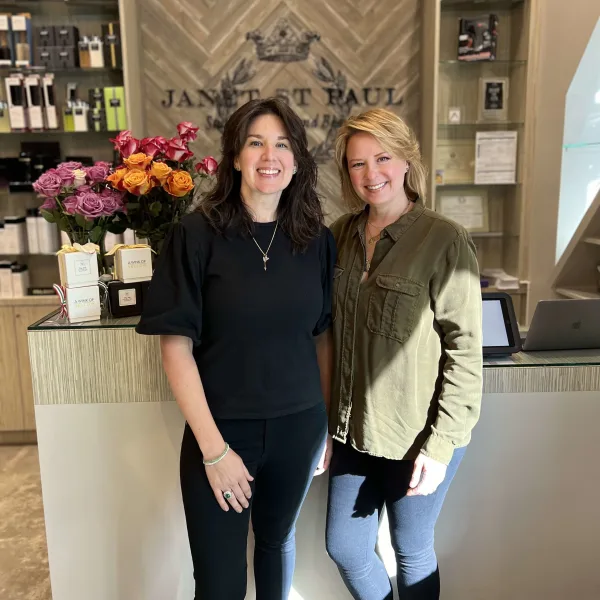
At Janet St. Paul Studio for Hair and Beauty, Director of Operations Natasha McMillen helps bring her wife Janet St. Paul's vision to life, elevating every system from education to operations.
The strongest salons, spas, and med spas know which numbers tell the real story of their business. In this practical guide, Phorest breaks down the five essential KPIs every business should track to improve retention, boost revenue, and make smarter decisions with confidence.
At Bella Style Salon in Slidell, Louisiana, Director of Operations Angela Meyer tackles inventory, team management, and guest relations. Read all about her in our latest Meet the Manager.
Starting at Impressions front desk in 2006 when he was 19 years old, General Manager Paul Petrowsky is a seasoned professional who owner Sarah Taylor says is responsible for much of her own success.
Planning is in full swing for the most anticipated events and promotions for the 2026 holidays. As owners share their favorite ways to celebrate, they prove that a carefully planned event can also build culture, increase client loyalty, boost sales, and set a business up for a successful 2027.
When things run amok at Mane Attraction Salon, Owners Chris and Jenny Knudsen say General Manager Sami Hernandez is their go-to resource and ultimate sounding board. Meet Sami in this installment of Meet the Manager.