How One Salon Owner Discovered a Third Revenue Stream Through Tech
If every cloud has a silver lining, Susan Arens found hers in Vish’s color management software during the pandemic. The three-part color management system uses a premium Bluetooth scale to connect to an app, which tracks real-time formulas and color product costs, and automatically sends it to the front desk for checkout, and to the Vish Dashboard for analysis.
August 24, 2023
In partnership with
5 min to read
If every cloud has a silver lining, Susan Arens found hers in Vish’s color management software during the pandemic. The three-part color management system uses a premium Bluetooth scale to connect to an app, which tracks real-time formulas and color product costs, and automatically sends it to the front desk for checkout, and to the Vish Dashboard for analysis.
Arens, president of four Studio Be locations in northern Colorado, is also on the advisory board at Qnity and participates in weekly online roundtables that began during the pandemic.
Ad Loading...
“The roundtables address current topics and best practices, usually with a financial component, and often with a guest,” Arens says. “One of our guests in early 2021 was JoshHoward, CEO of Vish. The way he explained the system helped me drop my fear and resistance to technology.”
Integrating Vish for Profit
Sixty five percent of business at Studio Be Salon is color. With the cost of inventory rising significantly in the past few years, Vish solved some serious revenue problems.
“The amount of money we spend on color is insane,” Arens says. “And with product costs going up, we would’ve been in a world of trouble if we had not brought Vish on when we did.”
When Studio Be Salon opened their fourth location in Loveland, Colorado, in May 2021, Sue used it as a launchpad to test out Vish.
Ad Loading...
“We were strategic on rolling out Vish, setting goals for the team targeting at ensuring it was used the way we knew it would drive results,” says Arens. “And our team surpassed expectations.”
“We have saved a LOT on our color purchases,” says Arens. “In 2021 to 2022 we had 5 percent savings in color cost from reweighing, and when you take all the price increases that happened at that time into consideration, it was probably closer to 8-10 percent savings.”
Charging Clients, Not Stylists for Color
“We usually do a price increase of about 3 to 4 percent in July,” she says. “Instead, we added a color service fee to the customer, which was less than the price increase would have been, and we no longer charged our stylists for color used.”
With the Vish software, that fee was determined based on individual services, then passed along to the customer. Arens opted to keep her base charge for color the same at that time.
Ad Loading...
“Vish helped us figure out our ‘parts and labor’ for our color services and pass along the cost, or ‘parts,’ to the guest,” Arens says. “Then it took the salon’s wholesale cost and marked it up slightly to help cover the cost of gloves, foils, etc.”
In the past year, recouping the cost of color through Vish has resulted in an extra $300k across Arens’ four locations.
“And in the first half of 2023, we’ve collected $170k,” she adds.
Passing the color cost onto the guest enabled Arens to take it away from her colorists, who had been paying a small charge for the product used per client. And she received almost no pushback from guests.
Arens attributes her successful rollout to her open and honest communication. “We did a blog, an email blast and put a framed statement on our front desk,” she says. “We gave the staff talking points and even created a cheat sheet so they could easily answer guests’ questions.”
Ad Loading...
Unlocking Profit
With around 60 stylists using Vish, Arens says the reports she pulls for each salon have been great tools for coaching.
“We can pull a report from Vish for each salon, each guest and each stylist,” she says. “Then our location managers take that information and drill down with individual stylists to see how they’re doing and coach to those numbers.”
Stylists who hit their benchmarks are rewarded with a monthly bonus, incentivizing them to keep reweighing color for every client.
While Arens has seen savings and additional revenue with Vish over the past couple years, she says she has barely scratched the surface.
Ad Loading...
“We’re not using the software to its fullest capacity yet,” she says. “It’s a really robust tool with opportunities we still haven’t tapped into.”
Next up for Studio Be Salon: a deep dive into inventory.
“Vish can help us get more efficient and accurate in our ordering, making sure we have what we need without overspending,” Arens says.
In her quest to grow, Arens will leave no rock unturned.
“The profit margins in the salon world are shrinking,” she says. “We cannot survive with service and retail profits alone. We’re getting less and less of the retail pie, so we need to find other avenues to profit. That’s where Vish comes in for us. The color charge we implemented has almost made up for our loss in retail revenue.”
Ad Loading...
The Future Looks Brighter
Currently, the markup on color at Studio Be Salon is only about 20 percent. Arens says she will consider increasing that percentage, but not at the same time as a service price increase, and with sensitivity to the timing and amount.
“We still have so much room to grow,” she says. “Change is hard, but if you’re consistent you will see results. Be consistent, be tenacious, and love your people where they’re at—they will get there. As owners and leaders in the industry, we have to believe in change to achieve growth.”
Discover how to create a true “WOW experience” for every client by first building a culture where your team feels engaged, empowered, and inspired. Drawing on Calvin Stovall’s Iconic Framework, this blog explores how salon, spa, and clinic leaders can strengthen culture, elevate customer experience, and build a business that stands out for the long term.
The wellness industry is growing fast, and salons and barbershops already are an important part of it. In her first blog, Tracy Rado shares where the wellness dollars are heading, and how salon's can grow with this movement.
While salon sales are increasing, owners often feel they're working harder for the same or less profit. Leverage Q2 data from The KIM Report, Alain Audet reveals some of the structural changes that are dampening your growth and why your region and your salon size matters.
Weaknesses in your business are amplified during the Holiday Season. Spark Pro Global's Lucy Randall shows you five things to do now to have the strongest holiday season yet.
In Kati Whitledge's latest blog, she shares how salons have moved away from dress codes and embraced appearance standards. But by removing strict dress codes, some businesses may have unintentionally lowered their appearance standards. Whitledge helps you explain to your team why an appearance standard is important and how to smoothly implement a new appearance policy.
The Small Business Health Care Tax Credit is a non-refundable tax credit for for-profit businesses that provides a financial incentive for eligible employers who offer health insurance coverage to their employees. Leticia Skrabut, Esq., walks you through how to claim that credit.
Developing strong work habits early in one's career supports long-term success in the salon industry. Jesse Linares offers new stylists his top five tips.
Most salon owners have no idea what these numbers are.
You can hit record sales and still have a profit problem. The difference comes down to four numbers almost nobody was taught to track.
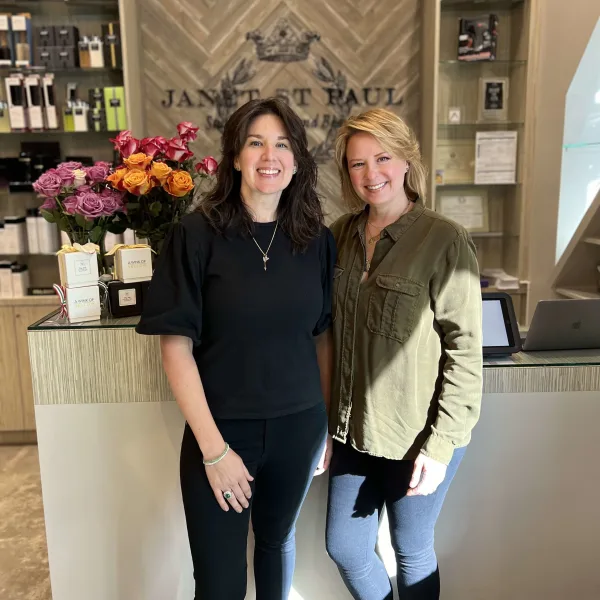
At Janet St. Paul Studio for Hair and Beauty, Director of Operations Natasha McMillen helps bring her wife Janet St. Paul's vision to life, elevating every system from education to operations.
The strongest salons, spas, and med spas know which numbers tell the real story of their business. In this practical guide, Phorest breaks down the five essential KPIs every business should track to improve retention, boost revenue, and make smarter decisions with confidence.
At Bella Style Salon in Slidell, Louisiana, Director of Operations Angela Meyer tackles inventory, team management, and guest relations. Read all about her in our latest Meet the Manager.
Starting at Impressions front desk in 2006 when he was 19 years old, General Manager Paul Petrowsky is a seasoned professional who owner Sarah Taylor says is responsible for much of her own success.
Planning is in full swing for the most anticipated events and promotions for the 2026 holidays. As owners share their favorite ways to celebrate, they prove that a carefully planned event can also build culture, increase client loyalty, boost sales, and set a business up for a successful 2027.
When things run amok at Mane Attraction Salon, Owners Chris and Jenny Knudsen say General Manager Sami Hernandez is their go-to resource and ultimate sounding board. Meet Sami in this installment of Meet the Manager.