






You Don't Own a Salon. You Own A Business.
In his latest blog, Leon Alexander Ph.D., challenges industry conventional thinking to help owners add more to their bottom lines.
 MENU
 SEARCH
Making a career change frequently requires a major leap of faith. After years of planning events like the North American Hairstyling Awards for the Professional Beauty Association (PBA), Bonnie Bonadeo was ready to take her own leap.About five ...

Ryan Walsh
Making a career change frequently requires a major leap of faith. After years of planning events like the North American Hairstyling Awards for the Professional Beauty Association (PBA), Bonnie Bonadeo was ready to take her own leap.
About five years ago, while Bonadeo was still working for PBA, she noticed there were several talented people hanging around with not much to do. The economy had tanked and companies were trimming their education budgets. This left platform artists without a stage to teach on.
“With my role in PBA, several people were contacting me asking for work,” Bonadeo says.“A lightbulb went off, and I realized this could be a business.”
Bonadeo launched The Beauty Agents, a booking agency that matched talent with opportunities. But Bonadeo quickly identified another need.
“When people were booked and on a stage without a brand, they were kind of lost,” she says. “They didn’t know what to talk about or how to engage an audience—they found themselves floundering.”
As she watched her talent create fillers with rants and opinions, she also watched the audience become disengaged.
GETTING NAKED
In 2012, Bonadeo connected with Alejandra Crisafulli after meeting through a mutual client. Crisafulli, who founded Life Creations Education, brought experience as a life coach to the table. Together, the two quickly realized their skills complemented each other, and they launched Naked Audience Productions, affectionately known as NAP.
NAP has several programs under its umbrella (see sidebar), but it is the Stages program that’s changing the way speakers connect with their audiences.
Bonadeo already had identified that one of the biggest problems her speakers had was to stand on their own without a brand. “But what I was missing was someone to internally structure a program to coach people through it,” she says. “As a life coach, Alejandra knew how to teach people to be more connected.”
Today, the duo hosts the two-day Stages program across the country to teach people engagement and how to be better presenters.
“People weren’t being authentic on stage,” Bonadeo says. “There was no connection of who they were and how they started. The word ‘authentic’ became where we connected—our tag line is, ‘Mastering the art of authentic communications.’”
CONNECTING WITH AN AUDIENCE
Bonadeo and Crisafulli understood that Stages was a niche product when they launched, but they also knew that the people who wanted to be educators, or even current educators who were not making any headway, needed their help.
“They want to be more powerful on stage,” Bonadeo says. “We also have companies hire us to train their team because they want the whole team to be better on stage.”
But Stages is doing the opposite of teaching people to be company-focused. Instead, the spotlight is on being more human and present with others.
“Everything the companies wanted the individuals to do wasn’t happening because they weren’t coming from an authentic place,” Crisafulli says. “People buy from people, not from companies.”
The Stages program has three components. The first is awareness of how the connection works between audience and speaker.
“Through awareness, a person understands what’s inside of them and what they need to do to create a connection with the audience and why it’s important,” Crisafulli says. “They become aware they have to stop hiding behind the company brand and move into their own brand.”
The next stage is connection. Bonadeo and Crisafulli help each person identify their individual brand so they can walk away with what is unique to them and know how to market themselves.
Finally, structure and sequence are covered in stage three. Here, participants are taught strategic sequence from beginning to end to keep an audience engaged while hitting all their points.
“After the program, NAP participants are being themselves,” Bonadeo says. “They’re not afraid to share hardships with an audience. If you’re being authentic, the connection naturally happens when people become engaged—you can feel it.”
Part of this connection means overcoming fears. Bonadeo and Crisafulli aren’t letting anyone who goes through their program get away with hiding behind a resume or dodging difficult emotional hurdles. They lead by example from the start so attendees know what’s expected.
“Traditionally, if someone is going to talk in front of audience, they talk about their credentials,” Bonadeo says. “We don’t do that. Instead, in the first three minutes we share our hard stories.”
She maintains their authenticity creates a place where people are comfortable doing the same.
“We’re allowing people to release this cloak they’ve been holding up for so long that they think they need to hide the things that have stopped them from being successful,” Bonadeo says. “We create a very safe environment very quickly. They share their story, and we help them develop their brand from that story, which is what they’ve been hiding from,” she says.
“We help them see it’s supporting them, and they build their story and brand into a sequence that allows people to emotionally connect.”
THE BENEFITS OF BEING YOU
As a salon owner, going through the Stages program offers a different type of education than business or technical classes.
“We’ve had quite a few owners come through Stages who feel they will benefit from the communication aspect of the program,” Bonadeo says. “They’re high-end salon owners, and manufacturers are dancing with them. Going through the program brings them a step closer.”
And for owners who want to improve their leadership skills, NAP’s L.E.A.D. program (Leadership Education and Development) follows some of the same principles as Stages—being your authentic self—but with a focus on leadership.
“Leaders are not always authentic,” Bonadeo says. “They manage by policies or systems instead of leading through real connection.”
The two-day L.E.A.D. program focuses on teaching vulnerability in leadership. “Really being able to authentically share their stories, whether it’s on stage or with an employee, can be challenging,” says Crisafulli. “We want to hide because we’re afraid of being judged.”
And nobody wants to admit they’re not a good leader. Bonadeo and Crisafulli say they often see owners who think they need more tactical education. But they maintain if you’re not genuine, it won’t work.
“Make the connection with your team, and systems will follow that,” Bonadeo says. “It really comes from the place of having a directional shift. If something’s not working and you do it over again, you need to stop the insanity and do something different,” Crisafulli says.
With both L.E.A.D. and Stages, Bonadeo and Crisafulli offer program attendees follow-up coaching to help hone their personal brands and navigate social media.
In 2016, the duo have nine programs scheduled across the country. To learn more about Stages, L.E.A.D. and other NAP events, visit napevents.com.
Naked Audience Productions:
WHO WE ARE
Founded in 2012 by Bonnie Bonadeo and Alejandra Crisafulli, Naked Audience Productions (NAP) focuses on “Mastering the Art of Authentic Communications.” The duo lead workshops together and keep the maximum number of attendees to 20 people to ensure an intimate environment and individual attention. Nine workshops are already scheduled for 2016 in cities across the U.S.
NAP (napevents.com) has five programs it teaches:
• Stages: Coaching for authentic public speaking. Features a five-step sequence to connection.
• L.E.A.D. (Leadership Education and Development): Focuses on becoming an authentic leader through the 180 Coaching Method (directional shift).
• Healing Workshop: Healing and personal growth taught through Healing Formula.
• Next Stage: The follow-up to Stages, this program focuses on authentic selling. Coming in 2016.
• Additional coaching programs: NAP also has life coaching, personal brand and public speaking coaching, leadership coaching and business coaching for individuals.
To read case studies from salon owners who've been helped by NAP Events and the Stages program, click on the following:
Jeff South of Intrigue Salon and Club Intrigue of Marietta, Georgia
Elaine Travis of Lux Color Lounge in Conshokocken, Pennsylvania
Brenton and Julie Lee of the Brenton Lee Salon in Pasadena, California
In his latest blog, Leon Alexander Ph.D., challenges industry conventional thinking to help owners add more to their bottom lines.
In her latest blog, Amy Pal helps you develop your own clear guidelines around complimentary free employee services.
From managing air traffic on busy days to handling frustrated guests' complaints, your front desk team often serves as the salon's emotional shock absorber. From a customer service lesson from the DMV to a list of strategies for caring for your front line, our experts offer ideas for alleviating stress, celebrating wins, and setting goals.

According to the KIM Report, top-line salon revenue appears steady or slightly up, but that growth is driven primarily by service price increases. Beneath the surface, retail performance and client visit frequency (appointment drift) are under real pressure. In his latest blog, Alain Audet offers strategies for keeping your salon's retail sales strong.

Putting your family to work in the salon offers some real tax benefits, but you have you have to play by the rules of the tax code to claim them. Azarvand Tax Law's Leticia Skrabut, Esq., shows you how.
Discover how to create a true “WOW experience” for every client by first building a culture where your team feels engaged, empowered, and inspired. Drawing on Calvin Stovall’s Iconic Framework, this blog explores how salon, spa, and clinic leaders can strengthen culture, elevate customer experience, and build a business that stands out for the long term.
Sponsored by Phorest Salon Software
The wellness industry is growing fast, and salons and barbershops already are an important part of it. In her first blog, Tracy Rado shares where the wellness dollars are heading, and how salons can grow with this movement.

While salon sales are increasing, owners often feel they're working harder for the same or less profit. Leverage Q2 data from The KIM Report, Alain Audet reveals some of the structural changes that are dampening your growth and why your region and your salon size matters.
Weaknesses in your business are amplified during the Holiday Season. Spark Pro Global's Lucy Randall shows you five things to do now to have the strongest holiday season yet.

In Kati Whitledge's latest blog, she shares how salons have moved away from dress codes and embraced appearance standards. But by removing strict dress codes, some businesses may have unintentionally lowered their appearance standards. Whitledge helps you explain to your team why an appearance standard is important and how to smoothly implement a new appearance policy.

The Small Business Health Care Tax Credit is a non-refundable tax credit for for-profit businesses that provides a financial incentive for eligible employers who offer health insurance coverage to their employees. Leticia Skrabut, Esq., walks you through how to claim that credit.
Developing strong work habits early in one's career supports long-term success in the salon industry. Jesse Linares offers new stylists his top five tips.
Most salon owners have no idea what these numbers are. You can hit record sales and still have a profit problem. The difference comes down to four numbers almost nobody was taught to track.
Sponsored by Strata Salon Systems™
A five-area audit every owner-dependent salon needs to run. You built something that looks successful. Now find out if it can survive without you.
Sponsored by Strata Salon Systems™

Every month you put off fixing the problem, it gets bigger, more expensive, and harder to solve.
Sponsored by Strata Salon Systems™
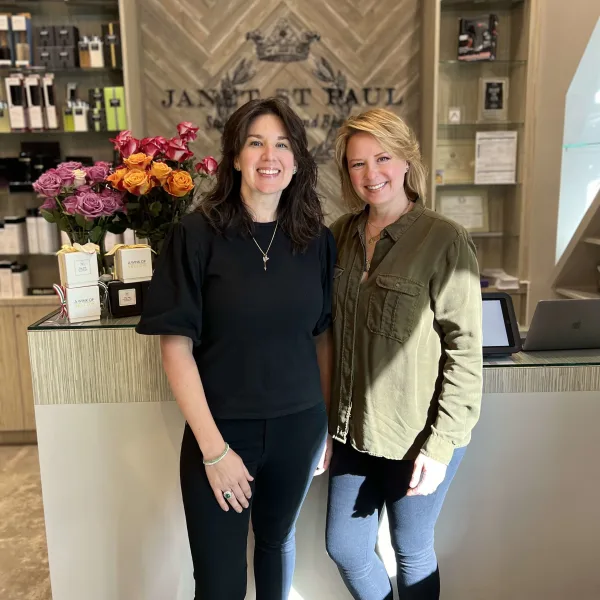
At Janet St. Paul Studio for Hair and Beauty, Director of Operations Natasha McMillen helps bring her wife Janet St. Paul's vision to life, elevating every system from education to operations.
Expand your color service menu with the Pinstripe technique. Brooks and Brooks' Marlon Hawkins walks you through the technique.