










You Don't Own a Salon. You Own A Business.
In his latest blog, Leon Alexander Ph.D., challenges industry conventional thinking to help owners add more to their bottom lines.
 MENU
MENU SEARCH
In April 2002, Inez Gray, owner of Habitude in Seattle, was awoken with a phone call informing her that her salon was ablaze. A common cause of salon fires, oil-saturated spa towels combusted after being left warm in the dryer overnight. What ...

The aftermath of a laundry dryer fire at Bob Steele Salon’s Atlanta Post Riverside location.
In April 2002, Inez Gray, owner of Habitude in Seattle, was awoken with a phone call informing her that her salon was ablaze. A common cause of salon fires, oil-saturated spa towels combusted after being left warm in the dryer overnight. What was surprising, however, was that the dryer was off when the fire occurred.
By the time the fire department responded, Gray had lost a million dollar build-out and more than $250,000 in equipment and products. “We were able to salvage a few trinkets and mementos and pull our hard drives out and recover them,” Gray says. “I have two big boxes of files in my storage unit that still smell like smoke and soot to this day.”
Gray and her management team acted quickly to do what they thought best for their clients and staff. Knowing they would need to downsize their team as they serviced their clients in a smaller, temporary space, they laid off 40 of their 80 employees and triple-shifted the rest in the salon’s other two locations. Although letting half of her team go was a difficult task, Gray shares that when it comes to a situation like this, “Don’t be afraid to lay off your staff—often they will return with newfound energy and enthusiasm.”
The salon, located in a historic district of Seattle, would have been delayed in an expeditious rebuild due to the approvals needed in this part of town, so Gray worked with a forensic accountant to prove this to her insurance company. Gray worked so quickly, in fact, that the day after the fire, she found Habitude’s new home, and was able to persuade her insurance company that rebuilding in this new location would mitigate the business-loss cost.
For four months, the Habitude team worked out of a 1,200-square-foot salon and 600-square-feet in the nearby spa they were partnered with, while insurance paid for round-the-clock construction.
Habitude’s new space is double the size of their old location at 8,000 square feet, and they continue to grow rapidly. It is now Habitude’s policy to remove all laundry from the dryer before leaving for the night.
“Remember your brand is not the place, it is the staff, clients and the mission of your company,” Gray says. “The stronger your culture, the easier it is to recover from any situation.”
AN UNLIKELY COINCIDENCE
Amanda Hair, owner of Bob Steele Salon with four metro-Atlanta locations, received a call this past December that her flagship salon was on fire. The manager that made the phone call had to preface the news with, “This is not a joke,” as the two had met only weeks before to talk about fire prevention. As a result of this exchange, Hair had ordered extinguisher checks and had her two commercial dryers serviced at this location, making the timing of this fire an unlikely coincidence.
Investigators determined the fire started in the barrel of one of Hair’s commercial dryers, and was likely a case of spontaneous combustion, like Gray’s fire, but in this instance, in a dryer that was running. Fortunately, Hair’s opening employee acted quickly, containing the fire with a nearby extinguisher while the fire department was in route. The dryers and a nearby garbage receptacle were among the only items burned, but Hair was surprised by the amount of damage the smoke did to her salon.

On a happier day, the team from Bob Steele Salon at a ribbon cutting for The Verve, its new talent location.
“At this location, we’ve flooded, survived 2014’s ‘snowmageddon,’ experienced electrical issues—every unexpected thing has happened—so our systems continue to improve,” Hair says.
The guest relations team at Bob Steele were able to rebook clients at their other locations, while many stylists added additional days to an already-booked month to accommodate clients. “We have a very caring culture, and it was great to see team members jump in.”
It took a fire-restoration team four days to restore the salon. “Every surface needed to be wiped down; smoke had penetrated the air conditioning units and vents,” Hair says.
Fortunately for Hair, her insurance policy covered everything, and she only had to pay out-of-pocket for the price difference between her old dryers and the newer ones she brought in.
Reflecting on this experience, Hair advises salon owners to “keep things up-to-date,” including extinguishers and equipment. Although newer commercial dryers deter fires from occurring (with internal sprinkler systems triggered when overheating is detected, for example) it is important to service dryers regularly and keep an extinguisher close by, Hair says. And even when you have systems in place, “Be prepared for the unexpected.”
INSURANCE INSIGHTS
Detra Smith, owner of Hannah and Me Salon in Moulton, Alabama, was the victim of burglary and arson July 20, 2014. A local woman, who was quickly apprehended, looted Smith’s salon and set a fire to cover her tracks.
Though her stolen possessions were returned to her, Smith chose to discard many of them – “I felt so violated,” she says. As Smith and her salon are deeply involved in their community, friends and colleagues were quick to loan her tools and equipment so she could get back on her feet in a temporary space.

The staff of Hannah and Me during a Fashion Night Event before the fire.
Hannah and Me reopened in their rebuilt salon at the beginning of the year, and were just recently able to find an insurance company to take them on after being dropped form their former policy. In addition to learning that a “total loss” fire makes finding business insurance incredibly challenging, Smith shares the following lessons learned about insurance:
1. Pull real estate comps. If you have owned your building for some time, research real estate prices and make sure your insurance policy meets the current market value.
2. Know your numbers. Check the content coverage on your insurance policy. Even if you have enough coverage on the building, a standard policy probably won’t cover a total loss of contents. Many industry products are small but expensive, and they accumulate quickly. If you have had the same furniture or equipment for many years, ensure your policy would cover ‘replacement cost’ or the cost of purchasing these items at today’s prices.
3. Backup important information. If your salon does not use cloud-based software, be sure to backup records including inventory, appointments, and client information often.
4. Keep a record of your possessions. Take photos or videos of everything and keep these records in a safe place that is not in the salon location. “After the burglary, I had to make a list of stolen items for the investigators. When the items were returned to me, I was surprised at the things I had forgotten about and left off the list. I can’t tell you everything that was in the area most burned.”
5. Personal items are not covered. “Many of us use our business storage area for personal items too. Be aware that personal items are not covered on a business insurance policy. A personal claim can sometimes be filed on a homeowner’s policy.”
6. Booth renters need coverage. A business policy will cover loss of income for the salon as long as records are available showing actual income. The salon owner should be able to pay employees for loss of wages from this coverage, but be aware that it may take a few weeks to receive this pay. Booth renters though are not considered employees, therefore they will not be covered and their income is not included in the loss of income part of the policy. A booth renter should have their own business policy for liability, as well as loss- coverage.
In his latest blog, Leon Alexander Ph.D., challenges industry conventional thinking to help owners add more to their bottom lines.
In her latest blog, Amy Pal helps you develop your own clear guidelines around complimentary free employee services.
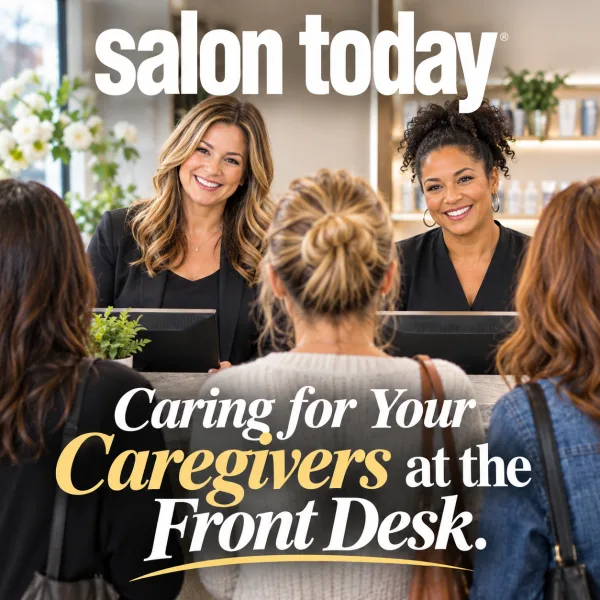
From managing air traffic on busy days to handling frustrated guests' complaints, your front desk team often serves as the salon's emotional shock absorber. From a customer service lesson from the DMV to a list of strategies for caring for your front line, our experts offer ideas for alleviating stress, celebrating wins, and setting goals.
According to the KIM Report, top-line salon revenue appears steady or slightly up, but that growth is driven primarily by service price increases. Beneath the surface, retail performance and client visit frequency (appointment drift) are under real pressure. In his latest blog, Alain Audet offers strategies for keeping your salon's retail sales strong.

Putting your family to work in the salon offers some real tax benefits, but you have you have to play by the rules of the tax code to claim them. Azarvand Tax Law's Leticia Skrabut, Esq., shows you how.

Discover how to create a true “WOW experience” for every client by first building a culture where your team feels engaged, empowered, and inspired. Drawing on Calvin Stovall’s Iconic Framework, this blog explores how salon, spa, and clinic leaders can strengthen culture, elevate customer experience, and build a business that stands out for the long term.
Sponsored by Phorest Salon Software

The wellness industry is growing fast, and salons and barbershops already are an important part of it. In her first blog, Tracy Rado shares where the wellness dollars are heading, and how salons can grow with this movement.

While salon sales are increasing, owners often feel they're working harder for the same or less profit. Leverage Q2 data from The KIM Report, Alain Audet reveals some of the structural changes that are dampening your growth and why your region and your salon size matters.

Weaknesses in your business are amplified during the Holiday Season. Spark Pro Global's Lucy Randall shows you five things to do now to have the strongest holiday season yet.

In Kati Whitledge's latest blog, she shares how salons have moved away from dress codes and embraced appearance standards. But by removing strict dress codes, some businesses may have unintentionally lowered their appearance standards. Whitledge helps you explain to your team why an appearance standard is important and how to smoothly implement a new appearance policy.

The Small Business Health Care Tax Credit is a non-refundable tax credit for for-profit businesses that provides a financial incentive for eligible employers who offer health insurance coverage to their employees. Leticia Skrabut, Esq., walks you through how to claim that credit.

Developing strong work habits early in one's career supports long-term success in the salon industry. Jesse Linares offers new stylists his top five tips.

Most salon owners have no idea what these numbers are. You can hit record sales and still have a profit problem. The difference comes down to four numbers almost nobody was taught to track.
Sponsored by Strata Salon Systems™

A five-area audit every owner-dependent salon needs to run. You built something that looks successful. Now find out if it can survive without you.
Sponsored by Strata Salon Systems™

Every month you put off fixing the problem, it gets bigger, more expensive, and harder to solve.
Sponsored by Strata Salon Systems™
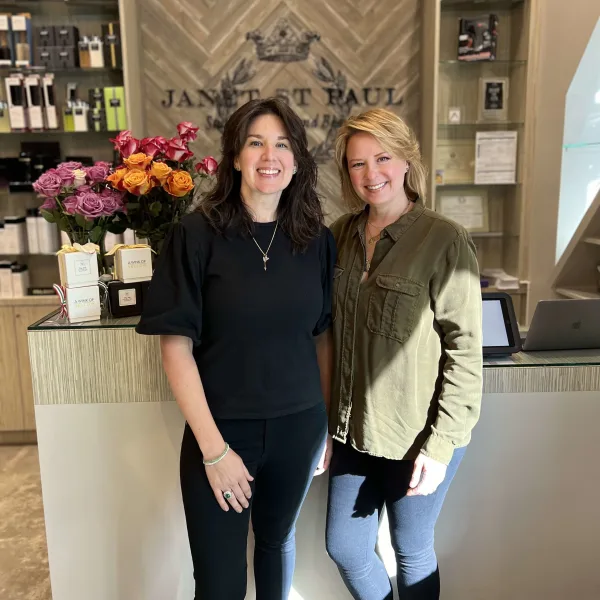
At Janet St. Paul Studio for Hair and Beauty, Director of Operations Natasha McMillen helps bring her wife Janet St. Paul's vision to life, elevating every system from education to operations.

Expand your color service menu with the Pinstripe technique. Brooks and Brooks' Marlon Hawkins walks you through the technique.