A solid salon or spa design starts on paper, with a detailed floor plan. Not only is that important for the flow of stylists and client through the service areas, but careful planning in the retail section can have a dramatically positive impact ...
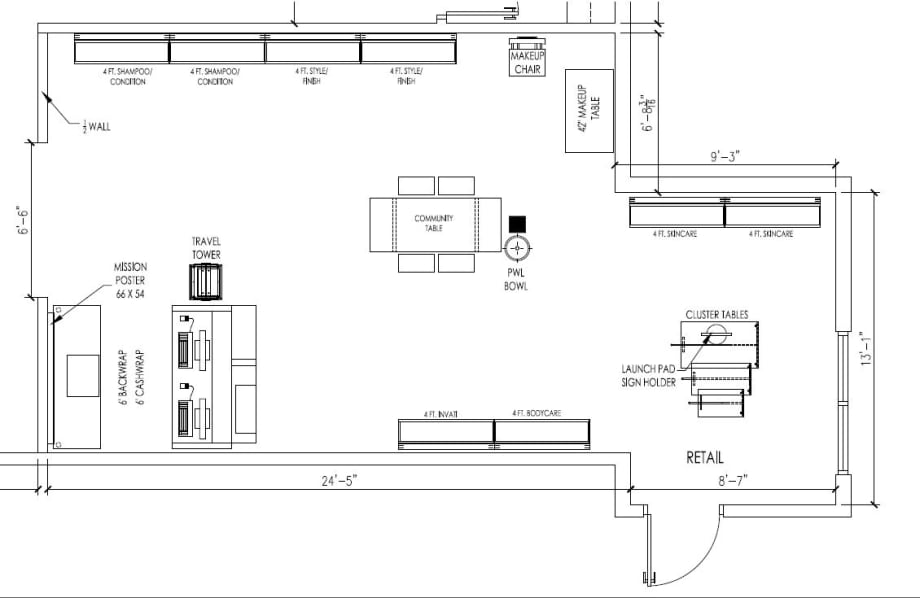
You can see Civello’s retail strategy in place by studying the layout of one of the salons he’s recently counseled
3 min to read
A solid salon or spa design starts on paper, with a detailed floor plan. Not only is that important for the flow of stylists and client through the service areas, but careful planning in the retail section can have a dramatically positive impact on sales.
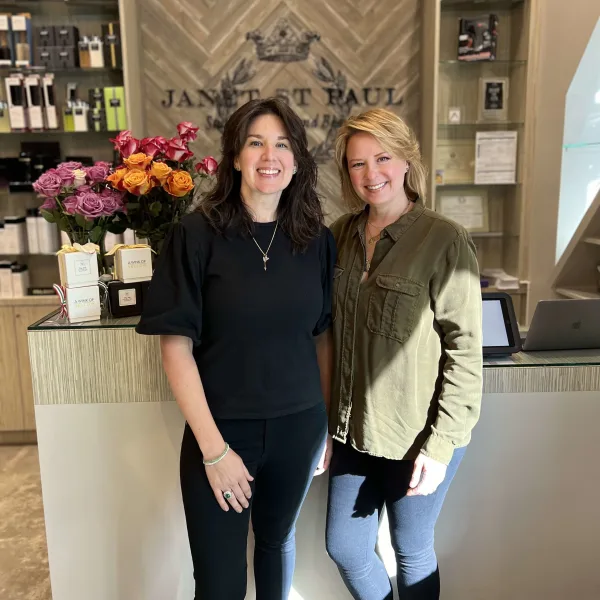
George Civello, president of the Novvo Etopa, recently shared some retail design strategies that have proven successful with his salon and spa clients.
Ad Loading...
Accessibility. “Too many salons design beautiful retail shelves then place them behind the front desk where the client doesn’t have access,” Civello says. “Clients should be able to easily reach all products, be able to take them off the shelf and read the packaging.”
Front Desk Placement: “Salons also tend to put the front desk right inside the door, but in fact you should locate it as far away from the door as possible, while still keeping it in the reception area,” Civello advises. “Think about your favorite successful store, where is their cash register? Most retailers greet the customer with a focus table or two right as they walk in, then the customer has to ‘shop’ their way through the store to the cash register.”
Civello suggests switching out the product offerings on the focus table every 6 to 8 weeks, so the client is always sees something new. He also recommends against putting the desk too close to the window. “Your window is your billboard to passersby about what is going on in the salon. It should be used to highlight your products, specials and the season.”
George Civello, president of Novvo Etopa.
Good Merchandising: “If you watch women shop, they will never buy the last of something on the shelf,” Civello. “Make sure your shelves are well stocked at all times. In the game of retail, you have to show abundance.”
Ad Loading...
Create a Self-Shopping Environment: “A retailer like Banana Republic will put tall clothes up on the walls so a shopper walking into the store has an unencumbered view of all the retail,” Civello says. “Your retail theater should be inviting.”
“The seating also shouldn’t be in the window. Again, the window is your opportunity to promote yourself, and it should pull shoppers in,” Civello continues. “Also, a waiting area in the window, makes a shopper who doesn’t have an appointment hesitate about coming in and buying products. A definite separation between the retail and the rest of the salon is more inviting to all shoppers.”
Shelf Strategy: “There are a lot of theories about the way you place products on the shelves from the retail world and none of them are exact science,” Civello says. “I advise salons to keep styling aids closer to stylists because they tend to sell them. Think of shampoos and conditioners as the bread and milk in the grocery store—shoppers will seek them out when they need them, so place them in a location where shoppers have to see the bulk of your retail before they reach them.”
Civello recommends keeping impulse buys close to the front desk. An impulse buy are products—like travel sizes or accessories that have a smaller price point and clients don’t think much about grabbing them and adding them on. “I liken it to your magazine or Hershey’s bar at the grocery checkout,” Civello says.
Lighting is critical: “People won’t shop if it’s too dark. If you don’t have lit shelves, consider installing track lighting over your shelves,” Civello advises. “Also, most manufacturers produce great collateral – make sure it is integrated into your displays and that it also is well lit.”

After moving to Colorado and teaching at a cosmetology school, Allison Stock joined Zandi K as a stylist, eventually becoming part of the Leadership Team, Education Team and Master Bridal Team. Today, as Director of Operation, Stock is Owner Nicki Wenz's right hand, managing human resources and operations, education and career development, and coaching and culture.
Scott maximized her micro-salon by transitioning from stylist to strategic owner, focusing on recruiting and station-sharing. By prioritizing her ownership role over behind-the-chair work, she grew her team to six stylists within the two-chair, 150-square-foot space before eventually moving to a larger facility.
The former CFO of Perdue Farms and owner of Hardy Seafood, Terry Owens delivers a wealth of wisdom and strategies for entrepreneurs in his new book, "Business is Simple."
After scaling her single-location salon business, SALON TODAY 200 Honoree Amy Pal recently sold her six-location Whip Salon for seven figures. Using the six Ps for maximizing a business's value, she's ready to help her peers do the same.
Buried inside the One Big Beautiful Bill Act are federal solar tax credit changes that deserve your attention now. Two of the credits that matter most to commercial property owners, the Investment Tax Credit and the Production Tax Credit, are still available, but only if you move fast. A third, the Commercial Building Energy Efficiency Deduction, has a hard termination date that is closer than most people realize.
Up to 40% of hair stylists ghost the salon interview stage, leaving owners trapped playing endless phone tag with uncommitted applicants. This data-driven report breaks down why traditional job boards create recruitment friction and reveals the modern messaging strategies high-growth salons use to get pre-qualified talent to actually show up. Learn how to transition from cold calling to high-conversion conversations that protect your time and fill your chairs.
Spit fests, hostile threats, and even an overachieving matchmaker--SALON TODAY readers share their craziest client tales and how their team handled these tough situations with professionalism and grace.
Keeping your appointment book full when clients are in vacation mode takes more than a good Instagram post. It takes a plan.
The 2026 Summer Marketing Calendar from Meevo gives salon, spa & med spa owners a month-by-month roadmap with sharp themes, key opportunity dates, and campaign ideas specifically designed for the beauty & wellness industry.
Here’s to your summer season working as hard as you do!
AI is transforming the beauty and wellness industry, and the future is about empowering people, not replacing them. Discover how Phorest AI helps salons, spas, and med spas across North America respond faster, personalize every visit, and keep human connection at the heart of the client experience.
Owner Michaella Blissett-Williams credits her General Manager Gloria Hortua with [salon] 718's year-over-year, double-digit growth and says she's been able to scale the company to eight locations because she can rely on Hortua to manage daily operations.
Elyse Rogers is an uplifting presence at The Headroom who makes the team feel heard even in stressful situations. Owner Danielle Cherewyk sings her praises in this installment of Meet the Manager.
Despite a slight and predictable decline in client traffic for Q1, resilient pricing power is driving year-over-year revenue growth in salons. The KIM Report's Alain Audet reviews the data and what it's telling us about the state of professional beauty.
Same-store revenue grew just 2% for the second straight year—and new guest visits declined across every segment of the industry. The 2026 Benchmark Report reveals where growth is actually happening, which verticals are pulling ahead, and what the data says about where your business stands right now.
Hair restoration is entering a new era driven by regenerative science. This paper explores how Exosome technology is transforming treatment outcomes by targeting hair loss at a cellular level. Discover why EXOGROW is leading this shift.
A salon brand is much more than a logo. In this thought-provoking blog, Leon Alexander, Ph.D., walks you through the difference. SALON TODAY suggests sharing this article with your team and leading a discussion at your next huddle, asking the team to define your business's brand.