Our newest blogger, Allan Labos, owner of Akari Salon in Portland, Maine, details how he overhauled his retail program, making it so profitable he was able to purchase his 20,000-square-foot building.
While retail revenues for our industry have been flat or growing at minimal levels, most salons have the tools and knowledge already in place to substantially increase their product sales and expand their brand with minimum effort.
But first you need to ask yourself some key questions:
Ad Loading...
Do you really understand the value retail can bring to a business?
Are you educating your customers or just acting like quintessential salespeople?
Could your sales declines be a symptom of more deeply rooted issues?
In the past four years we’ve doubled and expanded our retail environment to 4,000 square feet with plans to expand another 25 percent by next summer.
This growth also has brought new customers into the service area. On average, our styling team now sells 30 to 50 percent retail to service dollars each month while our aestheticians sell 50 to 100 percent retail to service dollars.
Ad Loading...
Sales weren’t always so spectacular. An analysis of sales patterns helped us determine why some employees were star sellers and others struggled.
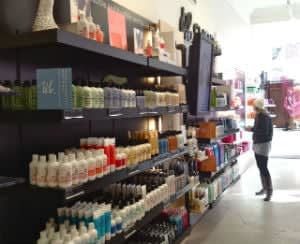
A client experiencing just a small section of Akari's impressive 4,000-square-foot retail area.
We found service providers with high retail numbers also had strong referral, retention and request rates. Conversely, we learned that service providers who weren’t as busy also were weak in one or all of the Rs: Referral, Requests, Retail and – most importantly – Retention.
Our findings were a real wake-up call. We decided it was essential to provide clients a full-service experience. We took the following steps to integrate these expectations into our culture:
First, we recognized the value of turning repeat customers into loyal customers – those who shop across the brand, refer others and are not interested in coupons, gift certificates, discounts and promos from competing establishments.
Ad Loading...
Second, the house and service providers recognized and appreciated the value of home care. We now are fully committed to providing stocked, clean shelves that are full of products at all times.
Third, our front desk team learned to follow through on stylists’ recommendation. We also make ongoing monthly checks to ensure the entire team is on message and up to date on product knowledge.
The growth in sales also gave us increased leverage with vendors; our success is their success.
We’re having fun, customers are happy and the business keeps growing.
Our retail sales now remain an ongoing focus, constantly evolving. We collectively celebrate and reward high achievers every month and support those who need help through education, role-playing, scripting and other confidence-building tools.
Ad Loading...
We coach the team on key questions to ask, how to listen and respond to customers’ signals and their specific needs. In short, it’s vital to understand the clients’ current needs and let them know we understand and hear their concerns.
We’re all so lucky – we have a captive audience and own our customer’s attention for at least an hour. We are the specialists: We’re here to educate and inform on styles and products that will give them best results with minimum effort. We’re also a filter to separate all the chatter and fluff from ads, blogs, fashion magazines, television and department/ drug store cosmetic counters.
Customers want to know the difference between professional salon products and drug store retail counter products. They want to know what works best for them. And they’re willing to pay a premium for this advice.
Your culture sets the standard. Employees need to understand why the customer comes to your establishment and how to not only meet but exceed their expectations.
If you aren’t educating your customer about services, products, home care and your entire brand, you’re not providing them the full experience or even listening to their basic needs.
Discover how to create a true “WOW experience” for every client by first building a culture where your team feels engaged, empowered, and inspired. Drawing on Calvin Stovall’s Iconic Framework, this blog explores how salon, spa, and clinic leaders can strengthen culture, elevate customer experience, and build a business that stands out for the long term.
The wellness industry is growing fast, and salons and barbershops already are an important part of it. In her first blog, Tracy Rado shares where the wellness dollars are heading, and how salon's can grow with this movement.
While salon sales are increasing, owners often feel they're working harder for the same or less profit. Leverage Q2 data from The KIM Report, Alain Audet reveals some of the structural changes that are dampening your growth and why your region and your salon size matters.
Weaknesses in your business are amplified during the Holiday Season. Spark Pro Global's Lucy Randall shows you five things to do now to have the strongest holiday season yet.
In Kati Whitledge's latest blog, she shares how salons have moved away from dress codes and embraced appearance standards. But by removing strict dress codes, some businesses may have unintentionally lowered their appearance standards. Whitledge helps you explain to your team why an appearance standard is important and how to smoothly implement a new appearance policy.
The Small Business Health Care Tax Credit is a non-refundable tax credit for for-profit businesses that provides a financial incentive for eligible employers who offer health insurance coverage to their employees. Leticia Skrabut, Esq., walks you through how to claim that credit.
Developing strong work habits early in one's career supports long-term success in the salon industry. Jesse Linares offers new stylists his top five tips.
Most salon owners have no idea what these numbers are.
You can hit record sales and still have a profit problem. The difference comes down to four numbers almost nobody was taught to track.
At Janet St. Paul Studio for Hair and Beauty, Director of Operations Natasha McMillen helps bring her wife Janet St. Paul's vision to life, elevating every system from education to operations.
The strongest salons, spas, and med spas know which numbers tell the real story of their business. In this practical guide, Phorest breaks down the five essential KPIs every business should track to improve retention, boost revenue, and make smarter decisions with confidence.
At Bella Style Salon in Slidell, Louisiana, Director of Operations Angela Meyer tackles inventory, team management, and guest relations. Read all about her in our latest Meet the Manager.
Starting at Impressions front desk in 2006 when he was 19 years old, General Manager Paul Petrowsky is a seasoned professional who owner Sarah Taylor says is responsible for much of her own success.
Planning is in full swing for the most anticipated events and promotions for the 2026 holidays. As owners share their favorite ways to celebrate, they prove that a carefully planned event can also build culture, increase client loyalty, boost sales, and set a business up for a successful 2027.
When things run amok at Mane Attraction Salon, Owners Chris and Jenny Knudsen say General Manager Sami Hernandez is their go-to resource and ultimate sounding board. Meet Sami in this installment of Meet the Manager.