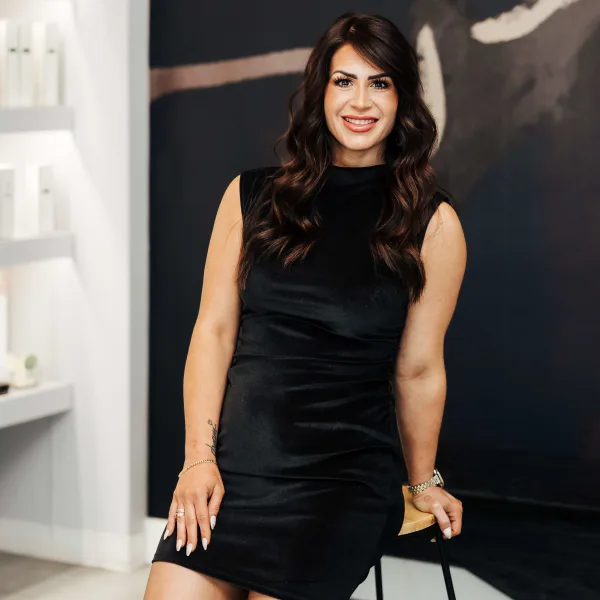
The Constant
Starting at Impressions front desk in 2006 when he was 19 years old, General Manager Paul Petrowsky is a seasoned professional who owner Sarah Taylor says is responsible for much of her own success.
The personal finance experts at WalletHub analyze the best states to start a business, then offer five key tips for launching successfully.

Being an entrepreneur is hard, as around one in five new businesses fail within the first year. Being in the right state can make the process a lot easier, though, and Utah is the best state for lauching a business, according to a new report by the personal-finance website WalletHub.
Utah is followed by Georgia, Florida, Idaho and Nevada.The report analyzed 25 indicators of business-friendliness across three categories: business environment, access to resouces and business costs.
"Utah is the best state for starting a business because businesses have greater access to loans than in any other state, and Utah has the largest annual employment growth in the country, at nearly 2.5%, "said Cassandra Happe, an analyst at WalletHub. "During a time when money is tight, having ready access to capital and being in a state where business is booming can mean the difference between a startup thriving and dying during its first few years."
Utah
Georgia
Florida
Idaho
Nevada
Arizona
Colorado
Texas
North Carolina
Tennessee
Rhode Island
Connecticut
Alaska
Maryland
West Virginia
New Hampshire
New Jersey
Pennsylvania
Hawaii
Missouri
Each of the best states for starting a business brings something unique to the table. For example, Georgia has one of the highest entrepreneurship rates in the country, and some of the lowest taxes. Florida has one of the highest GDP growth rates, and its working-age population is growing quickly. Iowa has a very high business-loan availability, and Nevada keeps the cost of providing health insurance to employees low.
“Starting a business is a difficult and risky process, but where you live can highly influence your chances of success. Before establishing a business in any location, make sure to do research to ensure it’s an ideal place for your customer base, has enough labor and supplier availability, and suits your needs when it comes to financing,” said Happe.
There are a few things that entrepreneurs can do to make their business launch go as smoothly as possible.
Before diving in, conduct thorough market research to understand your industry, target audience, and competitors. Identify gaps in the market and ensure there's a demand for your product or service. A strong understanding of your market will guide your business decisions and set you up for success.
Outline your business goals, target market, competition, and financial projections in a comprehensive business plan. This document serves as a roadmap for your business and is essential for securing funding from investors or lenders. Regularly revisit and update your business plan as your company evolves.
Differentiate your business from others by offering things that stand out. Clearly communicate what sets your product or service apart from the competition and why customers should choose you. A compelling value proposition helps attract customers and build a strong brand identity.
You should establish your business in a state that has a strong market in your particular niche, with easy access to relevant suppliers. For example, Jeff Bezos started Amazon in Washington in part because of the tech hub around Seattle and the fact that the state’s small population would minimize how much state sales tax they had to collect. Other business-friendly things to look for in a state include low business taxes, a large working-age population and a strong overall economy.
Keep a close eye on your finances from the start. Develop a realistic budget, monitor expenses, and set aside funds for unexpected costs. Hire an accountant or use accounting software to ensure accurate financial records. Effective financial management is key to the long-term sustainability of your business. Don’t cut corners when it comes to things like licenses and insurance, and don’t put all of your personal income into a business venture.


Starting at Impressions front desk in 2006 when he was 19 years old, General Manager Paul Petrowsky is a seasoned professional who owner Sarah Taylor says is responsible for much of her own success.

Planning is in full swing for the most anticipated events and promotions for the 2026 holidays. As owners share their favorite ways to celebrate, they prove that a carefully planned event can also build culture, increase client loyalty, boost sales, and set a business up for a successful 2027.

When things run amok at Mane Attraction Salon, Owners Chris and Jenny Knudsen say General Manager Sami Hernandez is their go-to resource and ultimate sounding board. Meet Sami in this installment of Meet the Manager.

Pagoda, a new AI-native operating system for scheduling, payments, patient records, marketing, and client communications, launches at Skinovatio Medical Spa in Arlington Heights, Illinois.

At a panel discussion hosted by L’Oréal Professionnel in Paris in early July, French Philosopher Sophie Galabru explored the cultural shift where women are increasingly choosing natural, personalized color results over traditional grey coverage. In an exclusive interview with SALON TODAY, Galabru and L’Oréal Professionnel Colorist Pierrick Beringer discuss this shift and how salons and colorists respond.

At Salon Blonde, Director of Operations treats the staff as the salon's most important guests, while her wonderful 'nerdy' side, loves data, systems, and numbers. Find out how she makes Salon Blonde tick.

In an exclusive interview with SALON TODAY, Salon Owner Salvatore Minardi reflects on his past 18 months as Intercoiffure America Canada's World Talent Exchange Ambassador and how his experiences will help encourage cultural and artistic exchange and support greater engagement between ICA and the global organization Intercoiffure Mondial.

Everything you need to know about client retention as a salon owner.

Owner Shelby Bills says her general manager, Sydney Osborne, reminds her of the power of leading with heart. Find out how Osborne became a great leader in our lastest installment of Meet the Manager.

In her latest blog, Kati Whitledge identifies the five stages salon owners go through when a team member leaves the salon unethically, offering advice for each stage.

The beauty and wellness businesses pulling ahead aren’t just working harder—they’re using AI to capture demand, personalize pricing, and convert more of every guest interaction into revenue. Here’s what the benchmark data reveals about the growing gap between AI adopters and everyone else.
Sponsored by Zenoti
Stop chasing recruitment ghosts on generic job boards and start curating an elite team. Discover the framework that top-tier salons use to bypass phone tag, automate visual portfolio vetting, and attract high-earning, culture-first beauty professionals directly through real-time messaging. Turn your recruitment process into an exclusive brand invitation that keeps your highest-ticket chairs permanently filled.
Sponsored by Beautista
Your calendar looks full, but is all of that demand actually converting to revenue? From phantom rebookings to underpriced peak hours, the 2026 Benchmark Report exposes five revenue leaks that most beauty and wellness businesses don’t even know they have.
Sponsored by Zenoti

After moving to Colorado and teaching at a cosmetology school, Allison Stock joined Zandi K as a stylist, eventually becoming part of the Leadership Team, Education Team and Master Bridal Team. Today, as Director of Operation, Stock is Owner Nicki Wenz's right hand, managing human resources and operations, education and career development, and coaching and culture.

In a world dominated by e-commerce, salon owners push back with proven strategies to increase retail sales while motivating team members to educate their clientele and delighting clients with retail-themed events and clever merchandising displays.

The company's Concealed Bead Method is raising the bar for what professional extension education can deliver.

Scott maximized her micro-salon by transitioning from stylist to strategic owner, focusing on recruiting and station-sharing. By prioritizing her ownership role over behind-the-chair work, she grew her team to six stylists within the two-chair, 150-square-foot space before eventually moving to a larger facility.