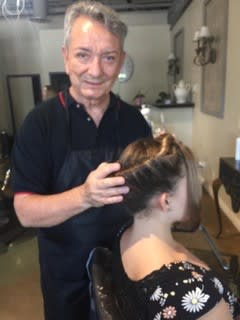
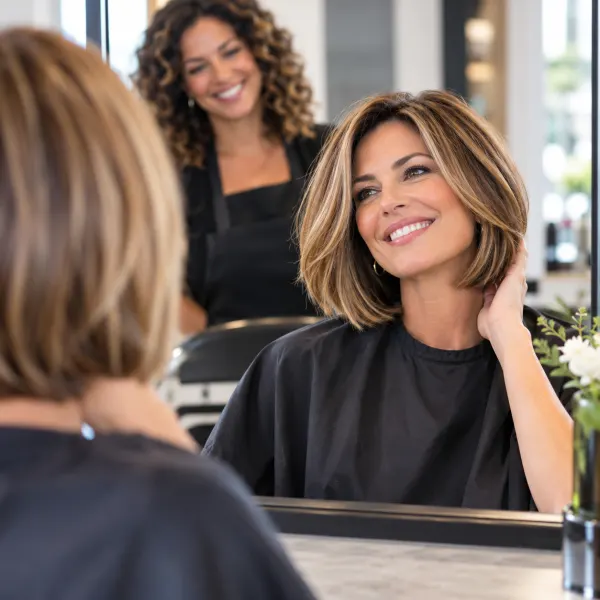
"Nobody was rude to me; everyone was nice, yet silently, I was denied opportunities awarded to anyone younger. Ageism is sneaky and includes biases like younger stylists give the salon a better image, clients prefer younger stylists, and they only do old- fashioned styling."
As a kid, if I draped my magic blanket over my head, I was invisible. Popi loved the invisible game and wagged his tail alongside me, barking as I bumped into doors and other real-world objects. Realizing I could never be invisible no matter how hard I tried, I outgrew my magic blanket. Then, as I turned 60, I became invisible again when the salon stopped offering me walk-in clients.
I felt I was doing my best hair. I was still teaching trend styling at major shows, plus I had a great relationship with the reception team, yet the walk-ins dried up. The rationale? I was 65 years old and should be set for life; therefore, I didn’t need new clients; other stylists were more deserving. Besides, I was risky; what if I suddenly decided to retire? OMG, what would happen to the clients?
Ad Loading...
Scout’s honor, I’ve never looked to the receptionist to build my clientele. The quality of my work, not favors from receptionists, brought me clients. Polished consultations and my good work on the street made it happen. But ageism? After a lifetime of gay and Latino stealth exclusion, my gaydar should pick up any bias— but it went right over my old head. Nobody was rude to me; everyone was nice, yet silently, I was denied opportunities awarded to anyone younger. Ageism is sneaky and includes biases like younger stylists give the salon a better image, clients prefer younger stylists, and they only do old- fashioned styling.
I did address this bias, not for my fair share of walk-in clients. Nope—this one was about taking one for the team to build a better industry. One day you will be where I am today. I bet you will want an industry that respects your abilities and allows these to shine on an even playing field. You will want a salon where all ages openly perform their best with grace and sensitivity. I shared the information below with management and the receptionists. To my surprise, they were totally unaware of ageism and how it affects older stylists, clients, and the salon’s reputation. Here it is for your salon:
What is ageism? Are you aware of it? What are the signs?
Discrimination on the grounds of a person’s age works both ends of the age bracket—you can discriminate against the old or young. It’s about how you think, feel and act towards anyone based on age. Truthfully, someone older is probably the only person who doesn’t believe they’re old. And despite federal and state law protection from age discrimination, the law doesn’t guarantee your desirability.
Being excluded, not asked, told, warned, considered, nor invited, is at the heart of ageism. The cruelest aspect of ageism is to have to show up pretending everything is alright.
Ad Loading...
The beauty industry struggles to tackle ageism on a broader scale because of the inherent fear of any aging conversation. Salon professionals shared that they find it distasteful to talk about ageism--like surrendering to an old enemy, one that should remain unmentioned. Really? Keeping ageism in the closet is like attempting to cover the sun with one finger. We need to bring it out and create workplaces where it’s cool to be any age.
Ageism is Systemic
After working for years with women to look and feel their best, I have first-hand knowledge of how ageism is particularly cruel to our women. Starting with the media that would have us all believe a woman’s beauty melts rapidly with each passing year. Except for Shakespeare, who said, “Age cannot wither her, nor custom stale her infinite variety,” the rest of us are doomed to wither away, bombarded by messages that aging is a disease to be prevented with miracle solutions from an anti-aging industry.
Stand Up Against Ageism
Let’s celebrate getting older and create a guarantee our salon is for all ages. Let’s polish our awareness and avoid the small, well-meaning actions and words built into society. Let’s remember these actions are offensive to our older clients and coworkers. Take the ageism quiz below for more insights into how you truly feel about ageism. If you don’t want to come along, do this: always acknowledge and include a senior present and treat them the same as everyone else. If they need special consideration or attention, they will ask you.
Ad Loading...
Take the Ageism Quiz
Well-intentioned actions and words offend older clients and coworkers daily. Which statements below are correct or incorrect for you:
I compliment older people on how well they look for their age.
If an older client has an ailment, I think that is to be expected at their age.
Older people should retire and make way for younger people.
Older workers are less effective than younger ones.
Older employees cause more accidents in the salon.
Age is irrelevant, and hiring is about whether you can do the job regardless of age.
“Old dear, sweetie, honey” are affectionate terms that can be used without any problem.
Older people should avoid specific tasks because they will fail.
Spare older adults’ feelings by hiding the truth from them.
Always talk louder and slower to older clients because of their age.
It’s okay to joke about older people’s age to make light of their advancing age.
Always repeat what you say to older people without them asking.
Older people shouldn’t be allowed to work because they are slow and fragile.
It’s best to decide what to have done for an older salon client in the salon.
Explaining styling options and giving advice to older salon clients is a waste of time 16.. Every elderly lady can usually look good and wear the same cut and style.
Senior clients don’t want to hear anything but the price of salon services.
It’s best to speak to a mature client without references to their age at all.
Always speak to a younger family member about the senior client’s styling needs.
A qualified older applicant for s job probably can’t handle the tasks.
Older stylists usually can’t take instruction, especially from a younger boss.
If a senior stylist has the skills and attitude, they should be considered for the job. 23. You can legally ask someone’s age in an interview, but it’s rude.
You can’t use age as the basis for deciding on a job, promotion, or opportunity.
Older stylists are less likely to create trendy styles than younger ones.
Answer Sheet:
False: compliment them but leave out the “for your age” part.
False: many seniors live a healthy ailment-free life until their passing
False: older people can remain working if they are qualified
False: older workers are equally efficient plus have experience
False: statistically, older workers cause fewer accidents in the workplace
True: employability is based on qualifications and attitude, not age
False: the term connotates frailty, vulnerability, and inferiority and should be avoided
False: older people perform tasks equally well as their younger adults.
False: lies may only be used in cases of extreme dementia to avoid injury or fall
False: unless the person suffers hearing loss, speaking louder is condescending
False: joking about any personal characteristics is offensive
False: see #10
False: see #8
False: give older clients exactly the same service as younger
False: older clients are just as interested, if not more, in their styling options
False: use standard adaptability and hair analysis techniques for styling older clients
False: the final result is of equal value to cost for older adults.
True: avoid “sweetie,” “honey,” “darling,” when speaking to seniors
False: direct all your communication to the senior client first.
False: interview the applicant’s qualifications, experience, and attitude like all others
False: older adults will usually follow the lead, especially with new tasks.
True: qualifications are the basis for hiring anyone
True: The Age Discrimination in Employment Act (ADEA) says the question itself is legal. It’s illegal to use the response as a basis to determine employability or decide to fire, pass up on a promotion or opportunity. See below:
True. hiring should be based on qualifications and attitude.
False: a stylist’s creativity depends on their interest and education.
Carlos Valenzuela is a bilingual raconteur, success coach, ex-salon & beauty school owner, author of the award-winning novella, Letters to Young Carlos,about a gay boy’s struggles growing up along the US/Mexico border in the 60s. Visit his writings at carlos-valenzuela.com
Discover how to create a true “WOW experience” for every client by first building a culture where your team feels engaged, empowered, and inspired. Drawing on Calvin Stovall’s Iconic Framework, this blog explores how salon, spa, and clinic leaders can strengthen culture, elevate customer experience, and build a business that stands out for the long term.
The wellness industry is growing fast, and salons and barbershops already are an important part of it. In her first blog, Tracy Rado shares where the wellness dollars are heading, and how salon's can grow with this movement.
While salon sales are increasing, owners often feel they're working harder for the same or less profit. Leverage Q2 data from The KIM Report, Alain Audet reveals some of the structural changes that are dampening your growth and why your region and your salon size matters.
Weaknesses in your business are amplified during the Holiday Season. Spark Pro Global's Lucy Randall shows you five things to do now to have the strongest holiday season yet.
In Kati Whitledge's latest blog, she shares how salons have moved away from dress codes and embraced appearance standards. But by removing strict dress codes, some businesses may have unintentionally lowered their appearance standards. Whitledge helps you explain to your team why an appearance standard is important and how to smoothly implement a new appearance policy.
The Small Business Health Care Tax Credit is a non-refundable tax credit for for-profit businesses that provides a financial incentive for eligible employers who offer health insurance coverage to their employees. Leticia Skrabut, Esq., walks you through how to claim that credit.
Developing strong work habits early in one's career supports long-term success in the salon industry. Jesse Linares offers new stylists his top five tips.
Most salon owners have no idea what these numbers are.
You can hit record sales and still have a profit problem. The difference comes down to four numbers almost nobody was taught to track.
At Janet St. Paul Studio for Hair and Beauty, Director of Operations Natasha McMillen helps bring her wife Janet St. Paul's vision to life, elevating every system from education to operations.
The strongest salons, spas, and med spas know which numbers tell the real story of their business. In this practical guide, Phorest breaks down the five essential KPIs every business should track to improve retention, boost revenue, and make smarter decisions with confidence.
At Bella Style Salon in Slidell, Louisiana, Director of Operations Angela Meyer tackles inventory, team management, and guest relations. Read all about her in our latest Meet the Manager.
Starting at Impressions front desk in 2006 when he was 19 years old, General Manager Paul Petrowsky is a seasoned professional who owner Sarah Taylor says is responsible for much of her own success.
Planning is in full swing for the most anticipated events and promotions for the 2026 holidays. As owners share their favorite ways to celebrate, they prove that a carefully planned event can also build culture, increase client loyalty, boost sales, and set a business up for a successful 2027.
When things run amok at Mane Attraction Salon, Owners Chris and Jenny Knudsen say General Manager Sami Hernandez is their go-to resource and ultimate sounding board. Meet Sami in this installment of Meet the Manager.