A Transmasculine Perspective on Diversity, Equity, Inclusion and Belonging
After sharing his personal journey of gender transition at Phorest's Salon Owner Summit, Alex Bélisle-Springer talks to SALON TODAY about how embracing diversity, equity and inclusion can instill a sense of belonging with both clients and staff members, specific actions owners can take that will spark both personal and professional growth, and why he felt the Summit was the right time and place for his message.
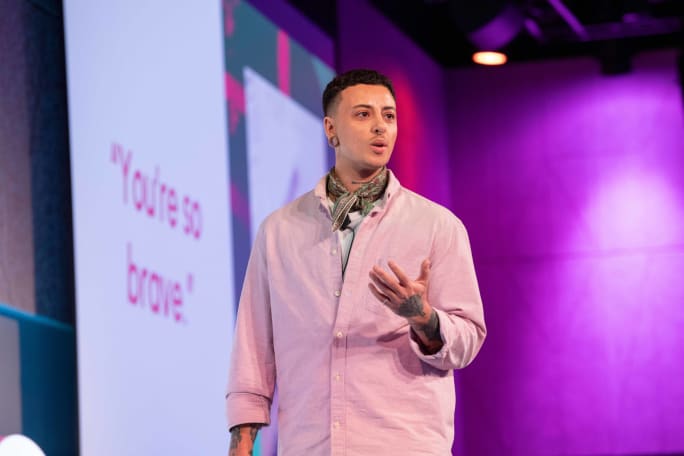
The presenter who received the longest and the loudest standing ovation at Phorest’s Salon Owner Summit in Dublin, Ireland, this year wasn’t an innovative entrepreneur with a rousing success story to share or a bestselling business author with a practiced motivational message, but rather one of Phorest’s own who spoke his truth. On that January day, Alex Bélisle-Springer shared his deeply personal journey of gender transition, bringing awareness as he encouraged the audience of salon owners and managers to consider how embracing diversity, equity, inclusion and belonging could help them grow both personally and in their businesses.
As host of PhorestFM and the Global Education Content Lead for the salon software company, Bélisle-Springer may be comfortable with a microphone, but he’s usually the interviewer rather than the person in the spotlight. But following a lifelong and ongoing journey of self-discovery, he felt the timing was right and the Summit offered a safe space to publicly share his message for the first time.
Ad Loading...
“But I wanted to pack the presentation with data and research and advice—and not just talk about me, because it's not just about me,” he says.
For many people, getting a new haircut that aligns with how they see themselves can be one of most personally affirming actions, says Bélisle-Springer, so he feels the professional beauty industry is the perfect industry to instill much needed change.
“If we can bring that understanding to what we already know about how making people look great helps them feel great, then it’s a win-win,” he shares. “When we think about change and having an impact as an individual, I think it’s very easy to feel deflated, and like what you’re doing isn’t going to change anything but we have to remember that the impact that you can have in your own communities is so valuable, and that’s what creates a ripple effect, and instills over time, systemic change.”
In the above one-on-one interview with SALON TODAY's Stacey Soble, Phorest Salon Software's Alex Bélisle-Springer shares his personal journey of gender transition, what his own self-reflection research yielded, and why now was the time to publicly share his message.
While Bélisle-Springer has never been turned away from a salon or barbershop, he knows people who have, and he's had moments where he's felt uncomfortable.
Ad Loading...
"My Dad's side of the family is Black, so I have super textured, extremely voluminous hair," he shares. "It was hard to find someone who could cater to that texture, and anytime I'd change hairdressers I'd need to do research to find someone who could cut similar kinds of textures," he says. "Spas were super uncomfortable for me because I wasn't comfortable in my own skin. I've had an androgynous look, so the thought of being in a bathing suit or changing in a changing room where I could be scrutinized just never was comfortable."
That feeling of discomfort is not uncommon, and not just for the clients of salons, spas and barbershops, but also for the people who work within them.
In his Summit presentation, Bélisle-Springer shared, “Despite the increased attention paid to issues of diversity, equity and inclusion and belonging over the past 10 years, 60% of US workers report covering at work in the last 12 months. Covering refers to the ways in which individuals downplay known disfavored identities to blend into the mainstream.”
“What if you could, through your beauty business, not only make someone feel good and look great, but also help them feel like they belong, at the very least within the vicinity of your walls?” Bélisle-Springer encouraged the audience to imagine.
For many salons and spas, causing a client to feel as though they don't belong can be unintentional. Bélisle-Springer encourages owners to think about the type of pressure their salon or spa might unknowingly be imposing on their staff or clients to minimize their identities. Some examples he cites of how this might happen, include:
Ad Loading...
Strict dress codes
Limited sick leave
Schedule distribution with little to no notice
Lack of sensory-friendly areas (indirect exclusion)
Limited expertise in working with diverse hair or skin types
Lack of products made to cater for people with diverse hair or skin type
Space that doesn’t cater for physical disabilities (accessibility)
Not offering gender-neutral prices, services, products or restrooms
Referring to diverse needs as ‘additional,’ ‘reasonable adjustments,’ or ‘special requests’
He also shares some facts and statistics to encourage the owners to consider how embracing diversity, equity, inclusion and belonging can be beneficial for their company culture, even increasing their ability to attract and retain talent.
Individuals with intersecting identities often possess a certain cultural competence that allows them to interact coherently with people of different customs, beliefs, and behaviors.
Ernst & Young Consulting conducted a survey for which 85% of its participants reported that empathy in the workplace increases productivity.
Fostering diversity, inclusion and belonging will provide your staff and clients with enhanced understanding of one another.
Happy workers are 13% more productive, as employees are happiest within their authenticity is embraced at work.
Presenting at the Salon Owners Summit wasn't a given for Bélisle-Springer just because he was an employee, he says he had to apply and be vetted like any other outside speaker. And the homework he gave himself in therapy a few years prior to beginning his social and medical transition came in especially handy in building his presentation. "I felt there was a disconnect in terms of how I perceived myself and how other people perceived me, and I didn't really understand why, so I came up with a series of five questions and asked them to a wide range of people I'd met over the past 10 years."
One of those individuals was Katt Philipps, the owner of Gräfin Skin + Beauty, whom Bélisle-Springer had interviewed on his podcast but had never met. He asked Philipps the following questions: "What was your first impression of me? What's one word or sentence would you say describes me best? What do you value most about me? What do I contribute most to our friendship? What's one thing I could work on for my benefit?"
Ad Loading...
From the exercise, Bélisle-Springer says he received some amazing responses, and some that were more hard-hitting than others, but he says it was Philipps who hit him with responses he didn't expect, but discovered were very true.
"Katt's first impression of me was I was a cool human similar to her in a Nomad Gypsy sort of way. But to the question about the word that describes me best, Philipps said 'Lost. I don't want to answer this one, and I say that because you appear to need to have a map to feel secure in where you're headed. I think that you see yourself as lost without a definition of yourself.' And, then she apologized," shares Bélisle-Springer.
He says he had a lot of different feelings about Philipp's response. "Initially I was kind of defensive saying to myself, 'I'm not lost.' But the more I reflected on it, the more I thought yeah, maybe, I am very far away from what I have known myself to be all these years because I've been covering and masking everything."
When asking Philipps what makes him the most vulnerable, Bélisle-Springer says she said, "The need to define that which doesn't really require a definition, except to yourself."
"I thought that was really interesting and thought maybe because I had been hiding those parts of myself that I hadn't accepted myself."
Ad Loading...
Back in Dublin, Bélisle-Springer shared that self-research with the audience, as well as Philipps responses, then he offered some actionable advice to the owners and managers about embracing diversity, equity, inclusion and belonging in their businesses using the acronym LEAP, which stands for inclusive Language, Education, active Allyship and inclusive Policies, Processes and other considerations:
Inclusive Language
"Build trust with staff and clients by recognizing that our world is much more complex than we’ve been treating it, and include those who have been excluded," Bélisle-Springer advises.
For example:
Normalize asking about someone’s pronouns (+ sharing yours) and using gender-inclusive language.
Use your pronouns in email signatures, social media, when introducing yourself
Replace ‘ladies’ or ‘guys’ by ‘folks, friends, all’
Don’t assume someone’s gender identity and use ‘they
Keep to technique (genderless terms) when giving a client a treatment or service
Ad Loading...
Educate yourself on language that refers to disabilities.
Autistic people generally favor identity-first language, for example autistic person vs. person with autism, non-speaking autistic person vs. non-verbal)
Deaf and blind people generally avoid idioms with blindness or terms like ‘mute,’ ‘deaf/dumb’ and instead favor terms such as ‘blind person,' 'deaf person,' and ‘person who is hard-of-hearing’
Use alternatives to classist language.
Replace expressions like ‘beneath my pay grade’ by ‘outside of my jurisdiction’
Replace ‘poor’ by ‘low-income’
Replace ‘homeless person’ by ‘person experiencing homelessness’
Use alternatives to ableist language.
Ad Loading...
Instead of saying “They are blind to their flaws,” use “They are unaware of their flaws”
Instead of saying, “My station is so clean, I’m OCD,” use “I’m organized”
Instead of saying, “My client keeps changing their mind. They’re so bipolar,” use “They’re indecisive”
Instead of saying, “I was upset by the tone-deaf response,” use “insensitive response”
Education
"Take a holistic approach to helping staff and clients feel socially connected and/or physically in control of their identities and way of presenting themselves," Bélisle-Springer shares. "Audit and educate yourself on any perspective you do not have in your circles.
"Seek out collaborative work with transgender organizations and advocates, disability advocates, LGBTQIA+ charities and organizations, occupational therapists, sensory integration specialists, ASD professionals, DEIB experts and gender specialists."
Become a sensory-safe provider—online and in-person certification courses available
Sponsor a haircut—donate
Active Allyship
"Commit to moving from passive allyship to active allyship," says Bélisle-Springer. For example:
Audit your privilege, embrace vulnerability and discomfort
Know how to address your mistakes (you will make some along the way, and that’s okay—it’s how you repond to them that matters)
Tap into your own sense of justice
Educate yourself
Listen to folks’ lived experiences
Stand up and speak out
Call in, rather than call out
Amplify the voices of the communities that need their perspectives heard
Take concrete action
Stay focused and committed
Inclusive Policies, Processes and Other Considerations
"Audit and make changes to your policies and processes based on equity (meaning treating people based on what they need to succeed and knowing that is not always the same for all) rather than equality (meaning treating people fairly or treating everyone the same)," advices Bélisle-Springer.
Ad Loading...
Products, services, suppliers:
Offer gender-neutral prices and services
Offer a range of skincare/hair care products suited to different skin tones and hair textures
Have at least one staff member who can speak sign language
Tech & social media:
Add captions to your stories
Write an alt-text description of your posts in your social media captions
Offer online booking
Record and post (to social media + website) a video tour of the salon or spa
Sensory experience:
Ad Loading...
Having a sensory-friendly space (reduced noise and lights, the option to pick the music the guest likes, calming color schemes, noise-cancelling headphones)
Offer non-fragranced products
Offer fidget toys, weighted blankets
Policies:
Put anti-discrimination policies in place
Put anti-racism policies in place
Audit your workplace dress codes and remove unnecessary appearance-based covering demands
Offer gender-neutral caregiving leave policies
Make sure authority, responsibility and merit are based on skill, experience and work ethic
Processes:
Follow staff meetings up with an email recap
Follow up consultations with an email when it comes to aftercare routines
Be more curious about your first-time clients (ask about their last salon/spa experience, whether they have any triggers, sensory needs or aversions
Take note of clients’ needs/aversion/triggers in their client card
Create a private area for sensory cuts, pre/post cancer-related (or other) treatments and services
Introducing Alex
When Barry Quinn, president of North America, first brought Bélisle-Springer up to the stage at the Salon Owner Summit, Quinn introduced him with his given name Zoe Bélisle-Springer, but at the very end of his presentation, Bélisle-Springer reintroduced himself as Alex. At that moment, the audience jumped to their feet and there was a massive standing ovation.
When asked how that felt, Bélisle-Springer says, "It was overwhelming. I wanted this to be a learning experience for everyone, including myself, because I'm still learning to let myself be perceived, and I don't think I've ever been that perceived. It was very emotional and heartwarming, especially to be greeted by my team and having Abby [Abigail Arthur (Walsh), Global Events & PR Manager at Phorest] hand me a new lanyard with my name: Alex Bélisle-Springer."
Discover how to create a true “WOW experience” for every client by first building a culture where your team feels engaged, empowered, and inspired. Drawing on Calvin Stovall’s Iconic Framework, this blog explores how salon, spa, and clinic leaders can strengthen culture, elevate customer experience, and build a business that stands out for the long term.
The wellness industry is growing fast, and salons and barbershops already are an important part of it. In her first blog, Tracy Rado shares where the wellness dollars are heading, and how salon's can grow with this movement.
While salon sales are increasing, owners often feel they're working harder for the same or less profit. Leverage Q2 data from The KIM Report, Alain Audet reveals some of the structural changes that are dampening your growth and why your region and your salon size matters.
Weaknesses in your business are amplified during the Holiday Season. Spark Pro Global's Lucy Randall shows you five things to do now to have the strongest holiday season yet.
In Kati Whitledge's latest blog, she shares how salons have moved away from dress codes and embraced appearance standards. But by removing strict dress codes, some businesses may have unintentionally lowered their appearance standards. Whitledge helps you explain to your team why an appearance standard is important and how to smoothly implement a new appearance policy.
The Small Business Health Care Tax Credit is a non-refundable tax credit for for-profit businesses that provides a financial incentive for eligible employers who offer health insurance coverage to their employees. Leticia Skrabut, Esq., walks you through how to claim that credit.
Developing strong work habits early in one's career supports long-term success in the salon industry. Jesse Linares offers new stylists his top five tips.
Most salon owners have no idea what these numbers are.
You can hit record sales and still have a profit problem. The difference comes down to four numbers almost nobody was taught to track.
At Janet St. Paul Studio for Hair and Beauty, Director of Operations Natasha McMillen helps bring her wife Janet St. Paul's vision to life, elevating every system from education to operations.
The strongest salons, spas, and med spas know which numbers tell the real story of their business. In this practical guide, Phorest breaks down the five essential KPIs every business should track to improve retention, boost revenue, and make smarter decisions with confidence.
At Bella Style Salon in Slidell, Louisiana, Director of Operations Angela Meyer tackles inventory, team management, and guest relations. Read all about her in our latest Meet the Manager.
Starting at Impressions front desk in 2006 when he was 19 years old, General Manager Paul Petrowsky is a seasoned professional who owner Sarah Taylor says is responsible for much of her own success.
Planning is in full swing for the most anticipated events and promotions for the 2026 holidays. As owners share their favorite ways to celebrate, they prove that a carefully planned event can also build culture, increase client loyalty, boost sales, and set a business up for a successful 2027.
When things run amok at Mane Attraction Salon, Owners Chris and Jenny Knudsen say General Manager Sami Hernandez is their go-to resource and ultimate sounding board. Meet Sami in this installment of Meet the Manager.