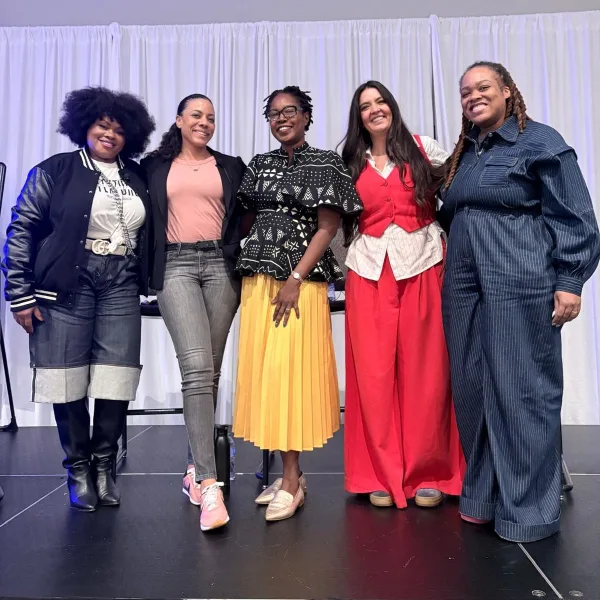
The team from Paragon HR Consulting share the risks and rewards of using AI, and how a policy is important for protecting your business, your clients, and your team.
In our last article, we talked about the common mistakes salon owners make and why AI policies deserve a spot near the top of your review list. Now, let's dig a little deeper!
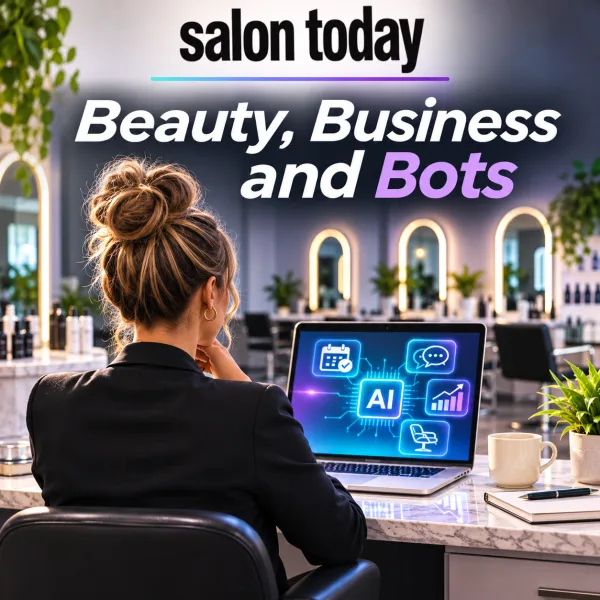
From creating social media content, responding to client messages, managing schedules, or assisting with hiring, AI is quickly becoming part of everyday salon and spa operations. And here's the interesting part: Your employees may already be using it.
We're big fans of technology that makes businesses more efficient! But with new technology comes new responsibilities.So, why should creating an AI policy be at the top of your to-do list? Let's talk about three reasons.
1. Protecting Your Clients, Employees, and Business Information
Imagine this.
Your front desk team uses ChatGPT to help respond to a client's complaint. Great idea, right? It saves time and helps create a professional response.
But what if they copy and paste the client's name, appointment history, contact information, and details about their experience into the platform?
Or maybe a service provider uploads a client's before-and-after photo into an AI editing tool without understanding where that image goes or how it might be used.
The intention may be good, but the potential risk is real.
AI platforms have different privacy settings, data retention practices, and terms of use. Not every tool is appropriate for handling confidential business or personal information.
Your AI policy should establish clear expectations around:
- What client and employee information can and cannot be entered into AI tools.
- Which AI platforms are approved for business use.
- How client photos, personal information, and internal business documents should be protected.
- When employees need management approval before using AI.
Here's the takeaway: Protecting confidential information isn't just an IT responsibility. It's a people responsibility, too!
2. AI Can Help Make Decisions, But Should It Be Making Them?
Let's talk about the people side of AI.
Imagine a salon manager using AI to write a job posting, screen applicants, draft a performance review, or prepare corrective action documentation.
These tools can be incredibly helpful!
But here's where we need to be careful.
AI doesn't know your employees, your culture, or the full story behind a workplace situation.
It may generate content that sounds professional and convincing, but that doesn't automatically make it accurate, fair, or legally appropriate.
When AI becomes part of hiring, performance management, or employee relations, businesses also need to consider potential bias, accuracy, confidentiality, and applicable employment laws.
Your AI policy should clarify:
- When AI may be used to assist with hiring and employee-related tasks.
- Which decisions require human review and approval.
- Who is responsible for verifying AI-generated information.
- When employees should consult leadership or HR rather than relying on AI-generated guidance.
AI can be a great assistant, but it shouldn't be your HR department! Technology can support your leadership decisions, but accountability and sound judgment still belong to people.
3. AI for Skin Analysis and Color Formulas: Innovation or Risk?
Can I use AI to recommend a hair color formula, analyze a client's skin, or suggest treatments based on a photo? Sounds amazing, right? And the possibilities are exciting!
This is a great tool and to use it as a tool is the key here. AI doesn't always account for a client's complete hair history, allergies, skin sensitivities, or other factors that can impact the safety and outcome of a service.
Your AI policy should address:
- Professional judgment: AI recommendations should never replace a licensed professional's assessment.
- Client safety: All recommendations must follow appropriate consultations, safety protocols, and professional standards.
- Privacy and consent: Are clients aware when their photos or personal information are being uploaded into AI tools?
AI can make us more efficient, but it doesn't replace the education, experience, and expertise behind the chair or in the treatment room.
The goal isn't to resist innovation. It's to use it responsibly while protecting the trust our clients place in us.
An AI policy helps establish one clear standard across your business.
Consider addressing:
- Approved uses: What tasks can employees use AI to help complete?
- Accuracy and accountability: Who reviews AI-generated information before it's shared or acted upon.
- Brand consistency: How do you ensure AI-generated content reflects your salon's voice, values, and expectations?
- Training and updates: How will employees learn the guidelines as technology continues to evolve?
The goal isn't to micromanage how your employees use technology. It's to give them the confidence to use it appropriately. Because clear expectations create consistency, and consistency creates stronger teams.
Does Your Salon Really Need an AI Policy?
Here's our perspective.
If your employees have access to AI tools, and chances are they do, then having a conversation about acceptable use should absolutely be on your radar.
And no, this doesn't mean creating a 20-page policy filled with complicated technical language!
Start simple.
Identify how AI is currently being used in your business. Determine what information needs protection. Establish expectations for employee use, management oversight, and accountability.
An AI policy can be incorporated into your employee handbook, supported by more detailed procedures where necessary.
Remember, an employee handbook shouldn't just address yesterday's workplace challenges. It should help prepare your business for tomorrow's opportunities. Great businesses don't just keep up with change. They create the structure and support needed to navigate it successfully.
Let's Dive Deeper: Why an AI Policy Should Be at the Top of Your To-Do List!
3 Key Reasons Every Salon and Spa Should Have an AI Policy on Their Radar
In our last article, we talked about common mistakes salon owners make when it comes to their employee handbooks, including the importance of keeping policies current.
One topic deserves a little more attention: Artificial Intelligence (AI).
AI is already making its way into everyday salon and spa operations, from marketing and client communication to hiring, skin analysis, and even hair color formulations.
We're big fans of AI! It's an incredible tool with exciting opportunities for the beauty industry. But as technology evolves, so should the expectations surrounding its use.
So, why should an AI policy be at the top of your to-do list?
1. Protecting Your Clients, Employees, and Business Information
Imagine your front desk team using AI to help draft a response to a client complaint. Smart, efficient, and a great use of technology!
But what happens when they enter the client's name, appointment history, and personal details into an AI platform?
A Service Professional uploads a client's photo into an AI tool without understanding how that image may be stored or used?
The concern isn't using AI. It's using AI without clear guidelines.
- Confidentiality: What client, employee, and business information can be shared with AI tools?
- Approved platforms: Which AI tools are appropriate for business use?
- Privacy and consent: When is permission required before uploading client photos or personal information?
AI can save your team valuable time, but protecting information should always remain a priority.
2. AI Can Help Make Decisions, But Should It Be Making Them?
Managers write job descriptions, develop interview questions, prepare performance reviews, and even draft employee communications.
That's a huge opportunity for salon leaders! But here's where an AI policy becomes important.
Just because AI produces a professional-looking answer doesn't automatically mean it's accurate, fair, or legally appropriate.
When it comes to hiring and employee relations, human judgment still matters.
· Appropriate use: When can AI assist with hiring, performance management, and employee communication?
· Human oversight: Who reviews and approves AI-generated recommendations or documents?
· Accountability: Who is responsible for ensuring information is accurate, and decisions comply with employment laws?
It shouldn't become your HR department! Use it to support your leadership, not replace it.
3. Skin Analysis and Color Formulas: Innovation Meets Professional Expertise
Now this is where AI gets really exciting! Imagine using platforms to help recommend a hair color formula, analyze a client's skin, or explore treatment options.
The possibilities are incredible!
But what happens if a recommendation doesn't account for previous chemical services, allergies, skin sensitivities, or other important factors?
AI should enhance the expertise of your service providers, not replace it.
· Professional judgment: AI recommendations must be reviewed by qualified professionals before being used.
· Client safety: Consultations, professional standards, and safety protocols still come first.
· Privacy and consent: Clients should understand when and how their photos or personal information are being used with AI.
Technology can make us more efficient, but the education, experience, and professional judgment behind the chair and in the treatment room remain essential.
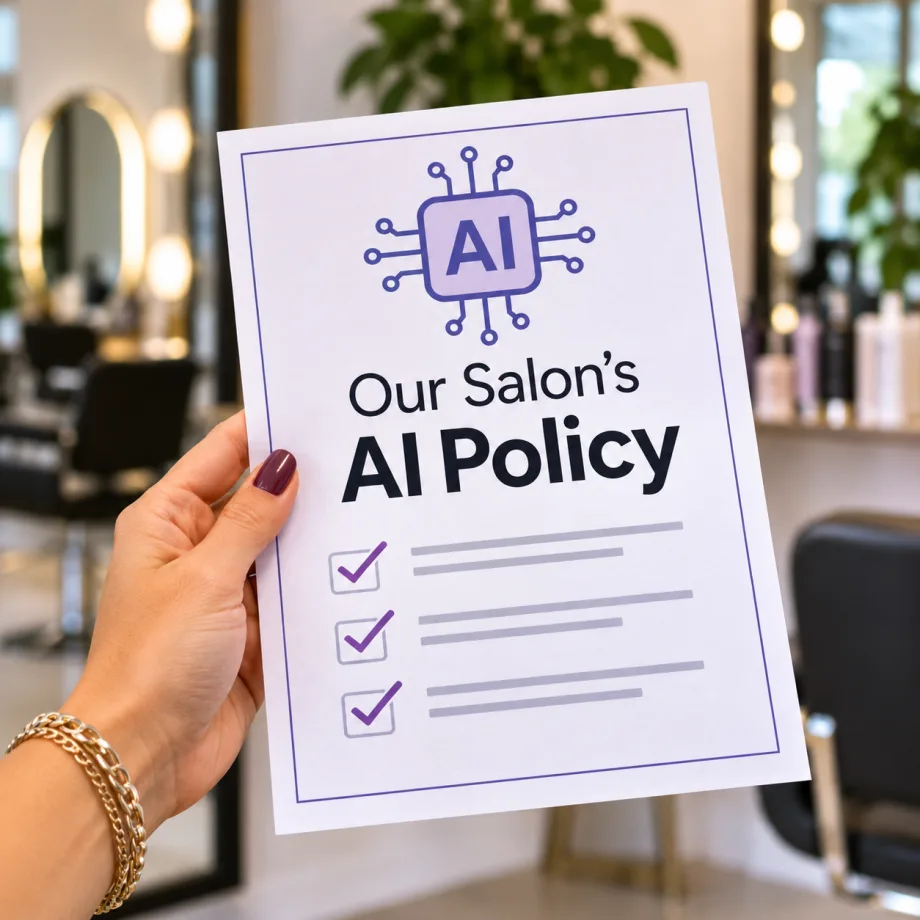
What Should Your Salon's AI Policy Actually Include?
Here's the good news. You don't need a complicated 20-page document to get started!
Focus on establishing clear expectations around five key areas:
1. Approved AI tools: Which platforms can employees use for business purposes?
2. Acceptable use: What tasks can AI assist with, and what information is off-limits?
3. Privacy and confidentiality: How will client, employee, and business information be protected?
4. Human oversight: Who is responsible for reviewing AI-generated content, recommendations, and decisions?
5. Training and accountability: How will your team understand and follow the policy as technology evolves?
An AI policy can become part of your employee handbook, giving everyone a consistent understanding of how technology should be used within your business.
The Bottom Line:
It's about giving your team the confidence to explore new tools while understanding the boundaries that protect your clients, employees, and business.
Start by asking how your team is currently using AI. You might be surprised by the answers!
From there, establish expectations and remember; your employee handbook shouldn't just address yesterday's workplace challenges. It should help prepare your business for tomorrow's opportunities.
This article is general information, not legal advice. Because laws differ by state and situation, it's wise to review your specific practices with a professional.
About the Authors: Both with Paragon HR Consulting,Danielle Stewart is President and CEO of Paragon HR Consulting and Ashley Rivera is the HR & Business Development Partner. For more information, reach out to paragonhrconsulting.com