A true day spa pioneer, Lydia Sarfati brought the first seaweed-based treatments to the United States, developed the Repechage Four-Layer Facial and encourages salons to adopt the first facial bars.
In 1977, Lydia Sarfati opened the first day spa in Manhattan, and now her skincare method is practiced by top estheticians around the world and taught by more than 200 schools. As the founder of Repechage, Sarfati brought seaweed-based skincare treatments and cosmetics to the U.S. market for the first time. She also is the developer of the Repechage Four-Layer Facial, which is offered in 35 countries, and today, her innovative Facial Bar encourages salons and spas to incorporate express facials with instant results. Sarfati is a prolific author and has produced 12 step-by-step instructional videos. Today, she presides over a 50,000 square-foot manufacturing, training, research and development facility in Seacus, New Jersey. Sarfati was a founding president of the Esthetics Manufacturer and Distributor Alliance, vice president of American Beauty Association, director of the Skin Care Council of Intercoiffure America/Canada and the honorary chairman of Esthetics America/CIDESCO USA.
Ad Loading...
How are you tenacious? Sarfati: I’m known in the industry to never take no for an answer. When I first came to the U.S. and my English wasn’t as developed, if someone I was pitching said “no,” I told them they didn’t understand. I said, “Let me tell you a different way.” I still feel if someone tells me no, it’s only because they didn’t understand what I said.
Since you started your own business, how have your motivations changed? Sarfati: They haven’t changed at all—only increased. I can always improve upon what I am already doing. If I do something today, I’ll see how I can make it better tomorrow. I strive for continued improvement in everything I do, say, read and expose myself to.
What do you do on a daily basis to help you grow as an entrepreneur? Sarfati: I really truly believe in taking very good care of myself. It allows my mind to focus and really see everything that needs to be done. I start with exercise every morning. By the time I come to work I am focused and ready. We often have meetings with my team. Certainly allows company to grow. I also allow myself time for meeting. Most entrepreneurs would rather be doing than sitting, talking and communicating.
Who or what inspires you? Sarfati: Early on, it was my father and mother who inspired me a great deal. They were both holocaust survivors, but no matter what they went through, they both had positive attitudes—especially my father. Now my children, grandchildren, my staff and team inspire me. I love working with them—they are incredible. I love being surrounded by very young and very old people. You can always learn something new and different from every generation.
What is the most important lesson you’ve learned from running your own business that you would share with other women? Sarfati: Be clear, be decisive, write it down, present it, discuss it and get everyone on the same page. I’ve seen too many people who cannot communicate clearly what they expect from someone. You need to be clear in your expectations. People don’t know what’s in your head. Just having someone watch you is not enough. Two people at same scene of the same accident will see it differently. Be CLEAR in your communication. Learn how to help the people expand and grow and have clarity.
Ad Loading...
As you grew your company/brand, what “Ah-Ha” moments of clarity helped you shape its future course? Sarfati: To control our destiny and continue to make sure our product was best in quality and formulation, we had to open and build our own manufacturing facility and stop contracting it out. In 2000, we opened our own factory. We manufacture our own product and our own extract. We harvest seaweed in France, bring it to the US, and have our own tank for the filtration process. We are very much in charge and make everything. We live in this country, so we should buy things made in the USA. I believe very strongly if more people would manufacture in the US, our economy would quadruple in short period of time.
In developing your company, what is the biggest roadblock you’ve faced, and how did you conquer it? Sarfati: Finding and really understanding distribution in the U.S. and how they work was tough. It was not until about 1996 when I joined ABA that I really learned the entire distributor network situation in the US. Once I learned, I was the first skincare brand picked up by all of them. It was a very hard job, but I did it. It’s easier now that distributors have consolidated for a company that’s already established. However, it’s more difficult for a newcomer to get into a distribution network today.
How would you describe your management style? What do you think makes you a good leader, and in what areas would you want to improve? Sarfati: I have very open lines of communication. I listen to everyone’s ideas, but in the end I have to make the decision. But I listen to everyone very carefully. I never shut someone down. I may say that’s a good idea, but not at this moment. It all goes back to being tenacious and having clear lines of communication. An area to improve would be to work on patience.
Throughout your professional history, what’s the best lesson you’ve learned after making a mistake? Sarfati: Both professionally and personally, if someone tells you they’ve never made a mistake, they are lying. Making a mistake is part of growth. My dad taught me if you make a mistake, own it. Say you’ve made it and fix it. Don’t blame someone else for a mistake.
What is the number-one quality you look for when hiring employees, and how do you evaluate if they possess that trait? Sarfati: Do they have the education and qualification for the position they are being interviewed? But that’s not enough. I can have three people with a Master’s in Communication for example, and only one of them will qualify because there is another important element: personality. In an interview, I always ask the candidate to tell me about their favorite vacation. If they sit there and say, well, we went to Vermont, the leaves were nice … they have no passion. How can they be passionate about work if they can’t tell me about their best vacation? Degrees are important, but you must have passion for what you do. If you can’t get up every morning and be happy going to work, you won’t provide the best results.
Ad Loading...
Share something personal that very few people at your work would know about you. Sarfati: I think they know me pretty well. But maybe they don’t know I’m a really good cook. I love cooking even though I eat out a lot!
What’s the best thing an employee/colleague ever said about you? Sarfati: That they have learned a lot from me and their life has become better from knowing me.
If you were training another woman to take over your job, what’s the most important advice you would offer her? Sarfati: To be tenacious, decisive, and to have energy every day. Be a positive thinker and a visionary.
If you were to look at scrapbook of your professional career, what would be your favorite page? Which page would you like to remove? Sarfati: I received so many wonderful awards, but receiving the entrepreneurial award of the year from ICMAD was memorable because it’s given from peers recognizing your achievements. It was a very memorable evening. Another memorable event is when my husband joined the company in 1998. He brought in fantastic energy and a positive attitude. Together we were able to build and do things I wouldn’t have been able to do on my own.
If someone were to write a book about your life, what would be an appropriate title? Sarfati: She Did it Her Way!
Ad Loading...
If you weren’t in the beauty industry, what would you be doing? Sarfati: I would be a historian. I love history and am a big history buff. I can imagine myself teaching, working with kids. It’s really something I love very much.
What is your vision for the future of your company? What is your vision for the future of the industry? Sarfati: I want to make sure we are in every country of the world. Currently we are in almost 40 countries, and all continents. The world is our oyster. We want to engage in business everywhere.
I am actually very excited about the beauty industry. Our industry is evolving and changing. The beauty of our industry is that it’s filled with people who have a great deal of passion. No one gets up and says they are going to be a massage therapist, nail tech, esthetician, etc, unless they are passionate about it. The ever-changing industry keeps services evolving. Whether it’s hair straightening services, gel nails or Repechage’s new mask, we are constantly thinking of how to make industry better.
Discover how to create a true “WOW experience” for every client by first building a culture where your team feels engaged, empowered, and inspired. Drawing on Calvin Stovall’s Iconic Framework, this blog explores how salon, spa, and clinic leaders can strengthen culture, elevate customer experience, and build a business that stands out for the long term.
The wellness industry is growing fast, and salons and barbershops already are an important part of it. In her first blog, Tracy Rado shares where the wellness dollars are heading, and how salon's can grow with this movement.
While salon sales are increasing, owners often feel they're working harder for the same or less profit. Leverage Q2 data from The KIM Report, Alain Audet reveals some of the structural changes that are dampening your growth and why your region and your salon size matters.
Weaknesses in your business are amplified during the Holiday Season. Spark Pro Global's Lucy Randall shows you five things to do now to have the strongest holiday season yet.
In Kati Whitledge's latest blog, she shares how salons have moved away from dress codes and embraced appearance standards. But by removing strict dress codes, some businesses may have unintentionally lowered their appearance standards. Whitledge helps you explain to your team why an appearance standard is important and how to smoothly implement a new appearance policy.
The Small Business Health Care Tax Credit is a non-refundable tax credit for for-profit businesses that provides a financial incentive for eligible employers who offer health insurance coverage to their employees. Leticia Skrabut, Esq., walks you through how to claim that credit.
Developing strong work habits early in one's career supports long-term success in the salon industry. Jesse Linares offers new stylists his top five tips.
Most salon owners have no idea what these numbers are.
You can hit record sales and still have a profit problem. The difference comes down to four numbers almost nobody was taught to track.
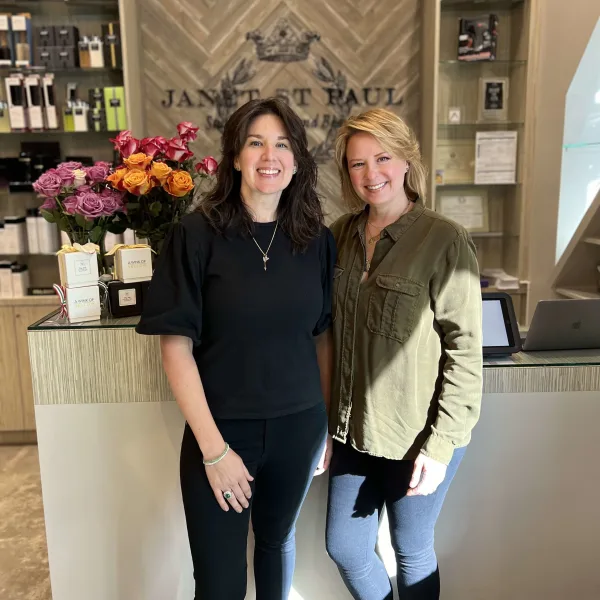
At Janet St. Paul Studio for Hair and Beauty, Director of Operations Natasha McMillen helps bring her wife Janet St. Paul's vision to life, elevating every system from education to operations.
The strongest salons, spas, and med spas know which numbers tell the real story of their business. In this practical guide, Phorest breaks down the five essential KPIs every business should track to improve retention, boost revenue, and make smarter decisions with confidence.
At Bella Style Salon in Slidell, Louisiana, Director of Operations Angela Meyer tackles inventory, team management, and guest relations. Read all about her in our latest Meet the Manager.
Starting at Impressions front desk in 2006 when he was 19 years old, General Manager Paul Petrowsky is a seasoned professional who owner Sarah Taylor says is responsible for much of her own success.
Planning is in full swing for the most anticipated events and promotions for the 2026 holidays. As owners share their favorite ways to celebrate, they prove that a carefully planned event can also build culture, increase client loyalty, boost sales, and set a business up for a successful 2027.
When things run amok at Mane Attraction Salon, Owners Chris and Jenny Knudsen say General Manager Sami Hernandez is their go-to resource and ultimate sounding board. Meet Sami in this installment of Meet the Manager.