A New Year, A New Administration and the Industry's Strongest Opportunity to Gain the 45B Tax Credit
SALON TODAY catches up with ISBN's Frank Zona, Gordan Logan and Rhoda Olsen shortly after their trip to Washington D.C. to discuss how a more united and active industry combined with a new administration and the current high visibility on tips and taxes in the U.S., offers professional beauty it's best chance on getting tip tax legislation passed, allowing it to have the same 45B tax credit that the food and beverage industry has enjoyed since 1993.
For years, a segment of the industry has worked tirelessly to obtain a tax credit for FICA taxes that salons and spas are required to pay on tips—a credit that the food and beverage industry has enjoyed since 1993.
The Small Business Tax Fairness and Compliance Simplification Act is bipartisan legislation which will directly help women, minorities and small business owners while shrinking the tax gap and increasing tip reporting compliance. As service sector small businesses commonly owned by women and minorities, the beauty industry is deserving of equitable access to the existing 45B tax tip credit which will create tax parity allowing the industry to thrive.
Ad Loading...
Industry associations like ISBN (International Salon/Spa Business Network) and PBA (Professional Beauty Association) have joined forces with other associations and individuals, working closely together to educate many members Congress about this bill.
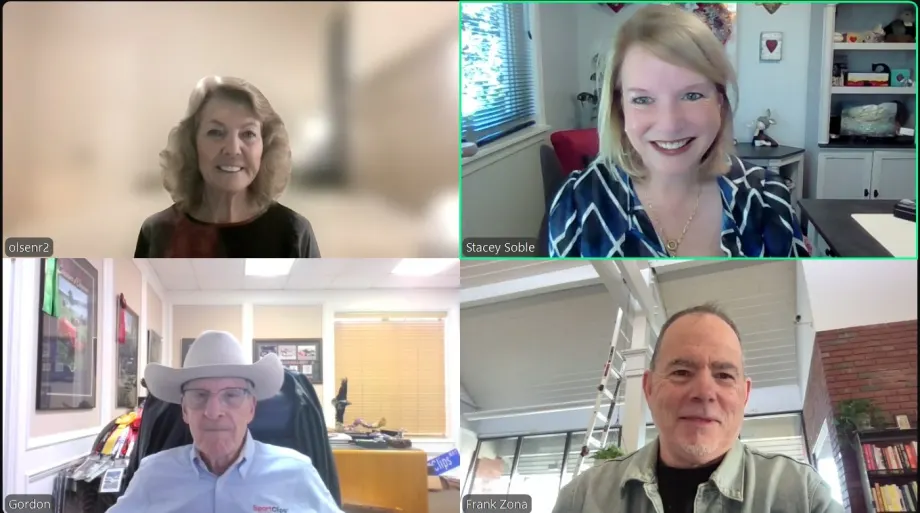
In a recent episode of SALON TODAY Conversations, Stacey Soble sat down with Frank Zona, owner of Zona Professional and ISBN Government Affairs Chair; Gordon Logan, chairman and founder of SportClips and Rhoda Olsen, vice chairman of the Board of Directors for Great Clips and ISBN Secretary, to talk about how a new year, a new administration and the recent spotlight on taxes and tips gives our industry a strong opportunity to gain the 45B Tip Tax Credit. Recently returned from Washington and a positive meeting with Congressman Lloyd Smucker (R-PA), this trio of longtime, dedicated advocates are enthusiastic about the coming months. But, they also stress there’s never been a more important time for owners to reach out to their representatives and share how the tax credit could help themselves, their employees and their overall businesses.
Click the YouTube video above to listen to the interview in its entirety or continuing reading the highlights of the interview:
SALON TODAY: Many of our listeners are familiar with the 45B Tip Tax Credit, but there probably is a good segment who have not been involved, so could you explain what it is and what you are trying to accomplish?
Frank Zona: When we talk about tips, that’s something that people frequently think of as a gift. But according to the United States tax code, tips are taxable income. In a situation where there is an employer and an employee, the income is considered wages for the purposes of Social Security. So, that means that the employer owes FICA on all the tips received.
Ad Loading...
The trick of that, from any practical point of view, is how do you pay taxes on something you don’t control? The government expects the individual to report to their employer by the 10th of every month what they earned the previous month. So, by January 10th for example, everyone across this industry and every other tipped industry will need to say, here’s what I earned in December. The problem is there needs to be a process in place to get that into payroll for the owner or payroll manager. And, it has to be accurate, which it frequently isn’t because of social reasons, personal beliefs and confusion.
SALON TODAY:The important thing to note is the restaurant industry has had this credit tips for many years, which the beauty industry has not been privileged to. Why?
Zona: Every tipped industry faces the same problem, but the restaurant industry is the biggest tipped industry. We happen to be number two. But the restaurants are more sophisticated, and they have many large, large players, like McDonald’s, that are publicly traded, and they saw this problem and said, ‘Look, we’re going to need some help from Congress.’ And they were able to obtain a tax credit called 45B which reimburses the employer for the FICA taxes they pay on tips.
Decades ago, there were salons in Connecticut that were uniformly audited because of tips, and the tip issue became more visible. Our industry was contacted by then Congresswoman Nancy Johnson in Connecticut, who said, “Would it help to get the tax credit expanded to the beauty industry?” It would be wonderful if that’s how Congress worked all the time, but it’s very rare. We said it would surely help, and it’s been a two-decade effort to get that tax credit expanded so that salon, spa and barbershop owners of any size could benefit from it.
SALON TODAY:So, what would it mean to owners financially if they got this credit?
Ad Loading...
Gordon Logan: It’s about 7.65% tax on tips. And, in our industry, tips are a very important part of the compensation for the stylists. So, if a salon is doing $100,000 a year in volume, and let’s say their tips are 20%, which is not atypical, the owner would be paying somewhere in the neighborhood of over $1,500 a year in FICA on the tips. Of course, you can just multiply that to whatever sales volume your store has. So, if a salon has a million dollar in sales, they’re paying over $15,000 in FICA on tips. You can see it’s a substantial amount of money.
I first heard about the credit the restaurant industry had when I attended my first ISBN conference in 1995, and we actually had the IRS commissioner there to talk about it. Of course, he couldn’t change it himself, that must be done through the legislature. The industry has been working on this for a number of years, but it hasn’t been really well-funded or well-coordinated until recently, and PBA and ISBN have joined forces to work on this along with a lot of other supporting organizations and people.
I think this is our last good chance to get this tax credit in 2025 because there’s going to be a lot of tax legislation. Many of the 2017 provisions are expiring, and it’s almost inevitable there’s going to be a tax bill probably in the first 100 days of the new administration. I think we are well positioned—the Ways and Means Committee has formed subcommittees called Tax Teams to look at various parts of the economy. The Main Street Tax Team headed up by Representative Smucker from Pennsylvania asked for comments. Hundreds of people and salon owners in our industry wrote in to let them know how important this tax credit would be to this industry and how it would make a difference in their businesses—in their ability to expand benefits, increase compensation, open new stores and hire new stylists.
It’s not just a tax credit for us, it’s also a way to grow the economy and that’s very important. So, Rhoda, Frank and I were with Matt Doctor (executive vice president and chief strategy officer) from Regis in Washington a couple of weeks ago and actually had a very long conversation with Representative Smucker.
He’s very receptive to it, and he told us his report going to Chairman Smith would include mention of our tax credit favorably. We’ve done everything we possibly can, and had a real full court press going on the last two years and it’s accelerated in the last six months. I think we’re better positioned today than we ever have been to get this done. But in Washington, it’s not done until it’s done. But it’s been a coordinated effort by a lot of people in this industry, and I think we’ve educated a lot of the legislators and made an impression, and hopefully we can push it across the finish line.
Ad Loading...
Rhoda Olsen: When I listen to these two gentlemen, I think they’re really underplaying their efforts. When you look at the time that’s been spent on this, some people may say, ‘Well is this ever going to get done?’ But if you understand legislative activity, it takes time. Every effort that was done before has added to this.
There’s all the work that has been done by Myra Irizarry Reddy and Katie Rapoza (who manage government affairs for PBA and ISBN), and Paola Hinton (who owns Five Senses Salon, Spa and Barbershop in Peoria, IL,) and a lot of other individual salon owners and it’s all combining to provide a level of momentum that I think is different. As Gordon mentioned, our industry is not very politically savvy. They’re busy doing their jobs—they’re working in their salons and you know, 92% of those have fewer than 10 employees. They can’t easily come to Washington and lobby, and they aren’t politically aware of what it takes to get this done.
We’re there on their behalf and Frank has been working on this for decades, Gordon as well. But it’s not unusual that something like this takes time to get the right visibility, the right resources and the right combination of effort. I also think that now there’s a lot of momentum and the timing is right. There’s awareness about tips and taxes and small businesses. This truly is a small business fairness issue as well—and owners would greatly benefit from the additional profitability to grow their businesses. It’s been a long time, but I think we’re at the tipping point. We have more than 50 cosponsors, we have a positive JT (Joint Committee on Taxation) scoring, which is incredibly positive. There are a number of things that have moved to a point where I think all of us feel more confident than we have over the last decades on this legislation.
SALON TODAY: And this legislation has had bipartisan support—support from both sides—for a long time, but that’s not enough. What has made it so challenging to get this legislation through?
Zona: A lot of things have to meet at the same time. You have to have some money invested by an industry for an advocacy effort. You need the right champions in Congress. And in those moments when things finally get done, people have to stand up and say, “This is one of the most important things to me.”
Ad Loading...
We’re weeks away from a new administration, and one of the central issues in the recent presidential campaign was the taxability of tip income. So, it’s never been more relevant, and sometimes Congress needs that public visibility of an issue to realize that there’s something to be dealt with here.
Our hope is that as Congress wrestles with the idea that tips be taxed at all, they’re going to have to face the math of that question, and it’s our calculation that it’s probably not realistic to remove tips from the tax code. Otherwise, our accountants, our attorneys, our mechanics, everyone is going to have this reason to reclassify income as tips. And, it would cost hundreds of billions of dollars.
So, Congress is going to be left in the position of saying, ‘Well, we’d like to do something about that.’ And, then there we will be with a revenue positive score, three decades of bipartisan efforts on legislation that is well vetted and non-controversial. If a congress person was watching this conversation right now, they’d say, ‘Why isn’t this done?’
So it is a unique time, as Rhoda just said, to get this done.
SALON TODAY: I believe what you have alluded to is Trump’s proposed reforms that would eliminate taxes on tips altogether, and we’ve had previous conversations about how unlikely that is. But that is also part of what makes this such a prime time, yes?
Ad Loading...
Logan: Six months ago, nobody was talking about tips. Then there were two bills introduced to Congress in response to Trump’s statement in Las Vegas, and then followed up by Vice President Harris—one eliminates all taxes—income taxes, Social Security, the whole nine yards. In the Senate, Senator Cruz introduced a bill that eliminated income tax on tips. So as Frank mentioned, it’s a several billion-dollar bill if you eliminate income tax period with the Social Security fund not being in such good shape. For many people in our industry, Social Security may well be their retirement plan. I think those two things are going to come into play. Then we go in with our bills which is heavily cosponsored—with more than 50 sponsors pretty divided between Democrats and Republicans. Since everyone is talking about tips and if they decide they can’t eliminate taxes on tips, then maybe they will see this as a fallback. Maybe they say, ‘We couldn’t do everything, but we can do something.’ That is what has increased the visibility of this issue and gives us a better forum in which to promote this idea.
Olsen: We clearly heard in D.C. that there’s a lot of skepticism about being about to do anything about eliminating taxes on tips, it would be really difficult given the impact. I do think the timing of this is good because of that increased awareness. And, I think it also falls into the small business arena. When we sat and had lunch we’ve said, “How are we going to get visibility over some of the other issues facing our country?’ We’re a relatively small industry with about 115,000 employers, but the legislators are dealing with immigration and wars and other tax issues that can be overwhelming, so it’s hard to get visibility. That’s why if we can be tax neutral, tax positive just to get added to a tax bill, that’s our best chance.
SALON TODAY: I know that you all can state quite a few statistics about our industry that can make this legislation attractive for Congress. Can you share?
Olsen: Yes, you know 84% of employment-based salons have fewer than 10 employees. Sixty percent of them are women and 34% are minorities. It’s a very broad representation of small businesses owned by and employing both women and minorities. You know, Gordon and I obviously represent much larger businesses, but the case is that most our actual locations are very small businesses operating in small communities that would benefit greatly from the support.
SALON TODAY: So, I think the most important question is, what can people do right now to help?
Ad Loading...
Zona: Don’t ignore it. Don’t assume that because there’s a large conversation about tips not being taxed at all, that that is going to happen. It’s a really important time to get this done. And, while our industry may not be politically savvy as a whole, in some ways we’re very politically connected. We just don’t leverage that. In other words, every member of Congress lives in some community somewhere and sits in the chair of a salon or a franchise that is going to be directly affected. What’s at stake here is employment, because there are a lot of vulnerable folks out there. We have a workforce that lacks education on financial planning, which to Gordon’s point means they will be relying on Social Security. Salon owners don’t need to understand tax law, they just need to understand how to get in touch with their members of Congress and say, ‘You better get this done.’ The people of the industry have to say it’s now or never, and members of Congress need to realize that it’d be a big bad mark to not handle something that is so teed up for them to deal with now. What can a viewer do? My answer is: Contact your member of Congress!
SALON TODAY: And is there a system in place to help people who have never reached out to their Congressmenperson before?
Logan: Yes, Katie and Myra have been working on this for years, and they have a guideline of how to go about contacting your representative. Representatives are really easy to get in touch with, they represent a relatively small area and they’re back in their home districts almost every week. They usually have two to four offices in their districts, and you can get in touch with their local offices.
If you read in the paper that your representative is going to be at a Kiwanis Club meeting or at the Chamber of Commerce, don’t be afraid to walk up and tell them you own a salon and that you want to talk to them about something very important to you and our industry. Emphasize not just that it will be a tax credit for you, but what it will help you do for your employees, whether that’s to bring them better benefits or improve compensation or hire more staff. It’s critical, because representatives really do pay attention to their constituencies. Phone calls and emails help keep it going.
When Katie recently sent out a questionnaire to everyone on the PBA and ISBN contact lists with six questions, she put the responses through ChatGPT and generated a customized letter. It's one of the most impressive outpourings we’ve had in the last few years—we got more than 4,000 signatures on the letter. We just need to follow through and get it done. The next few months are critical.
Ad Loading...
We also have to pay the lobbyists who help us, they’re expensive right now and thanks to Rhoda and some other folks, we have funding for the first couple months of this year, but if it drags out longer we’ll need additional funding. The PBA has an Issues Advocacy Fund and you don’t have to be a member of PBA to contribute. There’s no limit and corporations can contribute as well as individuals, and that’s what it takes to make things happen in Washington.
So those are the two things that people can do, contact their representative and contribute to the PBA Issue Advocacy Fund.
Editor's Note: PBA’s website has a number of resources to make this as easy as possible. Visit their site on FICA Tax Tip Fairness to download fast facts on the 45B Fica Tax Tip Credit, send an email to your members of Congress and more. Or, donate to the advocacy fund and more.
BaBylissPRO and IGK have partnered to launch the BaBylissPRO Studio Trunk, transforming the professional tool brand’s digital Style Studio into a physical experience for the first time in its sixty-year history.
K18 Biomimetic Hairscience has partnered with Beauty Changes Lives to launch the K18 Future of Hair Scholarship, aiming to support aspiring professional stylists by reducing financial barriers to cosmetology education.
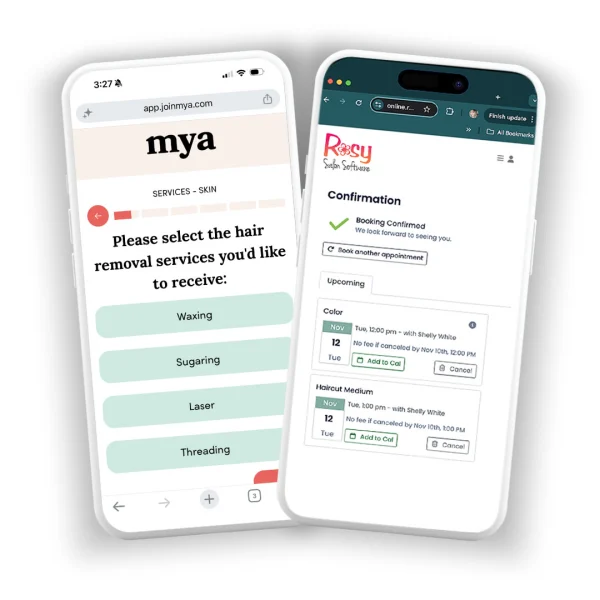
Rosy Salon Software integrates with Mya, empowering salons, spas, and barbershops to transform their websites into powerful, automated lead-generation machines.
Known for his buttery blondes and a technique for highlighting hair with more precision that he called chunking, Brad Johns died on August 27. His friend and fellow colorist, David Stanko, shares thoughts on his talented colleague and close friend.
The Green Beauty Community Foundation convenes beauty brands, salon-industry leaders, educators, and sustainability organizations for a collaborative professional beauty gathering on September 23rd in New York.
At 80, global feminist, former marriage and family therapist, executive coach, and powerlifter Barrie Zucal shows women how to stop letting “debilitating goodness” derail their dreams. Her empowering new book, BOLD: How Women Play BIG by Leading Instead of Pleasing, calls out the quiet conditioning that holds women back from achieving their ambitions — and shows them how to free themselves.
From a Santa Monica apartment startup to the nation's largest sugaring and sunless tanning brand, SUGARED + BRONZED reaches a major milestone with 50 locations across 10 markets.
The new service, which builds and maintains websites for fitness and wellness businesses, is the second in Playlist's suite of AI-powered apps, which includes AIConcierge, designed to improve client engagement and booking conversions.