Missed Opportunity: A Quarter of American Women Don't Go to the Salon
A new US consumer study by All Things Hair shows that a quarter of American women, especially multiracial and biracial women, don't go to the salon. The survey also shows African American women visit more regularly, have longer appointments and spend more at the salon, despite the fact they have to travel the furthest.
by Staff
March 23, 2023
2 min to read
A new survey reveals the striking differences in women's hair experiences in the United States and that consumer hair care needs, largely that of women of color, are being unmet.
The hair experts at All Things Hair (a publication by Unilever) conducted a survey targeting 2,000 U.Y. women of different ethnicities above the age of 16 to investigate hair inequality. The survey reveals the striking differences in women’s hair experiences in the US and that consumer hair care needs, largely the hair care needs of women of color, are being unmet.
Ad Loading...
Visiting the Hair Salon
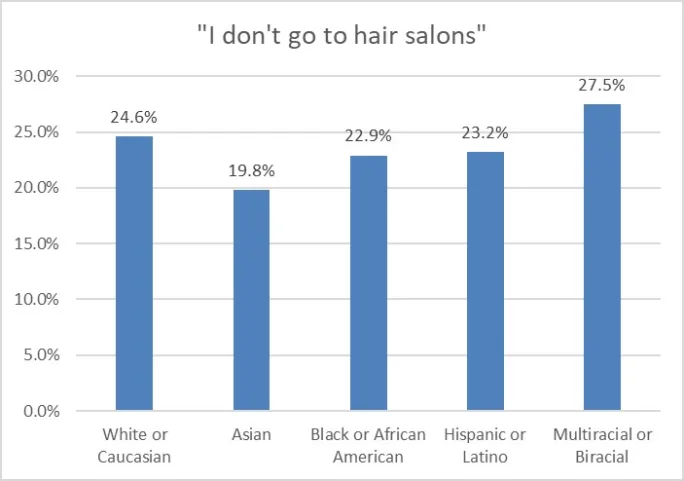
The survey reveals that a quarter (24%) of American women don’t even go to hair salons, while Multiracial & Biracial women are the least likely to go:
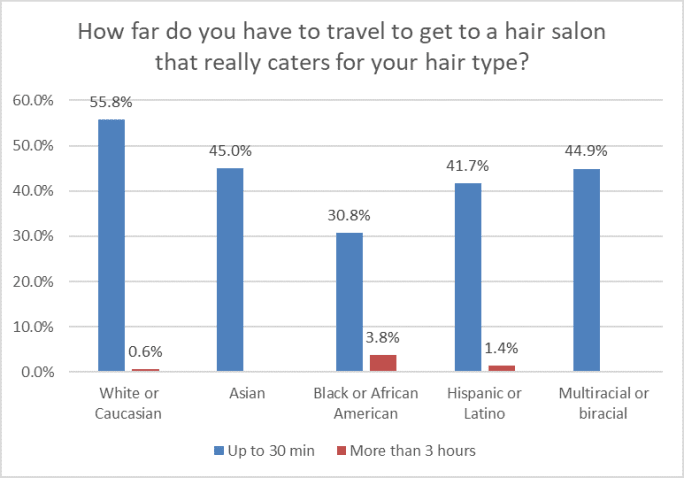
The survey also showed that when African American women visit the salon the most: 5.9% of Black women go to a hair salon once a week (double the consumer average of 2.9%). Adding to this, African American women have to travel the furthest to get to a hair salon that really caters to their hair type:
Hair Salon Appointment Lengths
The survey also reveals that Black women spend the most time at hair their salon appointments while White women spend the least amount of time:
18% of African American women spend more than 3 hours at hair salon appointments (triple the average of 6%)
Almost half (46%) of Caucasian women in the US spend less than 1 hour at hair salon appointments (higher than the average of 40%)
Hair Salon Spending Habits
The survey reveals that almost a quarter (24%) of US women spend more than $100 in hair salons. African American women spend the most money, with 36% spending more than $100 at salons.
Ad Loading...
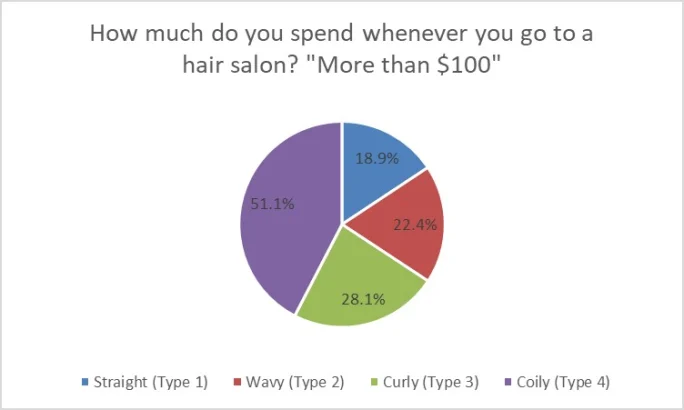
Additionally, women with 4c hair spend the most money at hair salons while women with straight hair spend the least:
Collectively, these figures show that African American women are spending more money in hair salons, visiting hair salons more regularly, and spending more time at hair salon appointments despite having to travel the furthest to find a hair salon that really caters to their hair type.
Nelly Ghansah, Natural Hair Editor at All Things Hair, comments: “In a society where we have progressed so much, hair inequality remains a huge issue. Our goal is to shed light on the inequalities that black and brown women face in the haircare space and the many strides that are being made to combat this issue.”
With a mission to support stylists with exclusive professional products and technique-driven education, TruBeauty Concepts gives them the tools they need to be successful and profitable.
Stylists Yene Damtew and Jamal Edmonds launch Coil Event, a textured hair event for working stylists with hands-on education, live demonstrations, industry conversation, and networking.
The easily wearable formula delivers XL volume, extreme length, and a weightless, lifted finish without the heaviness of traditional volumizing mascaras.
The International SPA Association recently announced that Jefferson Fisher, Jamie Kern Lima and Zack Kass are the keynote speakers for its 2027 Conference, scheduled for March 3-5 at Mandalay Bay in Las Vegas.
Life of Riley Salon Supply and Riley Salon Resources are back in the family, as Kelly Huether acquires the professional distributor he co-founded in 2013.
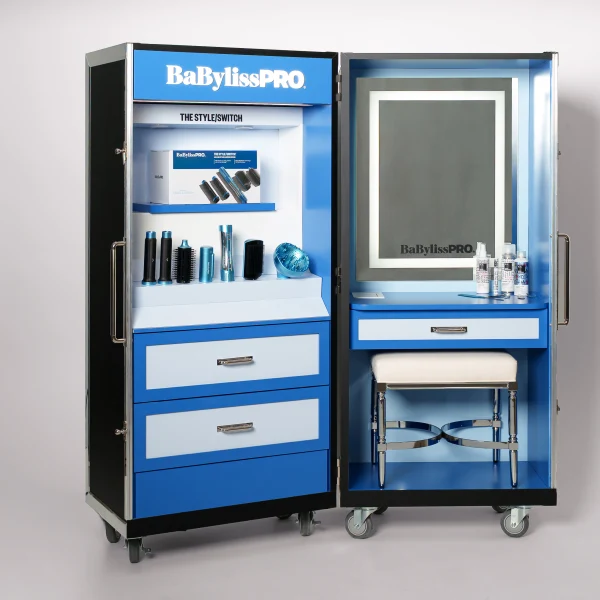
BaBylissPRO and IGK have partnered to launch the BaBylissPRO Studio Trunk, transforming the professional tool brand’s digital Style Studio into a physical experience for the first time in its sixty-year history.
K18 Biomimetic Hairscience has partnered with Beauty Changes Lives to launch the K18 Future of Hair Scholarship, aiming to support aspiring professional stylists by reducing financial barriers to cosmetology education.