











Kelly Huether Reacquires Life of Riley and Riley Salon Resources
Life of Riley Salon Supply and Riley Salon Resources are back in the family, as Kelly Huether acquires the professional distributor he co-founded in 2013.
by Staff
 MENU
MENU SEARCH
Includes expanded unemployment insurance benefits and a recovery rebate. Learn about some of the key points of this important legislation.

On Wednesday night, March 25, the Senate passed a nearly $2 trillion economic stimulus plan, the Coronavirus Aid, Relief and Economic Security (CARES) Act. The bill builds upon earlier versions of the CARES Act and is intended to be a third round of federal government support in the wake of the coronavirus public health crisis.
A press release from The White House outlines this relief package and here are key take-aways:
FOR FAMILIES
This legislation provides tax free payments—treated as a refundable tax credit—to Americans.
Couples earning up to $150,000 will receive $2,400, plus an additional $500 for each child.
2019 or 2018 tax returns will be used to calculate the rebate advanced to taxpayers, but taxpayers eligible for a larger rebate based on 2020 income will receive it in the 2020 tax season.
Individuals earning up to $75,000 will receive $1,200, plus an additional $500 for each child.
These payments will phase out for those earning over $75,000, $112,500 for head of household filers, and $150,000 for married couples filing joint tax returns.
The CARES Act allows States to temporarily increase unemployment benefits and receive Federal reimbursement for the additional amount.
Encourages States to waive the typical one week waiting period and provides an additional 13 weeks of benefits
Creates a new program to assist the self-employed and independent contractors who are unemployed due to the pandemic.
The legislation provides relief for homeowners and renters, ensuring that Americans’ homes are not threatened by the coronavirus.
Enables payment forbearance for federally backed mortgages, requires a foreclosure and eviction moratorium for homeowners with such mortgages, and imposes an eviction moratorium for renters in federally supported housing.
Suspends penalties for withdrawing up to $100,000 from retirement accounts.
Allows a high-deductible health plan with a health savings account to cover telehealth services prior to a patient reaching the deductible.
The legislation provides $3.5 billion in emergency funding to childcare providers to stay open, keep payroll, and prioritize the childcare needs of healthcare, emergency, and sanitation workers.
FOR BUSINESSES
This legislation provides small businesses and nonprofits comprised of 500 or fewer employees with almost $350 billion in partially forgivable loans.
The maximum loan amount for 7(a) business loans will be temporarily increased.This legislation also provides $17 billion to forgive 6 months of payments on any existing Small Business Administration non-disaster loans.
The CARES Act provides critical payroll tax relief for small businesses.
The legislation expands the emergency disaster loan program by funding $10 billion in advances on loan applications to rapidly help small businesses cover expenses including sick leave, payroll, and rent.
Businesses adversely affected by the coronavirus are eligible for a tax credit of $5,000 for wages paid to each employee.
The CARES Act includes $500 billion for the Treasury and Federal Reserve to provide liquidity and purchase business, municipal, and State debt.
If needed, the Federal Reserve can leverage funds of more than $4 trillion in financial support during this time of disaster.
TAXFOUNDATION.ORG
The Tax Foundation took these key points and broke them down, even further:
Expanded unemployment insurance (UI) for workers, including a $600 per week increase in benefits for up to four months and federal funding of UI benefits provided to those not usually eligible for UI, such as the self-employed, independent contractors, and those with limited work history. The federal government is incentivizing states to repeal any “waiting week” provisions that prevent unemployed workers from getting benefits as soon as they are laid off by fully funding the first week of UI for states that suspend such waiting periods. Additionally, the federal government will fund an additional 13 weeks of unemployment benefits through December 31, 2020 after workers have run out of state unemployment benefits.
Recovery Rebate for individual taxpayers.
The bill would provide a $1,200 refundable tax credit for individuals ($2,400 for joint taxpayers). Additionally, taxpayers with children will receive a flat $500 for each child.
The rebates would not be counted as taxable income for recipients, as the rebate is a credit against tax liability and is refundable for taxpayers with no tax liability to offset.
The rebate phases out at $75,000 for singles, $112,500 for heads of household, and $150,000 for joint taxpayers at 5 percent per dollar of qualified income, or $50 per $1,000 earned.
It phases out entirely at $99,000 for single taxpayers with no children and $198,000 for joint taxpayers with no children. 2019 or 2018 tax returns will be used to calculate the rebate advanced to taxpayers, but taxpayers eligible for a larger rebate based on 2020 income will receive it in the 2020 tax season.
Taxpayers with higher incomes in 2020 will see the overpayment associated with their rebate forgiven. For example, a single taxpayer with $100,000 in 2019 income would not receive an advance rebate but would receive the $1,200 credit on their 2020 return if their income for the year fell below the phaseout.
On the other hand, a single taxpayer with $35,000 in income receives a $1,200 advance rebate but would not have to pay the rebate back on the 2020 return if they make $100,000 this year.
This credit is one-time, but policymakers may consider additional rebates if the downturn is prolonged.
Originally posted on Modern Salon
Life of Riley Salon Supply and Riley Salon Resources are back in the family, as Kelly Huether acquires the professional distributor he co-founded in 2013.
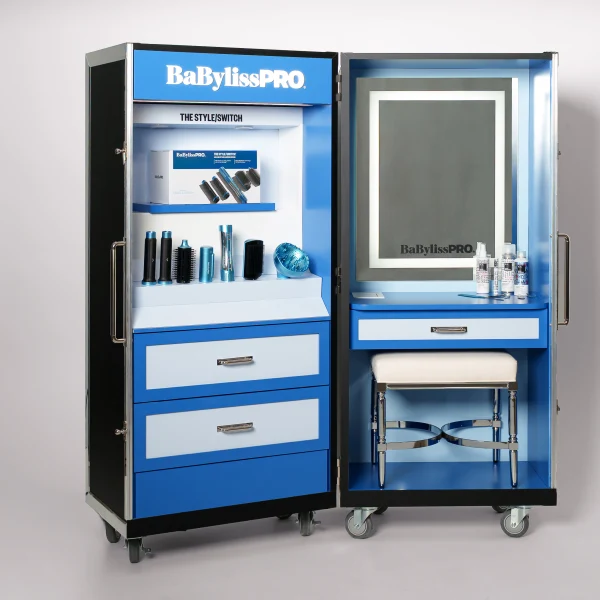
BaBylissPRO and IGK have partnered to launch the BaBylissPRO Studio Trunk, transforming the professional tool brand’s digital Style Studio into a physical experience for the first time in its sixty-year history.
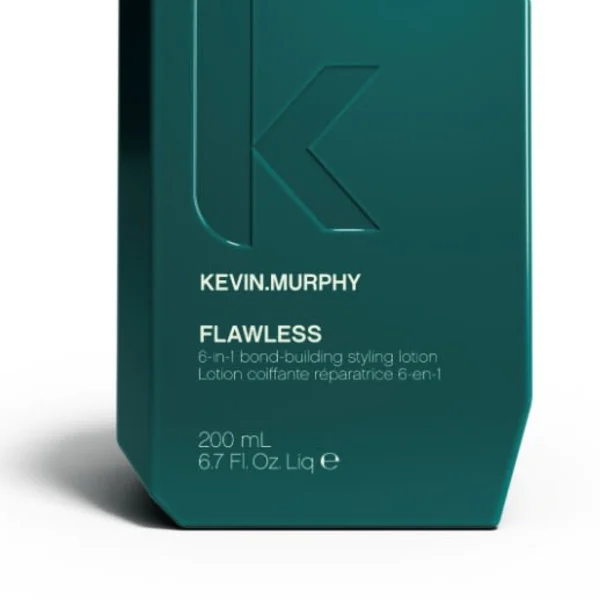
KEVIN.MURPHY's Flawless combines hair repair and styling benefits using KM.Re.Bond technology.

K18 Biomimetic Hairscience has partnered with Beauty Changes Lives to launch the K18 Future of Hair Scholarship, aiming to support aspiring professional stylists by reducing financial barriers to cosmetology education.
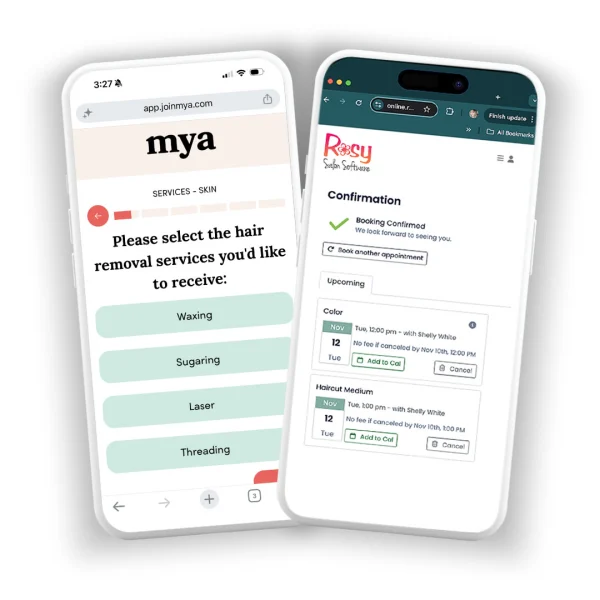
Rosy Salon Software integrates with Mya, empowering salons, spas, and barbershops to transform their websites into powerful, automated lead-generation machines.

Known for his buttery blondes and a technique for highlighting hair with more precision that he called chunking, Brad Johns died on August 27. His friend and fellow colorist, David Stanko, shares thoughts on his talented colleague and close friend.

The Green Beauty Community Foundation convenes beauty brands, salon-industry leaders, educators, and sustainability organizations for a collaborative professional beauty gathering on September 23rd in New York.

At 80, global feminist, former marriage and family therapist, executive coach, and powerlifter Barrie Zucal shows women how to stop letting “debilitating goodness” derail their dreams. Her empowering new book, BOLD: How Women Play BIG by Leading Instead of Pleasing, calls out the quiet conditioning that holds women back from achieving their ambitions — and shows them how to free themselves.

From a Santa Monica apartment startup to the nation's largest sugaring and sunless tanning brand, SUGARED + BRONZED reaches a major milestone with 50 locations across 10 markets.

The Davines Edit reflects the brand’s passion for people and planet.