







You Don't Own a Salon. You Own A Business.
In his latest blog, Leon Alexander Ph.D., challenges industry conventional thinking to help owners add more to their bottom lines.
 MENU
 SEARCH
The ISBN conference plans an event focused on helping members grow by cutting costs and seizing unique opportunities. As a preview, Mel Kleiman, a recruitment expert and the conference’s keynote speaker, reveals his top tips on how to recruit and hire the best employees.
The ISBN conference plans an event focused on helping members grow by cutting costs and seizing unique opportunities. As a preview, Mel Kleiman, a recruitment expert and the conference's keynote speaker, reveals his top tips on how to recruit and hire the best employees.

When the members and guests of the International Salon and Spa Business Network gather May 31 through June 2 for their annual conference at the Ritz-Carlton in Amelia Island, Florida, there's no doubt the popular beach of the luxurious barrier island's hotel will be tempting. But it's the invigorating mix of pertinent speakers, roundtable sessions and exhibitors that promise to excite and motivate participants.
With an overall focus on the strategic decisions that will keep salons "in the black" in these leaner times, ISBN invited Mel Kleiman, an international authority on employee recruiting, selection and retention practices.
Now president of Humetrics, Mel Kleiman was at one time was the single largest owner of Hertz Rent-a-Car franchises, which gave him unique insight into successfully hiring hourly employees.

Mel Kleiman
Kleiman feels that many industries-including the professional salon and spa industry-suffer from the plague of the "warm body." "From the salon industry to home health care to security guards-all these industries have one common denominator-your people are your product," he says. "The most important decision you make every day is who you allow in the door to take care of your customers."
In preparing for his ISBN address, the Hire Tough, Manage Easy author shares a few of his strategies with SALON TODAY readers:
ST: How should an owner prepare to interview potential employees?
Kleiman: Going through the hiring process is like going to the grocery story. The number one mistake is shopping without a list. You don't know what you're looking for and don't get everything you need. Another mistake is shopping when you are hungry. The same rules apply to hiring. Make a list of what you need in an employee, and don't wait to interview people until you need them right away. Then, their most important attribute is the fact they can start tomorrow.
ST: We're developing a shopping list. What things should be on it?
Kleiman: Just as there are four categories on the USDA Food Pyramid, there are four categories to consider when you are hiring:
Capacity: This forms the base of your pyramid. Is the candidate physically able to do the job? Is he or she smart enough to do it?
Attitude: This is the next level. The problem is that people are hired for what they know, but are fired for who they are. When it comes to statistics, only 13 percent of people are fired because they can't do the job-most are fired because of their attitude. Dependability is an attitude; teamwork is an attitude; customer service is an attitude.
Personality: Companies have a personality-we call it a culture. The better you are at identifying a candidate whose personality matches your culture, the more effective that employee will be. Personality is more ingrained than attitude and more difficult to change. Whether a person is an introvert or an extrovert is personality; their level of attention to detail is personality. A successful personality is the one that's not just motivated by things they like to do, but is willing to do the things they don't like to do to be successful.
Skill: This is the top of the pyramid, whether the candidate has the necessary skill to do the job.
When you look at the pyramid, the bottom and the top (or capacity and skill) have the most exposed area-those are the things that are the easiest to discern. It's the traits in the middle-attitude and personality-that are the hardest to discover. When you make your shopping list, look at each of these areas and decide what traits a candidate needs to become a successful employee.
ST: In addition to making the list, you caution that there's homework an owner needs to do before they go shopping. What is that?
Kleiman: There are five questions you need to ask yourself before inviting in candidates for an interview:
Are you really committed to hiring A-list players? If not, that's OK, but then you need to identify what level you are willing to hire and let that build your process for you.
What are the reasons a candidate would want to work for your company? Make a list of the top 10 reasons a candidate should come to work for you. More than 95 percent of owners haven't done this, but just going through the process helps you develop a sales pitch for your company.
How easy do you make it for the people you would want to hire to find you and get into your process?
How will you know when you have the best candidate?
What will you do to retain them once you've got them?
ST: Where should an owner look for the best employees?
Kleiman:
Stop shopping among the people who are looking for jobs. First, have you ever had great people work for you who have left? Start by trying to bring them back. One woman came up after a session and admitted that a competitor called looking for a reference on a former great employee. She told the caller she'd have to get the former employee's permission first, then called the former employee herself and made her an offer. Why give away the best employees if you can get them to come back to work for you?
The second best source of candidates is from your present employees and best customers. Ask your clients why they come to you. Find out if they go anywhere else for other salon services and find out whom they see.
Remember, the best person to hire is someone else's frustrated employee. If all the best people are already working, then you have to think about how available you are for interviewing. Be available to schedule interviews early in the morning and late at night.
ST: How do you identify the best employees when interviewing?
Kleiman: Never interview with a resume in front of you. I wouldn't even ask for a resume-they are just marketing tools. If you interview off a resume, then you're following the information the candidate wanted you to follow, and you are no longer controlling the interview.
Instead, hand them an application and ask them to fill it out completely, then see how they follow the directions. If they can't or won't follow directions, then you don't want to hire them.
Then, I'd hand them a voucher and tell them, "If I hire you, you'll never look at this salon from a customer's perspective again. I want you to set up an appointment for a service, then come back and give me a complete report-tell me what went right and what went wrong."
When they report back, note if they can recognize good customer service. Are they smart enough to pick up on possible concerns?
ST: What's the best interview question to ask every candidate?
Kleiman: Most of us ask candidates to tell us about their last job-but they are prepared for the question and it's kind of like watching a movie backward. I like to ask them about the first job they ever had, whether it was as a waiter or a babysitter, and ask what they learned from that experience.
ST: What's the best system for interviewing candidates?
Kleiman: It's best to develop a structured interviewing process and, remember, the more you know about the candidate, the less you risk. Involve your organization's best people in the process. It's good to have more than one of you in the room when interviewing. You'll be more likely to concentrate on the candidate rather than the question, and having an extra person in the room can have a dramatic effect on the responses. You'll also have a second opinion to help you decide.
Given the topic of Mel Kleiman's keynote, ISBN members weigh in with the staffing strategies that have weathered the test of time in their own companies:

"We interview and hire based on four core values that our staff agree upon-respect, teamwork, friendliness/image and customer service. Of course we look at technical skills as well. When we do make a hire, the new person is put on a 45-day trial period, and our staff takes a vote at the end if we should make the new hire permanent. We tell candidates about this upfront, and many eliminate themselves from the process. Because we share a portion of our profit with staff members as a bonus at the end of the year, they really take ownership in the hiring system and have a vested interest in hiring employees who will help us grow overall."

"We've been in business more than 70 years and have a history and brand recognition in our market that attracts candidates. Our company has a training salon that operates under the name Gould's Exchange. When we hire new stylists, they start at the training salon and work from six months to a year depending on how they progress. They work on real clients every day, and on Mondays are required to attend classes to help them develop their skills. They receive a guaranteed salary against commission, advanced education and benefits. The training salon serves as a continuation of the interview process, providing us with the ability to assess not just their technical skills but how well they communicate and interact with clients. It's a process that works well for us-we always have a waiting list of stylists wanting to work at the training salon."

"With six locations and a school, we try to work with what's in our stables and groom from within. When new hires come from our school, we know who they are and what kind of behavior they'll exhibit. Having them as students gives us the ability to really choose who has potential and a strong work ethic, as well as the right attitude and personality."

"Some of the best prospects are those who are referred to us by our staff members. I spend a lot of time going into schools and giving classes on motivation, inspiration and career path opportunities. Although you can never discredit technical ability, 90 percent of an employee's success is dependent on their communication skills. When a candidate comes in, I'll spend about 90 minutes talking with them. I look for people who smile a lot, I look at their appearance, I note if they are on time, and I ask why they wanted to become a hairdresser. Sometimes that will reveal whether they truly have a passion for the craft. I have each candidate interview with three different people so we can compare notes, and I always ask them to take the weekend and think it over before accepting."
ROUNDTABLES
At the ISBN conference, a series of planned roundtable discussions will focus on helping salon and spa owners control costs and drive sales in these difficult economic times. The sessions, limited to about 10 participants each, are designed to be intensely focused and highly interactive. To date, sessions include:
>Maximize Market Share
While everyone else is slowing down, now is your chance to make your move. This session provides marketing tips designed to help gain market share while the economy is in a downturn. Moderated by Doreen Belliveau, director of marketing, Chatters Canada and Sam Lennes, GoLoyal Inc.
>Cash is King (But Financing is Still Available)
Tips for obtaining financing in tight credit markets. Moderated by Scott Perry, vice president, Sport Clips.
>Real Estate is a Buyer's Market
Tips for leveraging your bargaining position with landlords and developers. Capitalize on better rent rates and tenant improvement allowances to take advantage of once-in-a-decade opportunities.
>Cut Costs Without Sacrificing Quality
Tips on scrutinizing your operating expenses for cost-cutting opportunities that won't affect the quality of service your company offers. Moderated by Ron Provenzano, Zano Salons and Spas.
>Tighten the Front Desk
What are the cost-cutting and revenue-enhancing opportunities at your front desk? Once you identify them, how do you engage your team to act on the best opportunities? Moderated by Tom Kuhn, Qnity, and Jeanine Blackwell, SalonBiz.
>Going Digital
With 70 percent of consumers searching online, businesses need to make sure they are obtaining the right level of brand exposure. Not only are online mediums more cost-effective, they have the potential for creating highly targeted and personalized marketing to the end-consumer. Paul Tate and Valorie Reavis from Shortcuts Software will lead the discussion on what works best and what pitfalls to avoid when creating your digital strategy.
NEED TO KNOW
What: ISBN Annual Conference
Who: Attendees include ISBN members and board members, other salon owners interested in networking with and learning from chain salon executives, industry leaders and sponsor representatives. You do not need to be a member to attend.
Where: Ritz Carlton, Amelia Island, Florida
When: May 31-June 2, 2009
How: Visit www.salonspanetwork.org for complete schedule and details. Early registration (before April 16) is $595 for members; $795 for non members.
2009 Exhibitors (At Press Time)
John Paul Mitchell Systems
Equibal Labs
Alterna Professional Haircare
Sexy Hair
AG Hair Cosmetics
Go Loyal, Inc.
HAIRuWEAR
Millennium by Harms Software
Shortcuts Salon and Spa Software
Redken
Matrix
The International SalonSpa Business Network (ISBN) is a peer group
dedicated to helping multi-unit salon and day spa owners grow their
businesses and increase their profitability. ISBN members represent
businesses of all different sizes and scopes, including high-end
salon/day spas, mid-priced salons, and value-priced salons. For more
information, contact Margie Melaniphy, director of business
development, at 866-444-4272.
In his latest blog, Leon Alexander Ph.D., challenges industry conventional thinking to help owners add more to their bottom lines.

In her latest blog, Amy Pal helps you develop your own clear guidelines around complimentary free employee services.

From managing air traffic on busy days to handling frustrated guests' complaints, your front desk team often serves as the salon's emotional shock absorber. From a customer service lesson from the DMV to a list of strategies for caring for your front line, our experts offer ideas for alleviating stress, celebrating wins, and setting goals.

According to the KIM Report, top-line salon revenue appears steady or slightly up, but that growth is driven primarily by service price increases. Beneath the surface, retail performance and client visit frequency (appointment drift) are under real pressure. In his latest blog, Alain Audet offers strategies for keeping your salon's retail sales strong.

Putting your family to work in the salon offers some real tax benefits, but you have you have to play by the rules of the tax code to claim them. Azarvand Tax Law's Leticia Skrabut, Esq., shows you how.

Discover how to create a true “WOW experience” for every client by first building a culture where your team feels engaged, empowered, and inspired. Drawing on Calvin Stovall’s Iconic Framework, this blog explores how salon, spa, and clinic leaders can strengthen culture, elevate customer experience, and build a business that stands out for the long term.
Sponsored by Phorest Salon Software

The wellness industry is growing fast, and salons and barbershops already are an important part of it. In her first blog, Tracy Rado shares where the wellness dollars are heading, and how salons can grow with this movement.

While salon sales are increasing, owners often feel they're working harder for the same or less profit. Leverage Q2 data from The KIM Report, Alain Audet reveals some of the structural changes that are dampening your growth and why your region and your salon size matters.

Weaknesses in your business are amplified during the Holiday Season. Spark Pro Global's Lucy Randall shows you five things to do now to have the strongest holiday season yet.

In Kati Whitledge's latest blog, she shares how salons have moved away from dress codes and embraced appearance standards. But by removing strict dress codes, some businesses may have unintentionally lowered their appearance standards. Whitledge helps you explain to your team why an appearance standard is important and how to smoothly implement a new appearance policy.

The Small Business Health Care Tax Credit is a non-refundable tax credit for for-profit businesses that provides a financial incentive for eligible employers who offer health insurance coverage to their employees. Leticia Skrabut, Esq., walks you through how to claim that credit.

Developing strong work habits early in one's career supports long-term success in the salon industry. Jesse Linares offers new stylists his top five tips.

Most salon owners have no idea what these numbers are. You can hit record sales and still have a profit problem. The difference comes down to four numbers almost nobody was taught to track.
Sponsored by Strata Salon Systems™

A five-area audit every owner-dependent salon needs to run. You built something that looks successful. Now find out if it can survive without you.
Sponsored by Strata Salon Systems™

Every month you put off fixing the problem, it gets bigger, more expensive, and harder to solve.
Sponsored by Strata Salon Systems™
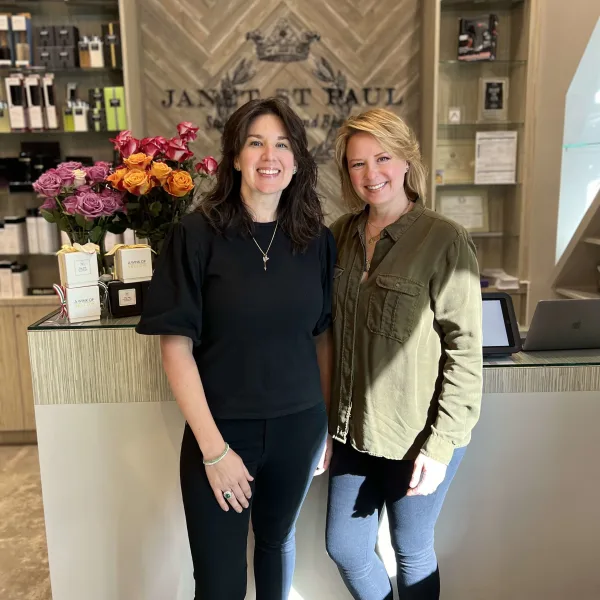
At Janet St. Paul Studio for Hair and Beauty, Director of Operations Natasha McMillen helps bring her wife Janet St. Paul's vision to life, elevating every system from education to operations.

Expand your color service menu with the Pinstripe technique. Brooks and Brooks' Marlon Hawkins walks you through the technique.