Promising to boost the color biz of even the most established salons, the new Red Chocolate education program blends business analysis with customized technical and guest-service education.
Promising to boost the color biz of even the most established salons, the new Red Chocolate education program blends business analysis with customized technical and guest-service education.
Ad Loading...
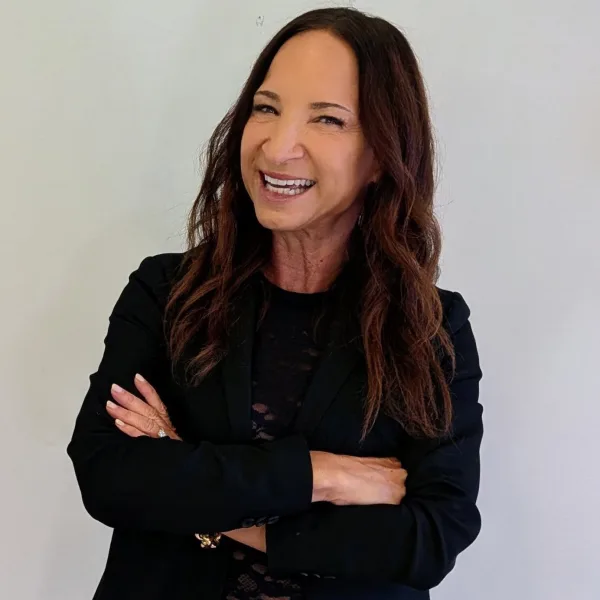
From Left: Ed and Nancy Brown, Virginia Meyer and David Adams.
Imagine your new bottom line if you could permanently boost your color business by 5 percent? What if you could raise it by 10 percent?
For many salons, color represents the largest revenue-generating category of the salon; for example, the SALON TODAY 200 reported that color accounts for 33 percent of overall sales. Many owners believe that because color is so strong, their color sales are flat-leaving little room for growth potential.
Even the most established salons have the ability to strengthen this core service, stress David Adams and Virginia Meyer, founders of Red Chocolate, a new color education program that connects the salon owner, manager and service provider to the essential tools, techniques and processes for sustained growth. Adams, a globally renowned colorist and former Aveda technical artistic director, felt color education platforms really turned into rock concerts that were great for inspiring new color ideas, but didn't always make it easy for participants to take home the information and implement.
An Idea Takes Shape Adams began thinking of all points of service that make a salon's color business successful, and how each staff member, from the receptionist to the service provider to the owner, was responsible for that success. About a year ago he discussed his ideas with Ed Brown, who, with his wife Nancy, owns Ladies and Gentlemen Salons and Spas and Brown Aveda Institute based in Mentor, Ohio.
"I spoke to Ed about developing a program that looked at different points of service-from merchandising color care products to educating the receptionist staff on color, to making sure a salon is charging the right price," says Adams. "I asked him if I developed the program would he be willing to offer up one of his salons to test it."
"It was the kind of conversation you get really exicited about, but after you walk away, you realize it probably will never happen," says Ed.
But Adams, with the help of Meyer, did follow through with his ideas for a pioneering program, and the Browns decided to offer the opportunity to test the program to their most senior colorists at their Lindhurst, Ohio location.
"As owners, we all take for granted that our established staff members have developed their own way of doing things, but they, too, yearn for inspiration. When they've done things the same way for many years, they start to forget the important disciplines," says Nancy Brown. "A creative person without discipline is like an octopus with roller skates."
Perspective from All Sides The Red Chocolate pilot program, "Creating Confidence and Success with Hair Color," consisted of six one-day, in-salon classes which were scheduled so participants, including the Browns, managers and service providers, had time to practice their newly learned skills in between sessions. (Two days of lessons were followed by two weeks of practice; then two days of lessons, two weeks of practice and the final two lessons.) In between class sessions, Adams contacted the participants to give them tips and encourage them to continue practicing what they'd learned.
The education followed Adams' 10 points of color service, including: greetings and welcomes, the consultation, pricing, formula, application and technique, value-added services, shampoo and after treatment, styling and finishing touches, home care and pre-booking.
Prior to the first class, Meyer met with the Browns and their managers to analyze the salon's existing color business. She took three key measurements: total color transactions to total transactions; color service per color ticket; and color service, measured as a percentage of total service sales. Those measurements not only provided a baseline look at the existing color business, but allowed Adams and Meyer to customize the program for the salon and set both personal and business goals.
"Most owners have an overall sense of how their color business is performing, but they don't probe deep into the different measurements that can show them where they are today, how to build a plan for growth and how to shape the behaviors that impact growth," Meyer says.
Other color behaviors were measured as well. For example, four of the Ladies and Gentlemen locations were asked to deposit waste color product into a bin for four days. "We were able to measure the total grams and determined the business was throwing away $500 worth of product every day," Adams says.
Armed with the salon's real color numbers, Meyer was able to establish a Profitability Planner that would show the owners what would happen if they increased their overall volume 5 percent, then increased it 10 percent.
The salon statistics also helped Adams refine his curriculum, developing six days of classes. Daily topics included: establishing opportunities for growth and defining benchmarks; Confidence in using hair color products and setting personal goals; practicing excellence in consultation and all steps involved in providing a superior hair color experience; a hands-on technical workshop including redefining the classic techniques; a hands-on technical workshop, including exploring new techniques; and a creative hands-on workshop.
The intended outcome of the series was to ensure every participant knew which color product to use for what end result; and felt inspired and confident in using and choosing that product. In addition, each participant was coached in the development of strong consultation, pre-booking, add-on service, retail and waste-reduction behavior. The final course gave each participant the opportunity to stretch creatively through practicing more advanced hair color techniques and application.
David Adams, here conducting a color class, developed Red Chocolate by analyzing all the points of service during a hair color appointment.
With two weeks in between each segment of classes, participants had the chance to put new skills in action, but the time also meant they were held accountable for the results. For example, in one of the later sessions when the participants brought in live models, Adams went around the class quizzing students on their consultations. "I'd ask, what are we going to do on Virginia's hair?" he says. "A participant would outline a strategy, and I'd respond, ‘That's great, but what are the other two options you offered her?' In the former consultation class, they learned to always offer a subtle change, a noticeable change and one that is bold."
Adams was able to prove his point that even the most established, productive colorist has room to grow when she focuses on key points of service. One of the senior colorists in the test program was able to sell 10 add-on treatments to his color service, boosting his total sales volume by 10 percent.
But it's not just the participants who are held accountable during the program. The owners and managers are held accountable for coaching the techniques and tracking the results.
"The accountability really made a difference," Nancy says. "After they learned something new, stylists knew we were tracking and they'd get updates from David-practicing what you've learned really makes it stick."
Test Results The test class included 32 participants taking part during a six-week period over summer of 2008. Although the average number of total clients was the same a year ago, the average service per service ticket price, the average retail sales per client, the average color service per color ticket and the average total color services increased substantially.
Overall, during a 10-week measured period, the Ladies and Gentlemen test salon realized an astounding $28,604 in additional color service revenue, while the total color revenue service increased eight percent year over year for the same period.
"But one of the best things about the program was the buzz it created both in the salon and out of it," says Nancy. "I had a client wave me down at the store to tell me she loved what her colorist was learning, saying, ‘She's so energized, it's like I have a whole new hairdresser!'"
Next Steps Although "In-Field Education" is the first phase launched by Red Chocolate founders, they have plans to develop two other areas of the program. For the "Image" portion, a creative team will bring world-class editorial, fashion and photographic talent together to inspire the colorist and motivate consumers to see hair color as an accessory. The final arm of the company, a "Destination Education Location," will see a physical training division that delivers superior quality, technical guest service and business education to students immediately following cosmetology school.
Red Chocolate strives to prove that their education will be sustainable-that the learning will not end after the last class. Students will be given the opportunity to refresh their skills through online learning and interaction with instructors via the web. To that end, Red Chocolate recently formed a strategic alliance with Inyu Training, an online education company. Inyu Training will be managing all web-based education for Red Chocolate, as well as collaborating with the team to create new educational programs and content.
For more information or to book a Red Chocolate class for your salon, contact Virginia Meyer at vmeyer@redchoc.com.
First Flight Results The most significant result of the Red Chocolate pilot program was the increase in color per color ticket. Out of 32 service providers:
Ad Loading...
28 experienced increases
17 experienced increases of 10 percent or better
The salon experienced a 14 percent boost in color per color ticket.
Ladies and Gentlemen reported that the numbers have continued to grow over time, signaling sustainability: From May 19 to October 31, 2008:
All beauty professionals should know how to identify when a client may need some health guidance. Tracy Rado discusses some common questions that clients ask in the chair, how to advise them, and when to refer them to a specialist.
From managing air traffic on busy days to handling frustrated guests' complaints, your front desk team often serves as the salon's emotional shock absorber. From a customer service lesson from the DMV to a list of strategies for caring for your front line, our experts offer ideas for alleviating stress, celebrating wins, and setting goals.
According to the KIM Report, top-line salon revenue appears steady or slightly up, but that growth is driven primarily by service price increases. Beneath the surface, retail performance and client visit frequency (appointment drift) are under real pressure. In his latest blog, Alain Audet offers strategies for keeping your salon's retail sales strong.
Putting your family to work in the salon offers some real tax benefits, but you have you have to play by the rules of the tax code to claim them. Azarvand Tax Law's Leticia Skrabut, Esq., shows you how.
Discover how to create a true “WOW experience” for every client by first building a culture where your team feels engaged, empowered, and inspired. Drawing on Calvin Stovall’s Iconic Framework, this blog explores how salon, spa, and clinic leaders can strengthen culture, elevate customer experience, and build a business that stands out for the long term.
The wellness industry is growing fast, and salons and barbershops already are an important part of it. In her first blog, Tracy Rado shares where the wellness dollars are heading, and how salons can grow with this movement.
While salon sales are increasing, owners often feel they're working harder for the same or less profit. Leverage Q2 data from The KIM Report, Alain Audet reveals some of the structural changes that are dampening your growth and why your region and your salon size matters.
Weaknesses in your business are amplified during the Holiday Season. Spark Pro Global's Lucy Randall shows you five things to do now to have the strongest holiday season yet.
In Kati Whitledge's latest blog, she shares how salons have moved away from dress codes and embraced appearance standards. But by removing strict dress codes, some businesses may have unintentionally lowered their appearance standards. Whitledge helps you explain to your team why an appearance standard is important and how to smoothly implement a new appearance policy.
The Small Business Health Care Tax Credit is a non-refundable tax credit for for-profit businesses that provides a financial incentive for eligible employers who offer health insurance coverage to their employees. Leticia Skrabut, Esq., walks you through how to claim that credit.
Developing strong work habits early in one's career supports long-term success in the salon industry. Jesse Linares offers new stylists his top five tips.
Most salon owners have no idea what these numbers are.
You can hit record sales and still have a profit problem. The difference comes down to four numbers almost nobody was taught to track.
At Janet St. Paul Studio for Hair and Beauty, Director of Operations Natasha McMillen helps bring her wife Janet St. Paul's vision to life, elevating every system from education to operations.