





You Don't Own a Salon. You Own A Business.
In his latest blog, Leon Alexander Ph.D., challenges industry conventional thinking to help owners add more to their bottom lines.
 MENU
 SEARCH
They’re hair to stay: Extend your clientele, your style offerings and your profit margin with extensions for all of your salon clients.
“Long, beautiful hair/Shining, gleaming/Streaming flaxen, waxen/Give me down-to-there hair/Shoulder length or longer...Hair, hair, hair, hair, hair, hair, hair...”
It’s no longer the 1960s when the hit musical “Hair” sang the praises of lengthy locks, but long, full, flowing hair has never been more in vogue. And unlike the hippie strands of yesterday, today’s hair requires major grooming and the professional’s touch to keep it looking its best—more like the lustrous locks of celebrity trendsetters like Lindsay Lohan, Paris Hilton and Jessica Simpson.
Hair lust isn’t limited to the younger generation. Older clients, more educated about their hairdressing options and willing to spend the money, are increasingly seeking solutions to hair thinning and loss. How to satisfy the needs of both types clients? The answer, say experts, is hair extensions.
Previously dismissed by some owners as a passing fad and limited to clients with plenty of disposable income and time, today’s newest extensions are easier and more convenient for a wide range of clients, won’t damage hair and offer a variety of styling options for clients of all ages. Best of all, as extensions become part of stylists’ repertoire and a mainstay to movie-star looks, they continue to fuel demand and have evolved into a regular profit center for salons across the country. If you’ve been too intimidated to jump into the extensions game, now’s your chance to capitalize on the future of hair styling.
Hot and Getting Hotter
Jeffrey Paul, owner of Jeffrey Paul’s Restoring Beautiful Hair and a consultant in Rocky River, Ohio, has been working with different types of hair extensions for more than 30 years, and helps manufacturers develop new systems and technology. Throughout his career, he’s watched extensions achieve “fashion accessory” status in the style world, meaning they’ve become an accessible way of changing up hair looks on an everyday basis. “They are here to stay,” he says. “Even if salon owners didn’t want to make the investment before, you’re going to see more and more dollars spent on bringing extensions into salons. Clients want it, and any stylist
who wants to be all he can be is going to know how to do it.”
Paul works with many different extensions lines to meet his customers’ needs, but he prefers the TressAllure line to add subtle highlights, lowlights or volume to his clients’ hair. The TressAllure human-hair extensions are thin, making them suitable for clients wanting to cover up hair loss without detection. Due to overwhelming interest, he has also developed his own human-hair extensions line, J. Paul Wrap Around Color Extensions, that’s sold on QVC directly to the consumer for trying out different color looks.
At the fashion forward B2V Salon in West Hollywood, California, owner Kim Vo says the extensions trend ignited with his celebrity clients, and then spread like wildfire. “It used to be a secret that all the celebrities wore extensions, so it wasn’t really mass market,” he says. “In the beginning we had to talk it up to our non-celebrity clients, and they couldn’t believe it, because it looked so natural.” The salon uses the Great Lengths line, made from human hair and protein-bonded, which can cost $2,200 for a full head of long hair, but starts at $550 if a client is just looking for a little extra volume. Stylists educate their clients by bringing out extensions for them to see and feel, but the real secret to getting new extensions clients is through current clients.
“Clients with extensions are a walking billboard for your work,” explains Vo. “The ones who have it done are going to love it, and they’re going to tell their friends about it, too.” After years of steady interest, the popularity of extensions hasn’t waned. Adds Vo, “It’s part of our style toolbelt.”
The Long and the Short of It
Perhaps you’ve had clients coming in and asking for their favorite celebrity look. But for many women, their hair is too damaged to grow long and lush, too fragile for high-lift blonde or too fine for cascading waves. With extensions, there is virtually no limit to the styles that can be created on any client, regardless of natural hair type. (Witness the before and after looks of a real client, Assistant Managing Editor Lisa Doyle, in our “Extended Vacation” sidebar, page 49.) And contrary to popular belief, extensions don’t have to be a long, arduous process.
Bonnie Conte, owner of Avalon Salon and Spa in Deer Park, Illinois, uses Hair U Wear’s Raquel Welch line, a non-permanent system of extensions that uses tiny clips to attach the human hair extensions close to the client’s real roots. “They won’t damage hair and they take only 45 minutes to apply,” says Conte, who says clients first buy the set of extensions ($229 for a 14-inch set, $279 for 18 inches), then has a stylist apply and style them for the price of a typical shampoo and style. Like most extensions lines, these non-permanent alternatives can be colored, flatironed or curled like real hair.
That’s good news for one of Avalon’s clients, a teenager with hair so thin she looked seriously ill, says Conte. “After she purchased the extensions, her whole outlook changed. She wore them every day to school, and no one could tell they weren’t part of her. Her mom even came in to purchase her a second set.”
Permanent extensions take longer to apply and cost more, but they can last for several months. Owner Michael Baker of Michael Warren Studio in Elkhart, Indiana, uses SoCapUSA extensions and bonds them to hair with a cold fusion method that renders flat, undetectable bonds and leaves hair “with integrity,” says Baker.
“I can do chemically-treated hair, chemotherapy patients, any type of sensitive client.” It takes two and a half hours to apply a full set, at a cost of $1,500 to $2,000 for the client, but according to Baker, the extensions will last from four to six months, or even longer. That makes it a good value to the client, and because the human-hair extensions cost the salon only $315, it’s a real moneymaker for the salon as well.
Baker’s clientele are mostly women in their 40s and 50s, so their primary concern is volume, not length. To get them used to the look and feel of extensions, he will apply a few bonds during their regular appointment, and “they come back within a week wanting more,” he says. “It quickly becomes an addiction.” But women aren’t the only ones who love them: Baker even wears them himself.
Extension School
Every owner has to do a little research to pick the type of extensions best suited to his or her clientele. Younger clients may want clip-ins they can attach themselves, while fashionistas could be willing to sit for eight hours to get full-on, long-lasting glamor. The critical factor, no matter what line you choose, is the manufacturer-provided education.
At B2V, Vo’s stylists went to a Great Lengths class to learn the technique, practiced on
models, and then came up with their own tricks for faster, easier application. Some rules, says Vo: “If hair is fine, extensions should also be fine, so you don’t weigh down the hair. Avoid areas like the bangs or the parting, where extensions will show. You should attach at least 1/2 an inch from these areas.” After applying any extensions, always customize to the client with color or cut.
With clip-in lines like Hair U Wear’s Raquel Welch line or Jessica Simpson’s HairDo, less training is required, but staff can still practice styles on each other and wear them around clients for promotional purposes, as they did at Avalon Salon. During appointments, the stylist can also educate the client on how to attach the clips herself.
And as with any salon service, home maintenance is key. Avalon stylists recommend color preserve products if extensions are done in conjunction with a color service. Ruben Fisher, owner of Tonic Salon in Las Vegas, does big business with Great Lengths extensions—and then sends clients home with leave-in detanglers and gentle conditioners for quality care. If a client needs to take out extensions for any reason, he says rubbing alcohol will release the gentle protein bond. Top-quality brands are made of real human hair and won’t damage the client’s own hair, so you can feel safe applying extensions to virtually any client.
Finished Looks
Long hair looks come and go, and even with extensions being as hot as they are, the bob today appears to be making a comeback. But extensions are flexible and adaptable to any style. If a shorter-haired client feels stuck in a rut, “she can get three years growth in a matter of hours,” observes Fisher. Comments Vo, “I see extensions as necessary for adding volume. As far as length, we’ll start seeing shorter cuts with extensions.” He predicts, “Extensions will just keep peaking.”
That may be true because, as many experts point out, the U.S. lags behind other countries in terms of extension popularity and style. Explains Baker, “We’re at least five to six years behind Europe,” and in Japan, “they do more extensions than the rest of the world put together,” asserts Paul, because plentiful hair is a status symbol and women are willing to spend more to keep up with the latest fashions. Technological advances will make extensions even more prevalent in this country in a few years, although, by then, says Paul, manufacturers may not be able to get their hands on enough human hair to meet demand. Currently, Japanese developers are working on “cyber hair,” or synthetic hair that looks and feels like real hair, but is lighter, more durable and fade-resistant.
Even better than human hair? The future of extensions looks beautiful indeed.
In his latest blog, Leon Alexander Ph.D., challenges industry conventional thinking to help owners add more to their bottom lines.
In her latest blog, Amy Pal helps you develop your own clear guidelines around complimentary free employee services.
From managing air traffic on busy days to handling frustrated guests' complaints, your front desk team often serves as the salon's emotional shock absorber. From a customer service lesson from the DMV to a list of strategies for caring for your front line, our experts offer ideas for alleviating stress, celebrating wins, and setting goals.

According to the KIM Report, top-line salon revenue appears steady or slightly up, but that growth is driven primarily by service price increases. Beneath the surface, retail performance and client visit frequency (appointment drift) are under real pressure. In his latest blog, Alain Audet offers strategies for keeping your salon's retail sales strong.

Putting your family to work in the salon offers some real tax benefits, but you have you have to play by the rules of the tax code to claim them. Azarvand Tax Law's Leticia Skrabut, Esq., shows you how.

Discover how to create a true “WOW experience” for every client by first building a culture where your team feels engaged, empowered, and inspired. Drawing on Calvin Stovall’s Iconic Framework, this blog explores how salon, spa, and clinic leaders can strengthen culture, elevate customer experience, and build a business that stands out for the long term.
Sponsored by Phorest Salon Software

The wellness industry is growing fast, and salons and barbershops already are an important part of it. In her first blog, Tracy Rado shares where the wellness dollars are heading, and how salons can grow with this movement.
While salon sales are increasing, owners often feel they're working harder for the same or less profit. Leverage Q2 data from The KIM Report, Alain Audet reveals some of the structural changes that are dampening your growth and why your region and your salon size matters.
Weaknesses in your business are amplified during the Holiday Season. Spark Pro Global's Lucy Randall shows you five things to do now to have the strongest holiday season yet.

In Kati Whitledge's latest blog, she shares how salons have moved away from dress codes and embraced appearance standards. But by removing strict dress codes, some businesses may have unintentionally lowered their appearance standards. Whitledge helps you explain to your team why an appearance standard is important and how to smoothly implement a new appearance policy.

The Small Business Health Care Tax Credit is a non-refundable tax credit for for-profit businesses that provides a financial incentive for eligible employers who offer health insurance coverage to their employees. Leticia Skrabut, Esq., walks you through how to claim that credit.

Developing strong work habits early in one's career supports long-term success in the salon industry. Jesse Linares offers new stylists his top five tips.

Most salon owners have no idea what these numbers are. You can hit record sales and still have a profit problem. The difference comes down to four numbers almost nobody was taught to track.
Sponsored by Strata Salon Systems™
A five-area audit every owner-dependent salon needs to run. You built something that looks successful. Now find out if it can survive without you.
Sponsored by Strata Salon Systems™

Every month you put off fixing the problem, it gets bigger, more expensive, and harder to solve.
Sponsored by Strata Salon Systems™
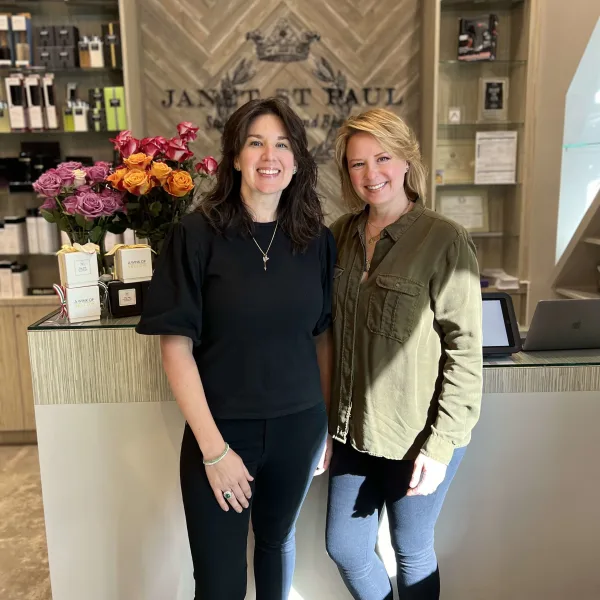
At Janet St. Paul Studio for Hair and Beauty, Director of Operations Natasha McMillen helps bring her wife Janet St. Paul's vision to life, elevating every system from education to operations.

Expand your color service menu with the Pinstripe technique. Brooks and Brooks' Marlon Hawkins walks you through the technique.