As Spoke and Weal prepares to open its San Francisco and Los Angeles locations, owners Joy Reyman and Christine Thompson talk about the success and setbacks or launching a new salon venture.
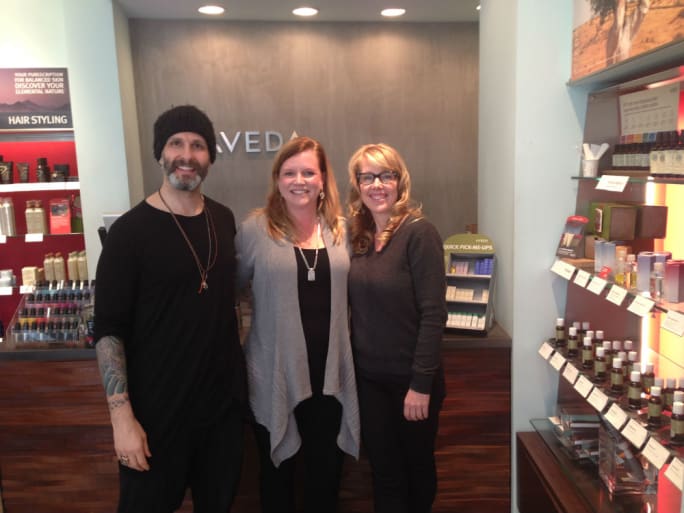
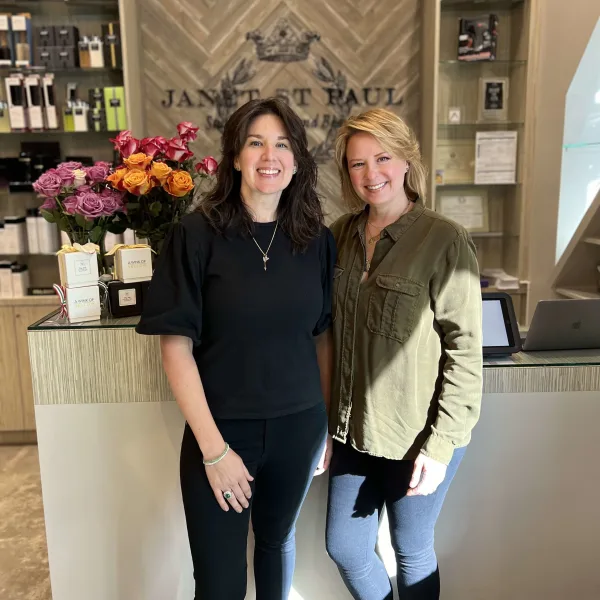
Spoke and Weal's Jon Reyman (left) and Christine Thompson (right) with SALON TODAY Editor Stacey Soble.
What’s it take to get a new salon venture off the ground? Determined to find out, SALON TODAY invited long-time industry veterans Jon Reyman and Christine Thompson to blog about the experience while they prepare to open two new salons in San Francisco and Los Angeles.
Both Reyman and Thompson bring experience to this journey. Reyman, who was the former artistic director of the Aveda Advanced Academy in New York, helped launch the Van Michael salon in Miami, and he continues to travel extensively as a stylist and educator developing curriculum for salons and institutions across the world. Thompson has successfully operated Salon Lux with two locations in San Luis Obispo, California for many years.
Ad Loading...
Recently, Reyman and Thompson partnered to launch Spoke and Weal salons, with the first location opening in December 2013 in San Francisco, and the second scheduled to open in Los Angeles in March 2014.
In the first of a series of blogs about their expansion process, they talk about the allure of the California market and what bumps they've encountered thus far:
SALON TODAY: Why were San Francisco and Los Angeles attractive markets to launch your Spoke and Weal salons?
Reyman and Thompson: “California is a great market. We wanted to bring some East Coast to the West Coast and we think our quality of service and systems will work well there. We have a no-nonsense way of working with our guests and with each other. We like the idea of mixing things up. We think the way we approach our work, how we build and refine technical skills, and tie together efficient systems will be well received in California’s creative and professional communities. We are specifically targeting urban areas with professional cultures, as well as cultures that promote creatives—places we think will benefit from our work and who will come on board with the style of service we offer.”
This former Los Angeles retail location will transform into the second Spoke and Weal salon location by March 2014.
SALON TODAY: What do you look for in a salon location?
Ad Loading...
Reyman and Thompson: “Nothing is ready for a salon! Really, it’s hard. Besides scouring the streets for what’s available, we look for complimentary businesses, fun active neighborhoods. For the physical location, we look for good LIGHT! With that said, the neighborhood doesn’t define us. We believe that if we build a product that is intelligent and well executed, the right people will find us.
“We’re trying that in Russian Hill neighborhood of San Francisco. We didn’t originally look in this neighborhood, we were looking in the Mission area, and this location was thrown our way by a friend who said a space was opening up. We said, 'OK, let’s prove that our work will move people into our salon.' We are not starting in a strategic location, but we are starting with a great product and great training.”
SALON TODAY: Is it a benefit or a disadvantage to takeover an existing salon—do you try to salvage some of the physical components or do you start with a clean slate?
Reyman and Thompson: “In theory, it could be a benefit if the location’s electric or plumbing is already upgraded for a highly productive salon, but in the end, it seems most places are probably not set up the way you would want. So, we think a clean slate usually works better. The Russian Hill salon was an existing salon but we ended up having to get rid of a bunch of funky stuff that was left behind and redoin everything.—which was a timely and expensive task. And in Los Angeles, we leased a retail location. but in the San Francisco space we came into, we ended up having to re-do everything. Nothing was ready. In Los Angeles, we leased a retail location. In the end, most places are probably not set up the way you would want in the end. We think a clean slate is better, but if it’s in and it works, it can save you some buildout dollars. We ended up having to get rid of a bunch of funky stuff that was left in our Russian Hill location—that alone was an timely and expensive task.”
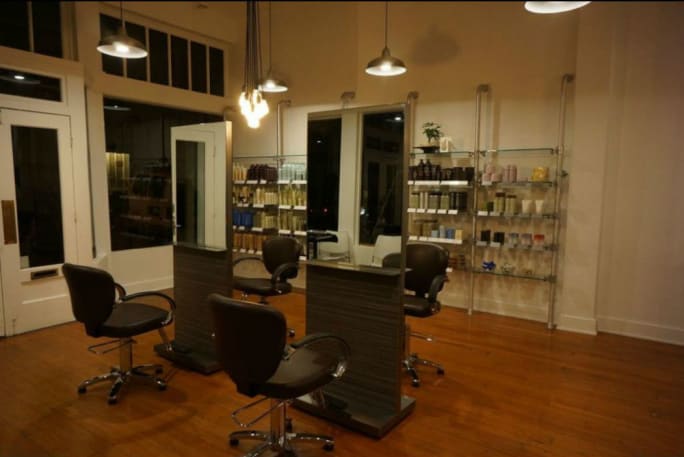
Small but mighty, the 700-square-foot salon based in the Russian Hill neighborhood of San Francisco is the first location in the Spoke and Weal venture.
SALON TODAY: What’s your formula for laying out a successful salon?
Ad Loading...
Reyman and Thompson: “Retail is necessary for the success of the business. The space dedicated to retail we see as the space behind the chair—our pros. Our guests guy retail because they have stylists prescribing haircare products. In Los Angeles, we’ll have 2,300 square feet, 400 of which is devoted to retail space. In Russian Hill, we have 8 chairs in 700 square feet. We had to carefully plan along the way, and a few times, we needed to re-evaluate.
“In our salons, stylists recommend the products and set them on the shelves right in front of our guests as they are describing what they do and why they are recommending them. This takes skill, as well as really good training with product lines, to ensure the guests are getting what they need for the results they want. This is a big part of the business, but traditional retail space is not the direction we see going, again, because our pros are the best retail space we have.
“As far as stations, it is nice to come in with a little more than 100 square feet per station.”
SALON TODAY: What lessons did you learn in building out San Francsico, or even your existing salons, that you’ll draw upon as you proceed with the Los Angeles salon?
Reyman and Thompson: “Always have an electrical engineer on site with you. At the level that we want to operate, we wanted access to a good amount of electricity and the electrical output in San Francisco was definitely an issue. We got in before we knew how big of an issue it would be during maximum productivity. So we have to deal with the process—it would have been good to have all that information up front.”
Ad Loading...
SALON TODAY: Are there any go-to partners that you consistently rely on for building a new salon?
Reyman and Thompson: “We have some custom cabinet guys that make great fixtures that are durable and beautiful. Our contractors were referred to us by another salon and they are good guys. Hair salons are a special build-out, so you need patient, detailed contractors with experience.”
Editor's Note: Continue to check salontoday.com as we follow Spoke and Weal's progress as they market the San Francisco salon and prepare to open the Los Angeles location.
According to the KIM Report, top-line salon revenue appears steady or slightly up, but that growth is driven primarily by service price increases. Beneath the surface, retail performance and client visit frequency (appointment drift) are under real pressure. In his latest blog, Alain Audet offers strategies for keeping your salon's retail sales strong.
Putting your family to work in the salon offers some real tax benefits, but you have you have to play by the rules of the tax code to claim them. Azarvand Tax Law's Leticia Skrabut, Esq., shows you how.
Discover how to create a true “WOW experience” for every client by first building a culture where your team feels engaged, empowered, and inspired. Drawing on Calvin Stovall’s Iconic Framework, this blog explores how salon, spa, and clinic leaders can strengthen culture, elevate customer experience, and build a business that stands out for the long term.
The wellness industry is growing fast, and salons and barbershops already are an important part of it. In her first blog, Tracy Rado shares where the wellness dollars are heading, and how salon's can grow with this movement.
While salon sales are increasing, owners often feel they're working harder for the same or less profit. Leverage Q2 data from The KIM Report, Alain Audet reveals some of the structural changes that are dampening your growth and why your region and your salon size matters.
Weaknesses in your business are amplified during the Holiday Season. Spark Pro Global's Lucy Randall shows you five things to do now to have the strongest holiday season yet.
In Kati Whitledge's latest blog, she shares how salons have moved away from dress codes and embraced appearance standards. But by removing strict dress codes, some businesses may have unintentionally lowered their appearance standards. Whitledge helps you explain to your team why an appearance standard is important and how to smoothly implement a new appearance policy.
The Small Business Health Care Tax Credit is a non-refundable tax credit for for-profit businesses that provides a financial incentive for eligible employers who offer health insurance coverage to their employees. Leticia Skrabut, Esq., walks you through how to claim that credit.
Developing strong work habits early in one's career supports long-term success in the salon industry. Jesse Linares offers new stylists his top five tips.
Most salon owners have no idea what these numbers are.
You can hit record sales and still have a profit problem. The difference comes down to four numbers almost nobody was taught to track.
At Janet St. Paul Studio for Hair and Beauty, Director of Operations Natasha McMillen helps bring her wife Janet St. Paul's vision to life, elevating every system from education to operations.
The strongest salons, spas, and med spas know which numbers tell the real story of their business. In this practical guide, Phorest breaks down the five essential KPIs every business should track to improve retention, boost revenue, and make smarter decisions with confidence.
At Bella Style Salon in Slidell, Louisiana, Director of Operations Angela Meyer tackles inventory, team management, and guest relations. Read all about her in our latest Meet the Manager.
Starting at Impressions front desk in 2006 when he was 19 years old, General Manager Paul Petrowsky is a seasoned professional who owner Sarah Taylor says is responsible for much of her own success.