






You Don't Own a Salon. You Own A Business.
In his latest blog, Leon Alexander Ph.D., challenges industry conventional thinking to help owners add more to their bottom lines.
 MENU
 SEARCH
Tackle your trickiest business problems with the right software.
When used to its full capacity, salon software can tackle your business’s most annoying problems. Our panel of software experts—Theodore Therriault, president of GuestVision; Paul Pagliaro, president of Milano Systems; Jon Maple, CEO and president of SalonTranscripts; Paul Tate, CEO of North America for Shortcuts Software; Fred Dengler, CEO of Mikal Corporation; Ron Mataya, president of ClienTrak! Software; John Harms, CEO and president of Harms Software; and Ross Neill, chief technology officer for Neill Corporation and Extended Technology—tackle both the big and small challenges posed by salon owners.
Q: I can’t find a paper appointment book with enough columns to fit all my stylists. Is it time to upgrade to a software program?
A: Capacity and easy access are two of the best reasons to look at computerized appointment books. If you run out of room, or move to multiple books, you often will spend more time with each client waiting on the phone while you search for an appointment and less time focused on what the client wants and what you can upsell them. Reverse that with a computer system that can easily consolidate multiple books into a single screen.
Q: I have products that I can’t keep on the shelves and others that have gathered dust for months. How can I get a better handle on my inventory?
A. Many salons struggle with inventory, often unnecessarily tying up much of their working capital on their shelves. Using a software program to manage the inventory can improve not only your product sales but your cash flow. While many programs can help you set up an automatic reordering system, they are still based on your best hunch. Look for a program that analyzes the sales of each individual product line, offering you a return on your inventory calculation. That will show you where you need to invest your product dollars and where you are losing money.
Q: My ticket average has been decreasing. How can I know why and what to do to remedy the problem?
A: Most software programs include a core report which gives you the opportunity to analyze any time period to identify any type of trend. Secondarily, the results of analyzing that report often take you to other reports which are more specific to give you detailed information behind the summary. The best way to determine the source of your downturn is to ask questions, such as: Has you product average and your service average changed, or just one of the two? Have new discount campaigns hurt your averages? Have you changed your product mix and possibly lost big-ticket sales? All of these answers should be available from the layers of reporting in your software package. The most updated software includes tools to “drill down” into the data and understand what is behind the numbers.
Q: We experience several no-shows each week. Our receptionist tries to make reminder calls, but when things get busy it either doesn’t get done or she doesn’t get through the entire list. How can we reduce our no-shows and recapture some of that lost revenue?
A: Once a client fails to show for an appointment, that time is lost and so is the revenue that the missed appointment promised. Contact your software company and inquire about what options they have for appointment reminders. Some send out e-mail reminders to clients. Others upload client lists to a company that calls each client with a voice recording. Others issue text messages. While your preferred method may mean an additional cost per contact, most likely it will be less that what you are losing on those no-shows. Choose a system that requires clients to issue a reply whether they will or will not be able to keep the appointment and send your reminders a few days before the scheduled time. Then you have some time to fill the openings. Send out e-mail newsletters with daily specials advertising open times and offer a discount to those who fill the slots.
Q: My top stylist is leaving. How can I keep from losing all her clients?
A: Market to her clients. Using the database marketing features of a modern software package, you should be able to send a customized e-mail, generate a set of mailing labels or print a direct-mail postcard. The message and possible promotional offer should match the goal you have. If you goal is to outright retain her clients, then it needs to be bold. For example, “Return to the salon and experience the same great customer service from another stylist. If you aren’t completely blown away by your service, then your next visit is on us.” If you wish to keep the auxiliary business, let’s say nails, so that you don’t lose all of her clients’ business then try, “Our nail technicians are the best in the business. We want to keep you coming back. Have a free upgraded manicure next time for the price of a manicure.”
Q: I don’t have the technicians to handle the walk-in business at the right times, and I end up turning business away.
A: To maintain a successful salon, you need to manage your staffing so that you are maximizing resource and are available when your clients want you to be. The best software will include traffic reports that detail how your salon traffic is shaped by hour of the day. It also should include details of when walkouts occur and the productivity the employees have by hour. With this data, you can determine when you are over and understaffed.
In his latest blog, Leon Alexander Ph.D., challenges industry conventional thinking to help owners add more to their bottom lines.

In her latest blog, Amy Pal helps you develop your own clear guidelines around complimentary free employee services.

From managing air traffic on busy days to handling frustrated guests' complaints, your front desk team often serves as the salon's emotional shock absorber. From a customer service lesson from the DMV to a list of strategies for caring for your front line, our experts offer ideas for alleviating stress, celebrating wins, and setting goals.

According to the KIM Report, top-line salon revenue appears steady or slightly up, but that growth is driven primarily by service price increases. Beneath the surface, retail performance and client visit frequency (appointment drift) are under real pressure. In his latest blog, Alain Audet offers strategies for keeping your salon's retail sales strong.

Putting your family to work in the salon offers some real tax benefits, but you have you have to play by the rules of the tax code to claim them. Azarvand Tax Law's Leticia Skrabut, Esq., shows you how.

Discover how to create a true “WOW experience” for every client by first building a culture where your team feels engaged, empowered, and inspired. Drawing on Calvin Stovall’s Iconic Framework, this blog explores how salon, spa, and clinic leaders can strengthen culture, elevate customer experience, and build a business that stands out for the long term.
Sponsored by Phorest Salon Software

The wellness industry is growing fast, and salons and barbershops already are an important part of it. In her first blog, Tracy Rado shares where the wellness dollars are heading, and how salons can grow with this movement.

While salon sales are increasing, owners often feel they're working harder for the same or less profit. Leverage Q2 data from The KIM Report, Alain Audet reveals some of the structural changes that are dampening your growth and why your region and your salon size matters.

Weaknesses in your business are amplified during the Holiday Season. Spark Pro Global's Lucy Randall shows you five things to do now to have the strongest holiday season yet.

In Kati Whitledge's latest blog, she shares how salons have moved away from dress codes and embraced appearance standards. But by removing strict dress codes, some businesses may have unintentionally lowered their appearance standards. Whitledge helps you explain to your team why an appearance standard is important and how to smoothly implement a new appearance policy.

The Small Business Health Care Tax Credit is a non-refundable tax credit for for-profit businesses that provides a financial incentive for eligible employers who offer health insurance coverage to their employees. Leticia Skrabut, Esq., walks you through how to claim that credit.

Developing strong work habits early in one's career supports long-term success in the salon industry. Jesse Linares offers new stylists his top five tips.

Most salon owners have no idea what these numbers are. You can hit record sales and still have a profit problem. The difference comes down to four numbers almost nobody was taught to track.
Sponsored by Strata Salon Systems™

A five-area audit every owner-dependent salon needs to run. You built something that looks successful. Now find out if it can survive without you.
Sponsored by Strata Salon Systems™

Every month you put off fixing the problem, it gets bigger, more expensive, and harder to solve.
Sponsored by Strata Salon Systems™
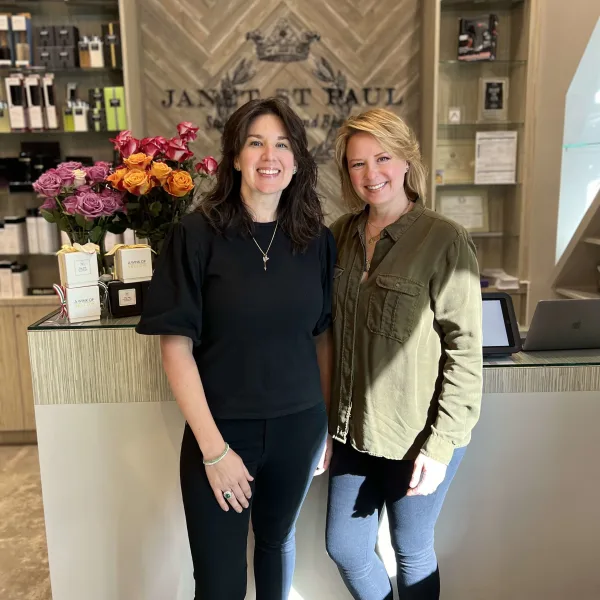
At Janet St. Paul Studio for Hair and Beauty, Director of Operations Natasha McMillen helps bring her wife Janet St. Paul's vision to life, elevating every system from education to operations.

Expand your color service menu with the Pinstripe technique. Brooks and Brooks' Marlon Hawkins walks you through the technique.