







You Don't Own a Salon. You Own A Business.
In his latest blog, Leon Alexander Ph.D., challenges industry conventional thinking to help owners add more to their bottom lines.
 MENU
 SEARCH
The outlook for the salon/spa industry improved in the second quarter, as the Professional Beauty Association's (PBA) comprehensive index of salon/spa activity registered a solid gain. The association's Salon/Spa Performance Index (SSPI)—a new ...
The outlook for the salon/spa industry improved in the second quarter, as the Professional Beauty Association's (PBA) comprehensive index of salon/spa activity registered a solid gain. The association's Salon/Spa Performance Index (SSPI)—a new quarterly composite index that tracks the health of and outlook for the U.S.salon/spa industry - stood at 101.8 in the second quarter, up 0.7 percent from its first quarter level.
"The SSPI rose in the second quarter, and stood above 100, which is a positive sign for the overall health of our industry," said Steve Sleeper, executive director of PBA."Salon/spa owners reported a positive six-month economic outlook for both sales and the overall economy, while capital spending plans held relatively steady."
The Salon/Spa Performance Index is based on the responses to PBA's Salon/Spa Industry Tracking Survey, which is fielded quarterly among salon/spa owners nationwide on a variety of indicators including service and retail sales, customer traffic, employee/hours and capital expenditures. The Index consists of two components - the Current Situation Index and the Expectations Index.
The Salon/Spa Performance Index is constructed so that the health of the salon/spa industry is measured in relation to a steady-state level of 100. Index values above 100 indicate that key industry indicators are in a period of expansion, while index values below 100 represent a period of contraction for key industry indicators.
The Current Situation Index, which measures current trends in five industry indicators (service sales, retail sales, customer traffic, employees/hours and capital expenditures), stood at 99.7 in the second quarter - up 0.9 percent from its first quarter level of 98.8. However, the Current Situation Index remained below 100 in the second quarter, which signifies contraction in the current situation indicators.
Salon/spa owners reported an improvement in service sales in the second quarter. Thirty-nine percent of salon/spa owners reported an increase in same-store service sales between the second quarters of 2008 and 2009, up from 35 percent who reported a sales gain in the first quarter. Thirty-nine percent of salon/spa owners reported a same-store service sales decline in the second quarter, down from 44 who reported lower sales in the first quarter.
Although the overall retail sales picture improved somewhat in the second quarter, salon/spa owners continued to report lower retail sales volume. Thirty-three percent of salon/spa owners reported higher retail sales between the second quarters of 2008 and 2009, up from 26 percent who reported a retail sales gain in the first quarter. Forty-four percent of salon/spa owners reported lower retail sales in the second quarter, down from 49 percent who reported similarly in the first quarter.
Salon/spa owners reported a solid improvement in customer traffic levels in the second quarter. Thirty-eight percent of salon/spa owners reported an increase in customer traffic between the second quarters of 2008 and 2009, while only 31 percent said their customer traffic levels declined. In the first quarter, 33 percent of salon/spa owners reported an increase in customer traffic, while 40 percent reported traffic declines.
Labor indicators were a mixed bag in the second quarter, with salon/spa owners reporting slightly higher staffing levels but a decline in employee hours. Twenty-eight percent of salon/spa owners said they added employees between the second quarters of 2008 and 2009, while 23 percent said they reduced staffing levels.
In contrast, 24 percent of salon/spa owners said they cut employee hours between the second quarters of 2008 and 2009, while only 15 percent increased employee hours.
The Expectations Index, which measures salon/spa owners' six-month outlook for five industry indicators (service sales, retail sales, employees/hours, capital expenditures and business conditions), stood at 103.9 in the second quarter - up 0.6 percent from its first quarter level. In addition, the Expectations Index stood well above 100, which indicates a solid level of optimism among salon/spa owners for industry growth in the months ahead.
Growth in the Expectations Index was driven by an increasingly optimistic outlook for sales growth in the months ahead. Sixty percent of salon/spa owners said they expect to have higher service sales in six months (compared to the same period in the previous year), up from 54 percent who reported similarly last quarter. Only 13 percentof salon/spa owners expect their service sales volume in six months to be lower than it was during the same period in the previous year, down slightly from 15 percent who reported similarly last quarter.
A majority of salon/spa owners also expect to see retail sales growth in the months ahead. Fifty-one percent of salon/spa owners said they expect to have higher retail sales in six months (compared to the same period in the previous year), up from 46 percent who reported similarly last quarter. In comparison,15 percent expect their retail sales to decline in six months (compared to the same period in the previous year), down from 22 percent who reported similarly last quarter.
Salon/spa owners are also decidedly upbeat about the direction of the overall economy. Sixty-three percent of salon/spa owners said they expect economic conditions to improve in six months, while only six percent expect to see worse economic conditions in six months. This sentiment was relatively unchanged from first quarter levels.
"The Professional Beauty Association continues to supply the beauty industry with timely and relevant economic data to help our members and the industry at large make successful and strategic business decisions" said Steve Sleeper "doing so is a core mission of the PBA."
The full SSPI and second quarter Salon/Spa Tracking Survey Report can be found at probeauty.org.
In his latest blog, Leon Alexander Ph.D., challenges industry conventional thinking to help owners add more to their bottom lines.
In her latest blog, Amy Pal helps you develop your own clear guidelines around complimentary free employee services.

From managing air traffic on busy days to handling frustrated guests' complaints, your front desk team often serves as the salon's emotional shock absorber. From a customer service lesson from the DMV to a list of strategies for caring for your front line, our experts offer ideas for alleviating stress, celebrating wins, and setting goals.
According to the KIM Report, top-line salon revenue appears steady or slightly up, but that growth is driven primarily by service price increases. Beneath the surface, retail performance and client visit frequency (appointment drift) are under real pressure. In his latest blog, Alain Audet offers strategies for keeping your salon's retail sales strong.

Putting your family to work in the salon offers some real tax benefits, but you have you have to play by the rules of the tax code to claim them. Azarvand Tax Law's Leticia Skrabut, Esq., shows you how.

Discover how to create a true “WOW experience” for every client by first building a culture where your team feels engaged, empowered, and inspired. Drawing on Calvin Stovall’s Iconic Framework, this blog explores how salon, spa, and clinic leaders can strengthen culture, elevate customer experience, and build a business that stands out for the long term.
Sponsored by Phorest Salon Software

The wellness industry is growing fast, and salons and barbershops already are an important part of it. In her first blog, Tracy Rado shares where the wellness dollars are heading, and how salons can grow with this movement.

While salon sales are increasing, owners often feel they're working harder for the same or less profit. Leverage Q2 data from The KIM Report, Alain Audet reveals some of the structural changes that are dampening your growth and why your region and your salon size matters.

Weaknesses in your business are amplified during the Holiday Season. Spark Pro Global's Lucy Randall shows you five things to do now to have the strongest holiday season yet.

In Kati Whitledge's latest blog, she shares how salons have moved away from dress codes and embraced appearance standards. But by removing strict dress codes, some businesses may have unintentionally lowered their appearance standards. Whitledge helps you explain to your team why an appearance standard is important and how to smoothly implement a new appearance policy.

The Small Business Health Care Tax Credit is a non-refundable tax credit for for-profit businesses that provides a financial incentive for eligible employers who offer health insurance coverage to their employees. Leticia Skrabut, Esq., walks you through how to claim that credit.

Developing strong work habits early in one's career supports long-term success in the salon industry. Jesse Linares offers new stylists his top five tips.

Most salon owners have no idea what these numbers are. You can hit record sales and still have a profit problem. The difference comes down to four numbers almost nobody was taught to track.
Sponsored by Strata Salon Systems™
A five-area audit every owner-dependent salon needs to run. You built something that looks successful. Now find out if it can survive without you.
Sponsored by Strata Salon Systems™

Every month you put off fixing the problem, it gets bigger, more expensive, and harder to solve.
Sponsored by Strata Salon Systems™
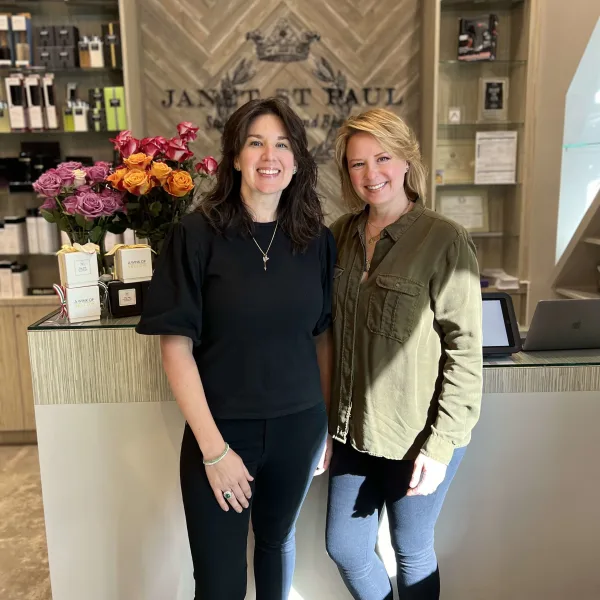
At Janet St. Paul Studio for Hair and Beauty, Director of Operations Natasha McMillen helps bring her wife Janet St. Paul's vision to life, elevating every system from education to operations.

Expand your color service menu with the Pinstripe technique. Brooks and Brooks' Marlon Hawkins walks you through the technique.