ACCEPTING CREDIT CARDS is a necessary part of doing business, but the quality of service and your fees can vary depending on your vendor. As a sales team leader with North American Bancard, Stacey Joseph helps salons, as well as independent stylists, dramatically lower their credit card processing rates. Here, she tackles questions regarding credit card processing fees:
ST: What should salon owners be aware of when it comes to credit card processing fees?
Ad Loading...
Joseph: “Two of the major issues that both salon owners and booth renters run into with credit processing is they are paying very high processing rates as well as not getting free credit card processing terminals that are of the latest technology and PCI Compliant. For example, we offer free equipment as long as you are processing your credit cards with us. Another situation to be alarmed about is companies that send a broker to your location who in turn, has to be paid for that visit indirectly. Your fees are guaranteed to be higher than usual because your cards are then being processed through a third party. You want to be with a direct processor who gives you a national wholesale pricing program and free equipment.”
ST: What is the current range of standard rates, and how should an owner negotiate if their rate seems higher than that?
Joseph: “Standard industry base rates are between 1.50%-2.00% as a base rate, but being in the industry for so long, I notice that many merchants are paying a teaser rate and their surcharges escalate to more than 3.00%. Some companies will not negotiate with you as a current client. In cases like these, I always suggest weighing your options with a more flexible company who is willing to work with you. Don’t think because you are paying high rates with one company, it will be that way with every company.”
ST: Some salons allow clients to include tips on credit card transactions while others won’t because they don’t want to be responsible for the processing fees for the tip portion. Have you seen any creative ways for salons to deal with this issue and keep clients happy?
Joseph: “I would suggest that salons accept tips in any form they come in. Most people carry very little cash, and a stylist is more likely to receive a larger tip when a client is using a credit card than when they pay with cash. But it can be another downfall with a credit card processor that doesn’t understand the needs of a salon and therefore doesn’t set you up properly. With high-speed wireless dial-up terminal and smart phone processing you can include a tip line without having to pay an excessive fee.”
All beauty professionals should know how to identify when a client may need some health guidance. Tracy Rado discusses some common questions that clients ask in the chair, how to advise them, and when to refer them to a specialist.
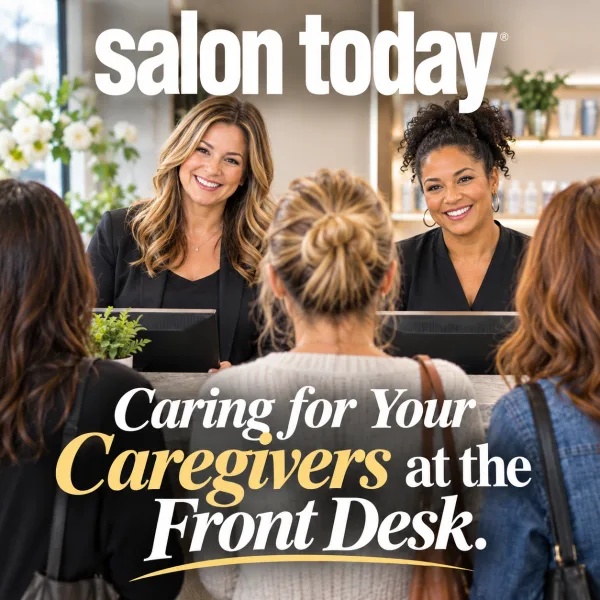
From managing air traffic on busy days to handling frustrated guests' complaints, your front desk team often serves as the salon's emotional shock absorber. From a customer service lesson from the DMV to a list of strategies for caring for your front line, our experts offer ideas for alleviating stress, celebrating wins, and setting goals.
According to the KIM Report, top-line salon revenue appears steady or slightly up, but that growth is driven primarily by service price increases. Beneath the surface, retail performance and client visit frequency (appointment drift) are under real pressure. In his latest blog, Alain Audet offers strategies for keeping your salon's retail sales strong.
Putting your family to work in the salon offers some real tax benefits, but you have you have to play by the rules of the tax code to claim them. Azarvand Tax Law's Leticia Skrabut, Esq., shows you how.
Discover how to create a true “WOW experience” for every client by first building a culture where your team feels engaged, empowered, and inspired. Drawing on Calvin Stovall’s Iconic Framework, this blog explores how salon, spa, and clinic leaders can strengthen culture, elevate customer experience, and build a business that stands out for the long term.
The wellness industry is growing fast, and salons and barbershops already are an important part of it. In her first blog, Tracy Rado shares where the wellness dollars are heading, and how salons can grow with this movement.
While salon sales are increasing, owners often feel they're working harder for the same or less profit. Leverage Q2 data from The KIM Report, Alain Audet reveals some of the structural changes that are dampening your growth and why your region and your salon size matters.
Weaknesses in your business are amplified during the Holiday Season. Spark Pro Global's Lucy Randall shows you five things to do now to have the strongest holiday season yet.
In Kati Whitledge's latest blog, she shares how salons have moved away from dress codes and embraced appearance standards. But by removing strict dress codes, some businesses may have unintentionally lowered their appearance standards. Whitledge helps you explain to your team why an appearance standard is important and how to smoothly implement a new appearance policy.
The Small Business Health Care Tax Credit is a non-refundable tax credit for for-profit businesses that provides a financial incentive for eligible employers who offer health insurance coverage to their employees. Leticia Skrabut, Esq., walks you through how to claim that credit.
Developing strong work habits early in one's career supports long-term success in the salon industry. Jesse Linares offers new stylists his top five tips.
Most salon owners have no idea what these numbers are.
You can hit record sales and still have a profit problem. The difference comes down to four numbers almost nobody was taught to track.
At Janet St. Paul Studio for Hair and Beauty, Director of Operations Natasha McMillen helps bring her wife Janet St. Paul's vision to life, elevating every system from education to operations.