Here's a question just in time for Thanksgiving—does your organization encourage a culture of gratitude? Not in the obligatory "In this economy you'd better be grateful to have a job!" way, but rather in the "Gee, I really appreciate my coworkers and the feeling is mutual." According to a recent Gallup poll, 65 percent of people say they don't feel appreciated at work. And that feeling quickly leads to pervasive negativity, low morale and decreased productivity.
Here's a question just in time for Thanksgiving-does your organization encourage a culture of gratitude? Not in the obligatory "In this economy you'd better be grateful to have a job!" way, but rather in the "Gee, I really appreciate my coworkers and the feeling is mutual." According to a recent Gallup poll, 65 percent of people say they don't feel appreciated at work. And that feeling quickly leads to pervasive negativity, low morale and decreased productivity.
Ad Loading...
Liz Jazwiec, author of Eat That Cookie!: Make Workplace Positivity Pay Off for Individuals, Teams and Organizations, says companies can deliberately infuse their cultures with the proverbial attitude of gratitude, and in these tough times, they must. "When you feel that your boss doesn't fully value your work, you start to care a little less. You don't provide the kind of service you would if you felt appreciated. You don't make an effort to help your coworkers," she says. "When the majority of the people in a workplace feel this way, the overall environment is hugely impacted. Productivity decreases, turnover increases, and it can become very difficult to stay afloat."
The great thing about infusing gratitude into the workplace is that it can come from anyone, regardless of position, says Jazwiec. "Everyone can show gratitude in a workplace and influence others to do so," she says. To make this a season of gratitude at your organization, Jazwiec shares the following tips:
Say thanks. When someone does something kind for you, recognize it with a simple, Thanks. "You can't expect people to appreciate you if you don't receive their kindnesses and compliments with thankfulness," she says. "Sure, you might be skeptical if your boss goes to a leadership conference, and upon his or her return, starts handing out compliments left and right. But just stop and think. Are those compliments making people happy? When you are recognized, does it give you even just the tiniest twinge of happiness? If so, then meet the gratitude your boss is showing with a little gratitude in return."
Ad Loading...
Adopt an "it's the thought that counts" attitude. Consider this scenario. A new VP at a hospital wants to do something special for her hardworking, overworked staff. She decides to provide pizza for the entire hospital staff, rolling it out over a Sunday, Monday and Tuesday to ensure that every person on every shift can take a pizza break. The pizza plan goes into effect, but instead of receiving the thanks of an appreciative staff, the VP receives complaints because many of the staff are upset they can't leave their patients to go down to the cafeteria where the pizzas are located. They complain because the employees in the business office and IT departments can go as they please.
"I must admit that I was that VP," says Jazwiec. "And I was devastated. I had tried so hard to get it right. Now, I did learn from that experience. I knew that the next time I should have the pizzas delivered directly to the units. But had I been someone with a different personality, I might have just decided never to order pizzas or don anything special ever again. My point is that sometimes you have to take into account the intentions of your boss or coworkers. If it is clear that they meant for something to be a way of thanking you or helping you, don't complain about how they missed the mark. Thank them for thinking of you and move on!"
Ad Loading...
Communicate openly and honestly. If it's gratitude you need, tell someone! Often your leader or coworkers can be so tied up in their own tasks that they forget about those working around them. The natural reaction when this happens is to either hold in your negative feelings or complain to another coworker.
"Now, I am not suggesting you go around asking people to thank you for what you are doing," Jazwiec says. "That would be pretty obnoxious. Bust what you might do is ask your boss or coworkers if you are giving them everything they need from you. And you might start showing them some appreciation. Gratitude is a two-way street. If you start making other people feel appreciated, nine times out of ten they will not be able to hold in their appreciation for you."
"And leaders, if you feel your lack of gratitude is justified because your staff isn't living up to their potential, communicate what's missing," she adds. "If you aren't getting what you need from them, let them know. And when they start delivering, thank them for their efforts."
Ad Loading...
Be prepared for some kind words. If you are unaccustomed to getting compliments, it may take some time for you fo feel comfortable receiving them. Just practice and be prepared for some kind words! "When I first started speaking, I had no idea what to say when people told me they liked my presentation," says Jazwiec. "I had to rehearse being gracious and grateful."
This is important practice for leaders. "It isn't easy for many employees to approach their bosses-even with a compliment-so make sure you give them the attention they deserve. And afterwards, shoot them a quick e-mail or send them a note thanking them for their kind words."
Ad Loading...
Thank those you serve. Once you have mastered the gratitude thing with your boss and your coworkers, you need to move onto the people you service. "When I first told my staff that we ought to be thanking our patients, one of them replied, 'What are we supposed to say? Thank you for breaking your leg?'" says Jazwiec. "Obviously not! I suggested they say, 'Thank you for putting your trust in us today.' Regardless of your line of work, there is no better time to start showing your customers you appreciate them than in a slow economy."
You can do it with a simple, 'Thank you for giving us your business.' Or you can thank them by providing other special incentives or coupons. It doesn't really matter how you do it, just make sure they know you are grateful that they are choosing to do business with you over your competition.
Know that gratitude encourages repeat performances. Leaders, remember the behavior you recognize will be repeated. If you think an employee handled a disgruntled customer well or showed great profiency in managing a project, let her know about it and she'll work hard to do the same, or even better, next time. And employees, if you acknowledge your boss's efforts to show gratitude, she will keep doing it. Thank her for going to bat for you and your coworkers, and she'll be more likely to do it again in the future.
Ad Loading...
"I know from experience that the best places to work are places where teams are grateful for what is given to them and aren't afraid to express sincere appreciation whenever it is merited," says Jazwiec. "The best places to work are those where individuals, regardless of their position, accept compliments and praise with grace, and don't second-guess the intention."
"Even in these tough times, most of us have a lot to be grateful for every day," she adds. "It's important to recognize that When you seek to expand both team and individual gratitude and graciousness, your work environment will be even healthier."
All beauty professionals should know how to identify when a client may need some health guidance. Tracy Rado discusses some common questions that clients ask in the chair, how to advise them, and when to refer them to a specialist.
From managing air traffic on busy days to handling frustrated guests' complaints, your front desk team often serves as the salon's emotional shock absorber. From a customer service lesson from the DMV to a list of strategies for caring for your front line, our experts offer ideas for alleviating stress, celebrating wins, and setting goals.
According to the KIM Report, top-line salon revenue appears steady or slightly up, but that growth is driven primarily by service price increases. Beneath the surface, retail performance and client visit frequency (appointment drift) are under real pressure. In his latest blog, Alain Audet offers strategies for keeping your salon's retail sales strong.
Putting your family to work in the salon offers some real tax benefits, but you have you have to play by the rules of the tax code to claim them. Azarvand Tax Law's Leticia Skrabut, Esq., shows you how.
Discover how to create a true “WOW experience” for every client by first building a culture where your team feels engaged, empowered, and inspired. Drawing on Calvin Stovall’s Iconic Framework, this blog explores how salon, spa, and clinic leaders can strengthen culture, elevate customer experience, and build a business that stands out for the long term.
The wellness industry is growing fast, and salons and barbershops already are an important part of it. In her first blog, Tracy Rado shares where the wellness dollars are heading, and how salons can grow with this movement.
While salon sales are increasing, owners often feel they're working harder for the same or less profit. Leverage Q2 data from The KIM Report, Alain Audet reveals some of the structural changes that are dampening your growth and why your region and your salon size matters.
Weaknesses in your business are amplified during the Holiday Season. Spark Pro Global's Lucy Randall shows you five things to do now to have the strongest holiday season yet.
In Kati Whitledge's latest blog, she shares how salons have moved away from dress codes and embraced appearance standards. But by removing strict dress codes, some businesses may have unintentionally lowered their appearance standards. Whitledge helps you explain to your team why an appearance standard is important and how to smoothly implement a new appearance policy.
The Small Business Health Care Tax Credit is a non-refundable tax credit for for-profit businesses that provides a financial incentive for eligible employers who offer health insurance coverage to their employees. Leticia Skrabut, Esq., walks you through how to claim that credit.
Developing strong work habits early in one's career supports long-term success in the salon industry. Jesse Linares offers new stylists his top five tips.
Most salon owners have no idea what these numbers are.
You can hit record sales and still have a profit problem. The difference comes down to four numbers almost nobody was taught to track.
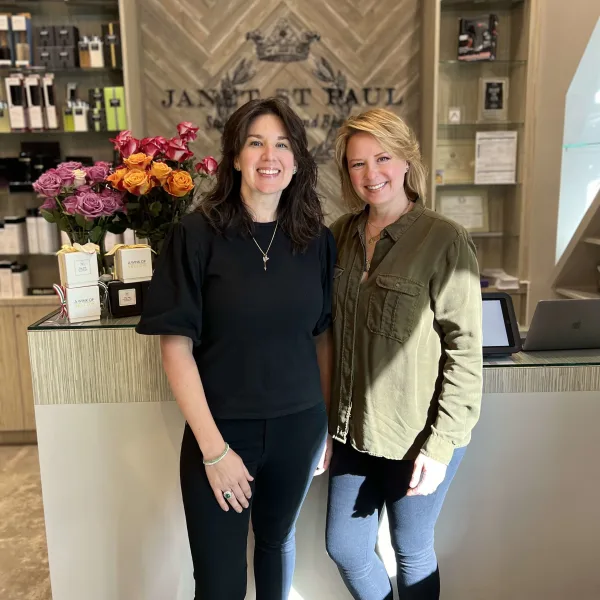
At Janet St. Paul Studio for Hair and Beauty, Director of Operations Natasha McMillen helps bring her wife Janet St. Paul's vision to life, elevating every system from education to operations.