







You Don't Own a Salon. You Own A Business.
In his latest blog, Leon Alexander Ph.D., challenges industry conventional thinking to help owners add more to their bottom lines.
 MENU
 SEARCH
As she announces a deadline extension of September 12 for this year's SALON TODAY 200, Stacey Soble, editor in chief, offers 6 strategies for building a winning ST200 essays.

If you’re struggling a bit with your essays for the SALON TODAY 200 competition, we’re here to help with a deadline extension and some tips to get those words rolling off your keyboard.
The deadline for uploading or mailing in the 2017 SALON TODAY 200 application is now midnight on Monday, September 12. That gives you 12 more days and two more salon weekends to focus on building the best application.
When it comes to developing a solid strategy for entering and winning in the competition, here’s my advice:
Numbers First: If you have the growth statistics, enter Growth as one of your competition categories. We select 100 growth honorees, but only 10 in each of the other best practice categories, so your chances of claiming a spot are always best when you can enter Growth. This also is the only category that doesn’t depend on the essay—we choose Growth honorees simply by their overall sales stats, verified by a copy of their tax returns or a letter of certification from their tax preparer. Typically, salons with growth percentages of more than 12 percent capture a spot in this category. That of course, all depends on how many people enter this category and how well the market did that year. My advice to any owner would be if you have growth of more than 10 percent, it’s worth it to enter in Growth.
Be Selective, Then Focused: Too many owners tend to try to fill out the entire application, but then they get overwhelmed and end up spending less and less time on each essay. And, with the exception of the Growth category, the information you convey though the essays are critically important to doing well in this competition. I think it’s better to choose two to five Best Practice categories where you believe your salon excels and spend your time compiling a stronger essay for those sections. Be strategic when you choose your categories though. Remember though, you are competing against all the other salons that entered in that category to capture a very small number of selections at the top (10 in each category). I can tell you that Customer Service and Salon Culture receive the most applications, so it’s much harder to snag an honor in those categories than it is in something like Inventory Control or Planned Profitability which tend to get fewer entries.
Focus on Facts, not Prose: Keep in mind, when we judge the applications, we’re looking for what you did, how you did it and the results. We aren’t looking for how well you wrote your essays. (I would never attempt to cut someone’s hair because that’s not my expertise, we don’t expect you to have perfect grammar, spelling and sentence structure.) We are though expecting you to demonstrate your business expertise. Don’t waste time on flowery prose that sets up the topic of your essay. Tell it to us straight—and include results whenever you have them. How does your program or idea translate into more productive employees, higher customer satisfaction, new client or higher client tickets—whatever the case may be. It’s perfectly fine to structure your essay in bullet point form, as long as those bullets are communicating strong points that build your case.
Use the questions as your guide. Each of our essay categories list a number of questions. While you don’t have to answer all of the questions that we ask, use them as a guide to structure your best essay. They are intended as clues to guide you in knowing the kind of information we are looking for. Carefully consider them as you write your essay, but don’t end with them. If you have something great to add on the topic of the best practice in which you are entering, include it in your essay, even if it doesn’t directly answer one of the questions we asked. That's what will make your application stand out.
Focus on your difference. This is perhaps the most important bit of advice I have on writing a quality essay. It’s so important to remember that you are competing against all the other salons who entered in the categories you entered. The more your essay stands out with unique ideas, thoughts, and results, the better you tend to do. For example if you are entering Retention and Referral Programs and your in-salon program is based on a program developed by a manufacturer or vendor, you need to let us know how you adopt that program and make it your own. Otherwise your essay will read exactly like everyone else’s essay who uses the same manufacturer-based program. (We’ve actually had years where essays from different salons are word by word identical because the entering salons are copying and pasting descriptions of the programs from something they've been given directly from the developer of the program.)
Focus on each category independently: It’s important to remember once you enter, your application gets divided into the different categories, and the judges for each best practice category are different. They are only seeing the information and essay you prepared for that individual category – they don’t have access to your entire application. If one of your essays included information that was also included in another essay, don’t just refer to the information and expect the judge to look up that other category. It’s better to copy that information and repeat in the new category essay.
I hope that gives you some additional guidance, but remember we are always here if you have a question or need help. Contact the Competition Supervisor Joyce Alverio at joyce.alverio@bobit.com or by phone at 847-415-8037. Or contact Stacey Soble, Editor of Salon Today, at stacey.soble@bobit.com or by phone at 805-709-1837.
Access the 2017 SALON TODAY 200 Application!
In his latest blog, Leon Alexander Ph.D., challenges industry conventional thinking to help owners add more to their bottom lines.

In her latest blog, Amy Pal helps you develop your own clear guidelines around complimentary free employee services.
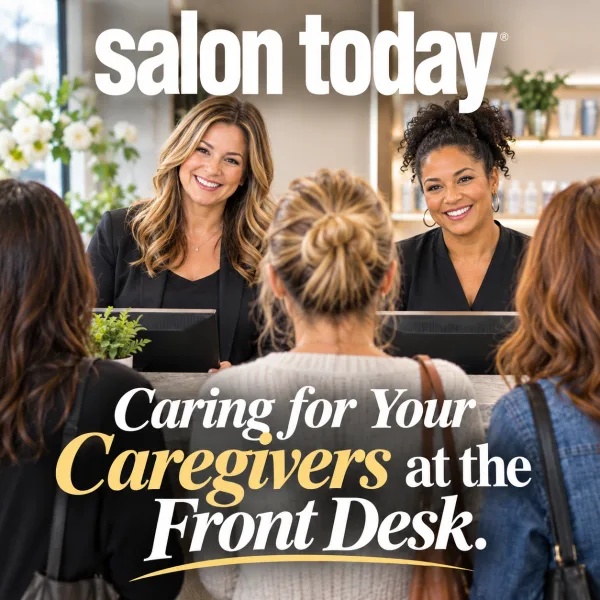
From managing air traffic on busy days to handling frustrated guests' complaints, your front desk team often serves as the salon's emotional shock absorber. From a customer service lesson from the DMV to a list of strategies for caring for your front line, our experts offer ideas for alleviating stress, celebrating wins, and setting goals.

According to the KIM Report, top-line salon revenue appears steady or slightly up, but that growth is driven primarily by service price increases. Beneath the surface, retail performance and client visit frequency (appointment drift) are under real pressure. In his latest blog, Alain Audet offers strategies for keeping your salon's retail sales strong.

Putting your family to work in the salon offers some real tax benefits, but you have you have to play by the rules of the tax code to claim them. Azarvand Tax Law's Leticia Skrabut, Esq., shows you how.

Discover how to create a true “WOW experience” for every client by first building a culture where your team feels engaged, empowered, and inspired. Drawing on Calvin Stovall’s Iconic Framework, this blog explores how salon, spa, and clinic leaders can strengthen culture, elevate customer experience, and build a business that stands out for the long term.
Sponsored by Phorest Salon Software

The wellness industry is growing fast, and salons and barbershops already are an important part of it. In her first blog, Tracy Rado shares where the wellness dollars are heading, and how salons can grow with this movement.

While salon sales are increasing, owners often feel they're working harder for the same or less profit. Leverage Q2 data from The KIM Report, Alain Audet reveals some of the structural changes that are dampening your growth and why your region and your salon size matters.

Weaknesses in your business are amplified during the Holiday Season. Spark Pro Global's Lucy Randall shows you five things to do now to have the strongest holiday season yet.

In Kati Whitledge's latest blog, she shares how salons have moved away from dress codes and embraced appearance standards. But by removing strict dress codes, some businesses may have unintentionally lowered their appearance standards. Whitledge helps you explain to your team why an appearance standard is important and how to smoothly implement a new appearance policy.

The Small Business Health Care Tax Credit is a non-refundable tax credit for for-profit businesses that provides a financial incentive for eligible employers who offer health insurance coverage to their employees. Leticia Skrabut, Esq., walks you through how to claim that credit.

Developing strong work habits early in one's career supports long-term success in the salon industry. Jesse Linares offers new stylists his top five tips.

Most salon owners have no idea what these numbers are. You can hit record sales and still have a profit problem. The difference comes down to four numbers almost nobody was taught to track.
Sponsored by Strata Salon Systems™

A five-area audit every owner-dependent salon needs to run. You built something that looks successful. Now find out if it can survive without you.
Sponsored by Strata Salon Systems™

Every month you put off fixing the problem, it gets bigger, more expensive, and harder to solve.
Sponsored by Strata Salon Systems™
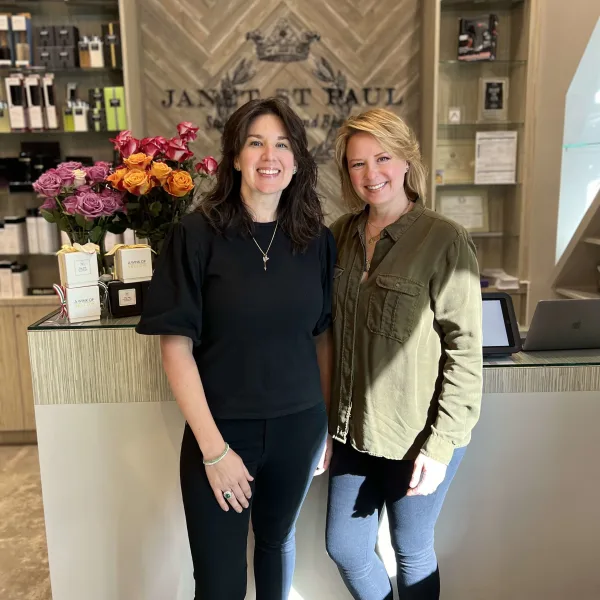
At Janet St. Paul Studio for Hair and Beauty, Director of Operations Natasha McMillen helps bring her wife Janet St. Paul's vision to life, elevating every system from education to operations.

Expand your color service menu with the Pinstripe technique. Brooks and Brooks' Marlon Hawkins walks you through the technique.