Are today’s cost-conscious consumers giving high-end brands the cold sholder? When it comes to the salon environment, top retailers say, “No!” and they offer up these 12 proven strategies to power sales in any economy.
Are today's cost-conscious consumers giving high-end brands the cold shoulder? When it comes to the salon environment, top retailers say, "No!" and they offer up these 12 proven strategies to power sales in any economy.
Ah, the prestige brand-it denotes a certain top-of-the-line, even exclusive, status on everything from fashion to cars to hair care. But where the brand alone used to spark an impulse buy, today's prestige products are met with a consumer's hesitation and an intense rationalization process.
"From where we were a year ago to where we are now is the difference between night and day, but it's still not a robust market," says Jeff Holland, president of Latitude 360 (latitude360.us), a company that connects dynamic brands with exclusive retail partners. "But there's always a market for the prestige brand, and for the beauty brand that market is driven by newness. Consumers interested in prestige products want the exciting and the innovative, and they want it first."
And, according to Holland, a trusted salon or spa is the exact environment where today's consumer will go for a prestige beauty or wellness brand. "While there are still consumers willing to buy the uber high-end brands, they don't feel good about conspicuous consumption-they still want to shop, but are turning away from the high-end department store and seeking purchases in places that are more local and where they have relationships."
"They also are seeking an additional perceived value from a beauty brand," Holland continues. "Portability is important, organic and natural brands are doing well, as are brands that deliver a health benefit. Consumers are more educated than ever, and are really picking up packages and studying the ingredients."
Holland stresses that with the information available through television, magazines and the internet, these consumers are more savvy than ever, too. What they are seeking at the salon is the expertise that can shed some opinion and first-hand, day-to-day experience with prestige brands.
Tapping the prestige market starts with building the right environment, picking the right product partner, developing your staff's knowledge and cultivating your expertise. Beyond that, it's all strategy, say these successful beauty retailers, who've agreed to share their 12 top-selling tips:
1. Shift the Responsibility
Ad Loading...
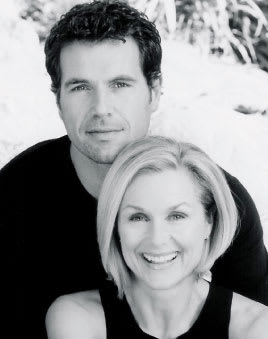
Andrew and Kim Todd, owners of the San Francisco-based diPietro Todd Salons, found retail success in shifting the responsibility to the salon's assistants, which has the added effect of boosting their professionalism.
At the multiple locations of San Francisco-based diPietro Todd Salons (dipietrotodd.com), it's the assistants who are charged with the main retail responsibility. "Retailing is big business for us, and we have a good system in place," says Kim Todd, who co-owns the enterprise with husband Andrew. "We have 35 assistants, and they all sell retail. They are trained on it, their progress is evaluated weekly, and it's part of their job description. Their relationship to the stylist is much like a nurse to a doctor. And, we all know as patients, you often get more information out of your nurse."
Shifting the retail responsibility to the assistants helps them develop professional conversations with clients, stresses Todd. "Clients perceive them in a new light, instead of as a shampoo lackey."
The diPietro Todd enterprise always has been careful to partner with lines that suit the needs of their high-end clientele-the salon currently retails Rene Furterer, Kerastase and Shu Uemura. While the stylists are counted on to make specific client recommendations and the front desk personnel are encouraged to help support sales, it's the assistants who are charged with closing the sale, and it's the assistants who make the commission.
How the product conversation evolves depends on the strength of the individual assistant. Todd encourages the more meek assistants to use a product prescription, where the bolder rely on engaging conversation.
2. Sample with Discretion The economy may be forcing salons to cut back on marketing efforts, but when it comes to prestige brands, sampling is still key, says Laura Chisholm, founder of Retail Avenue Consulting Group (retailavenue.com). "But samples can get expensive-it kills me when I shop and the sales clerk throws 20 samples in my bag, because I know she just gave away $40 worth of goods," she says.
While Chisholm recommends broad sampling whenever a salon is introducing a new line, she suggests implementing qualified sampling for other instances. "During the consultation, ask the client what hair care products she's currently using. If she loves what she's using now, hold back on the sample. But if she wavers, be able to offer a sample of something you think she'll like," Chisholm says.
Sampling also can attract new clients, says Anthony Segretto, owner of Zazu Salon and Day Spa (zazu.net) with four locations in greater Chicago. "We do a lot of fashion shows in Chicago where we partner with a local boutique," he says. "We add samples to any client bag that goes out, and now we're using those prestige brands to encourage new prospects into the salon."
3. Guide the Focus When Scott and Helen Miller opened their flagship Scott Miller Salon and Spa (scottmillerstyle.com) in Rochester, New York, Scott Miller says he modeled his apothecary-like retail area after Collette in Paris and Fred Segal in Los Angeles. "Women are conditioned to buy their prestige beauty products from department stores, and department stores always lead consumers straight through the maze of cosmetics and fragrance areas," says Scott Miller. "That's valuable real estate in a department store, so we decided to do the same-both our locations have 1,000 square-foot retail areas that spotlight lines like Bumble & bumble, Oribe, Kerastase, Acqua di Parma, Bobbi Brown and Nars."
Scott and Helen Miller borrowed ideas from Collette in Paris and Fred Segal in Los Angeles to create their prestige-packed retail space.
At any one time, Miller says his retail areas are staffed by as many as two retail specialists and five make-up artists.
After learning from focus groups that some clients believed the salon only used the make-up to finish client services but didn't actually retail it, Miller adopted the motto, ‘Turn Left.' In both his salons, the checkout area is to the right of the service area and the retail area is to the left.
"When clients come in the salon, they naturally walk to the front desk and ignore the area they walk through, and when they are done, they'll naturally make a beeline to the desk to pay and leave," says Miller.
To direct clients where he wanted them to go, Miller set up a hostess stand for checking in. The hostess greets the client, checks them in and encourages them to relax with a cup of coffee and wander through the store. When clients leave, their service providers now escort them left, through the retail areas, saying, "Let me show you what products I used on you today."
In a smaller retail space, you can direct the focus by setting up and maintaining a specific area to highlight whatever you are promoting at the time, suggests Segretto. "That can be a table in the retail area or a specific spot on the retail wall, but don't leave it up to your staff or front desk to forget to mention the promotion-you can condition clients to always check that area for promotions."
4. Give Full Service At the diPietro Todd Salon, every client gets a consultation at each and every visit, not just the first one. The client is always asked about her hair-what's working, what's not-offered some new suggestions, told about the latest and greatest products and shown how to do the new style at home.
"We talk to our staff about full servicing the client-this is the piece that too many salons don't pay attention to," says Todd. "Clients want to know about new products and they want to know how to use them to duplicate the style you created-if you don't offer that, they feel cheated."
5. Ditch the Pitch Stylists and clients alike are turned off by hardcore product pitches, but steer product information into a productive conversation and now you've got a professional offering expertise to a satisfied client.
"I personally don't have a great memory when it comes to all the ingredients and price points of every single product we carry, and price doesn't matter that much anyway-if a client wants it they will justify the cost," says Miller. "I instead suggest that my service providers pick two or three of their favorite products and talk to their clients about why they love them and can't live without them. People put a lot of trust and faith in their hairdressers, and most don't know the power that they have."
Segretto also appreciates the conversational approach. "When service providers are using a styling aid, whether a blow drying lotion or styling cream, we encourage them to place the product in the client's hands as they are explaining why they are using it and what it does," he says. "Then the client is interacting with the product and reading the label. Just by doing this we've seen sales increase."
6. Measure and Coach At Adam Broderick Salon & Spa (adambroderick.com) in Ridgefield, Connecticut, retail educators and specialists coach and train the entire organization to achieve success in retail. For hair care lines, the salon currently focuses on Kiehl's, Kerastase, Bumble & bumble and Oribe. Blu Bailey, one of those retail educators, says service providers are given specific retail goals each week.
"Everyone from interns to our editorial stylists receive ongoing retail education," she says. "We make sure stylists know when it's time to introduce the product conversation, what to say during the consultation, not to judge what they think a client is willing to spend and how to handle rejection. If their sales are soft we'll talk them through different strategies and role-play different situations."
Clip-and-Save Guide: High-End Hair Care Carrying a prestige brand can elevate your salon in your marketplace
and give you a point of difference. Download this Clip-and-Save Guide to help you
compare some high-end options side by side.
All beauty professionals should know how to identify when a client may need some health guidance. Tracy Rado discusses some common questions that clients ask in the chair, how to advise them, and when to refer them to a specialist.
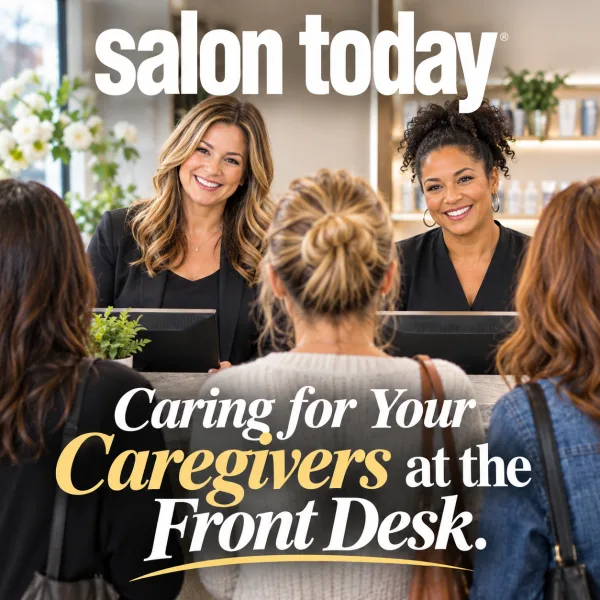
From managing air traffic on busy days to handling frustrated guests' complaints, your front desk team often serves as the salon's emotional shock absorber. From a customer service lesson from the DMV to a list of strategies for caring for your front line, our experts offer ideas for alleviating stress, celebrating wins, and setting goals.
According to the KIM Report, top-line salon revenue appears steady or slightly up, but that growth is driven primarily by service price increases. Beneath the surface, retail performance and client visit frequency (appointment drift) are under real pressure. In his latest blog, Alain Audet offers strategies for keeping your salon's retail sales strong.
Putting your family to work in the salon offers some real tax benefits, but you have you have to play by the rules of the tax code to claim them. Azarvand Tax Law's Leticia Skrabut, Esq., shows you how.
Discover how to create a true “WOW experience” for every client by first building a culture where your team feels engaged, empowered, and inspired. Drawing on Calvin Stovall’s Iconic Framework, this blog explores how salon, spa, and clinic leaders can strengthen culture, elevate customer experience, and build a business that stands out for the long term.
The wellness industry is growing fast, and salons and barbershops already are an important part of it. In her first blog, Tracy Rado shares where the wellness dollars are heading, and how salons can grow with this movement.
While salon sales are increasing, owners often feel they're working harder for the same or less profit. Leverage Q2 data from The KIM Report, Alain Audet reveals some of the structural changes that are dampening your growth and why your region and your salon size matters.
Weaknesses in your business are amplified during the Holiday Season. Spark Pro Global's Lucy Randall shows you five things to do now to have the strongest holiday season yet.
In Kati Whitledge's latest blog, she shares how salons have moved away from dress codes and embraced appearance standards. But by removing strict dress codes, some businesses may have unintentionally lowered their appearance standards. Whitledge helps you explain to your team why an appearance standard is important and how to smoothly implement a new appearance policy.
The Small Business Health Care Tax Credit is a non-refundable tax credit for for-profit businesses that provides a financial incentive for eligible employers who offer health insurance coverage to their employees. Leticia Skrabut, Esq., walks you through how to claim that credit.
Developing strong work habits early in one's career supports long-term success in the salon industry. Jesse Linares offers new stylists his top five tips.
Most salon owners have no idea what these numbers are.
You can hit record sales and still have a profit problem. The difference comes down to four numbers almost nobody was taught to track.
At Janet St. Paul Studio for Hair and Beauty, Director of Operations Natasha McMillen helps bring her wife Janet St. Paul's vision to life, elevating every system from education to operations.