In her early 20s, Amanda Hair was managing a Bebe clothing story, when a stylist from the nearby Bob Steele Salon ducked in for some items to use in a photoshoot. Admiring Hair’s look, the stylist asked if she’d ever consider ...
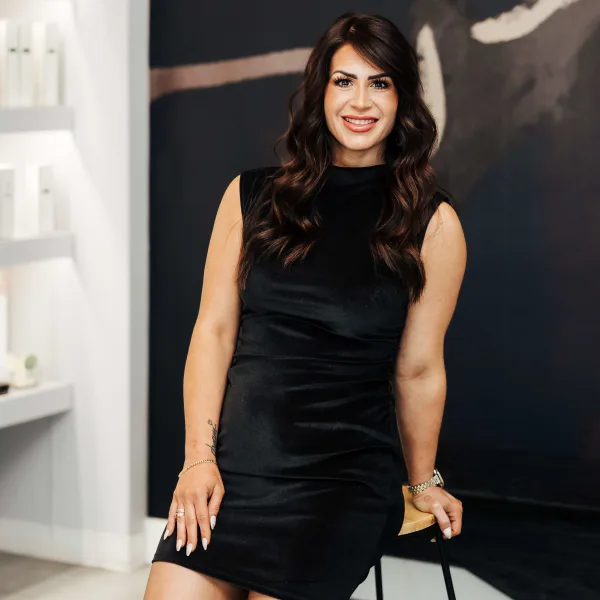
Amanda Hair and Bob Steele, sequential owners of Bob Steele Salon in Atlanta.
5 min to read
In her early 20s, Amanda Hair was managing a Bebe clothing story, when a stylist from the nearby Bob Steele Salon ducked in for some items to use in a photoshoot. Admiring Hair’s look, the stylist asked if she’d ever consider modeling for the salon. Thinking it would be fun, Hair agreed, later modeling for a future shoot and meeting Steele and his team. Attracted to the salon’s energy, Hair became a client as well as a model.
Soon after, Hair went on vacation with her future husband, and the two had a long discussion about their future. At the time, Hair was on track to become the next district manager for the store—a future she’d glimpsed while training and realized its frenetic pace and extremely long hours were not conducive to starting a family. Making a personal decision, she returned from vacation and gave Bebe a long notice, with enough time to train a replacement.
Ad Loading...
Coming on Board
Like many clients do, Hair shared her decision with her stylist, who in turn told Steele, who was looking for a floor manager. Steele invited her to interview.
Taking a cut in pay but improving her lifestyle, Hair accepted the position as the salon’s personnel manager in 2001. She immediately began studying the salon’s operations and looking for areas she could implement some of the systems she’d learned from retail. “Amanda was very mature for her age and had great management skills—she was good with people and they liked and respected her,” Steele remembers.
A team shot from Bob Steele Salons in Atlanta.
At the time, Steele was in his 50s, and was part of Vistage International, a business networking organization that helps CEOs and executives grow their businesses. One of the other members was a consultant who helped CEOS and business owners plan exit strategies.
Ad Loading...
Steele knew selling a salon can be tricky. “Your greatest asset is your people, and they can leave the salon at any time,” he says. “Clients often have more loyalty to the stylist than they do to the salon. Selling a salon or the transition from one owner to another can be disastrous if the current employees don’t stay with the new owner.”
Nevertheless, he began to plan an exit strategy, knowing that far too many owners wait until they’re burned out, and then it can be too late. Knowing he wanted to keep Hair engaged as a manager of the salon, Steele started envisioning a strategy that involved her buying him out slowly and gradually.
Another issue with selling a salon is finding someone with the money or collateral to pay for it. “Banks do not look favorably on the salon industry because of the failure rate and lack of marketable assets to use as collateral,” Steele says. “Therefore, they don’t want to loan money to anyone without a lot of personal collateral, and most young people, like Amanda, have not had time to build up their net worth. This meant that I would have to be the banker until she retired the debt she owed me.”
The Deal is in the Details
The two began working with a consultant, who asked what they both would want out of the deal. Hair also went through a thorough interview and testing process to determine if she was a good candidate for the ownership role. The consultant also helped them determine the value of the salon business.
Ad Loading...
In 2004, Steele and Hair signed the first deal, which involved him selling her 49 percent of the salon over the next five years. Steele says, “The money for purchasing the 49 percent of the salon included a few components—direct pay from Hair for the appraiser’s lowest legal amount; salary reduction with the reduced amount going to Steele for part of the money; and a part of the profit—Hair had the option to pay any or all of her share of the profits to reduce the debt.
“It was definitely an exciting time for me,” Hair says. “But I was a little naïve in thinking it would be an easy transition. I had to come up with a down payment, then take a salary deduction to make the monthly payments.”
Steele too had to learn to step back and start letting Hair lead. “The team would come to me with a question, and I started pointing them in Amanda’s direction, telling them to get her opinion.”
Their transition was complicated by the fact that right after Steele and Hair signed the papers, they began to expand their salon operations. They merged with another local salon in the area, but learned after assuming that salon that the culture was quite different, making for a rockier transition. Simultaneously, they were working on opening a new third location. They also opened a salon support office, which housed a call center for all three locations, and moved their own offices there. “It was a lot to change at once, and we paid for it—it was tough for a while,” Hair says.
Shifting Roles
Ad Loading...
In June 2008, Steele suffered a stroke. “One of the first things the neuropsychologist asked me was what I did for a living. When I told him I owned a hair salon, he said, ‘You must be pretty worried about it right now.’ But honestly that was the first time I’d even thought about it. The doctor told me that was very unusual. He’d never had an owner not be worried about their business in that situation.”
Steele decided to speed up the second stage of the sale, and in June of 2009, he sold Hair the remaining shares of the company over the next five years. Similar to the first phase, Steele now received a direct payment and consultant fee for the transition period and he officially retired.
With her systems in place, Hair streamlined her operations and cut costs to weather the tough economy, and has continued to grow the salon by recently adding a fourth new talent location called The Verge. Hair and Steele continue to own the corporate office together, and they still meet regularly, often over lunch.
Looking back, Hair recommends that others in her position look at the company as its own entity and make decisions that are best for the company, removing your own emotional connection. And, find a partner who has core common values. “Bob and I are extremely different people, but our core values are aligned—I don’t think our succession plan would have worked if we hadn’t,” she says.
For her own succession, Hair has her eye on her 10-year-old daughter. “Although it’s early yet, I hope that one day, she’ll be ready to jump into the role,” Hair says.
Discover how to create a true “WOW experience” for every client by first building a culture where your team feels engaged, empowered, and inspired. Drawing on Calvin Stovall’s Iconic Framework, this blog explores how salon, spa, and clinic leaders can strengthen culture, elevate customer experience, and build a business that stands out for the long term.
The wellness industry is growing fast, and salons and barbershops already are an important part of it. In her first blog, Tracy Rado shares where the wellness dollars are heading, and how salon's can grow with this movement.
While salon sales are increasing, owners often feel they're working harder for the same or less profit. Leverage Q2 data from The KIM Report, Alain Audet reveals some of the structural changes that are dampening your growth and why your region and your salon size matters.
Weaknesses in your business are amplified during the Holiday Season. Spark Pro Global's Lucy Randall shows you five things to do now to have the strongest holiday season yet.
In Kati Whitledge's latest blog, she shares how salons have moved away from dress codes and embraced appearance standards. But by removing strict dress codes, some businesses may have unintentionally lowered their appearance standards. Whitledge helps you explain to your team why an appearance standard is important and how to smoothly implement a new appearance policy.
The Small Business Health Care Tax Credit is a non-refundable tax credit for for-profit businesses that provides a financial incentive for eligible employers who offer health insurance coverage to their employees. Leticia Skrabut, Esq., walks you through how to claim that credit.
Developing strong work habits early in one's career supports long-term success in the salon industry. Jesse Linares offers new stylists his top five tips.
Most salon owners have no idea what these numbers are.
You can hit record sales and still have a profit problem. The difference comes down to four numbers almost nobody was taught to track.
At Janet St. Paul Studio for Hair and Beauty, Director of Operations Natasha McMillen helps bring her wife Janet St. Paul's vision to life, elevating every system from education to operations.
The strongest salons, spas, and med spas know which numbers tell the real story of their business. In this practical guide, Phorest breaks down the five essential KPIs every business should track to improve retention, boost revenue, and make smarter decisions with confidence.
At Bella Style Salon in Slidell, Louisiana, Director of Operations Angela Meyer tackles inventory, team management, and guest relations. Read all about her in our latest Meet the Manager.
Starting at Impressions front desk in 2006 when he was 19 years old, General Manager Paul Petrowsky is a seasoned professional who owner Sarah Taylor says is responsible for much of her own success.
Planning is in full swing for the most anticipated events and promotions for the 2026 holidays. As owners share their favorite ways to celebrate, they prove that a carefully planned event can also build culture, increase client loyalty, boost sales, and set a business up for a successful 2027.
When things run amok at Mane Attraction Salon, Owners Chris and Jenny Knudsen say General Manager Sami Hernandez is their go-to resource and ultimate sounding board. Meet Sami in this installment of Meet the Manager.