Different from the Diva, the Naysayer is the staff member who quietly undermines the salon’s leadership through their words and actions and influences staff opinion.
Different from the Diva, the Naysayer is the staff member who quietly undermines the salon’s leadership through their words and actions and influences staff opinion. The Naysayer is the first one to say, ‘That won’t work’ or ‘This is a bad idea.’ He or she is the one who badmouths the owner or manager to other staff in the backroom or rebels by simply refusing to follow the rules.
Don Bewley, founder of Eufora: “When you’ve got a Naysayer, it’s important to evaluate their strengths and weaknesses and try to find out the reason behind why they act the way they do. It could be they’re afraid or insecure or uneducated, and those are things I can coach them through. Every person has different goals—my goal is to find out what their goal is and help them achieve it—then they’ll help you with their goals. People don’t care what you know until they know that you care.”
Ad Loading...
Ginny Eramo, owner of Interlocks in Newburyport, Massachusetts: “I still have a few of these, but they are not the majority. I make sure those people are not in a leadership role. Negativity can certainly spread, but if you have a healthy work environment, negativity can only spread so far. As the salon owner, you can affect the environment. I spend less time on Naysayers and more time on team players. Your attention to the Naysayer just fuels it, and what gets rewarded, gets repeated. For example, there are 12 of us going to America’s Beauty Show this year, and I’m only taking positive, team players.
“I have a Naysayer who has been honest with me and realized she’s missed out on opportunities, and I told her why so she can change into more of a team player.”
Bryan Nunes, owner of Blo in Raleigh, North Carolina: “I’m all too familiar with the Naysayer as I used to be one. At the core, the Naysayer has a fear of abandonment, failure, not being good enough and rejection. I can’t overstate how critical it is in life, not just business, to practice understanding. “The way to handle Naysayers is by empowering them. Not in an ‘OK, do you have a better idea?-way, but in a way that makes them feel valued and secure—a way that gives them a sense that they matter. Like many of us, they must be brought into awareness about this part of their personality so they can begin to ask themselves how this approach is serving them in their day-to-day lives. “As far as staff meetings go, you have to set the ground rules and expectations ahead of time as a leader. Our staff meetings have communication going in one direction. They are strictly for the delivering of information. They are not and will never be a setting where back and forth dialogue is welcome beyond questions that involve clarifying a point or something small like that. This in not to say that feedback isn’t welcome, but only in a one-on-one setting.”
Kitty Tierney, owner of Impressions Salon and Spa in Mequon, Wisconsin: “My Naysayers usually go away. Many of my staff have been with me since they graduated from beauty school. The Naysayers think everything I do is wrong, so eventually they go away.”
Christine Zilinski, owner of Salon Concrete in Red Bank, New Jersey: “I have grown to value this person, but I did not always see it that way. What I’ve discovered is that the Naysayer is a person who has ideas different from your own. They are not always negative, but often someone looking to be heard, for attention and to have an opportunity to communicate their own ideas.
Ad Loading...
If this person challenges me, I will challenge them back with questions. I go into curiosity mode to get a better understanding of where they are coming from. For example, if someone doesn’t agree with a policy, I come up with powerful questions to find out what the issue is. This person may have great ideas, but they don’t know how to communicate them. If I react to the way they communicate, then we wouldn’t get anywhere. Instead I challenge them to come up with their own ideas.
“One great book to refer to in this scenario is Fierce Conversations by Susan Scott. One of the things that the book recommends is Beach Ball Conversations, which involves identifying the issue, talking about who it is affecting and how it is affecting them to come up with solutions.”
All beauty professionals should know how to identify when a client may need some health guidance. Tracy Rado discusses some common questions that clients ask in the chair, how to advise them, and when to refer them to a specialist.
From managing air traffic on busy days to handling frustrated guests' complaints, your front desk team often serves as the salon's emotional shock absorber. From a customer service lesson from the DMV to a list of strategies for caring for your front line, our experts offer ideas for alleviating stress, celebrating wins, and setting goals.
According to the KIM Report, top-line salon revenue appears steady or slightly up, but that growth is driven primarily by service price increases. Beneath the surface, retail performance and client visit frequency (appointment drift) are under real pressure. In his latest blog, Alain Audet offers strategies for keeping your salon's retail sales strong.
Putting your family to work in the salon offers some real tax benefits, but you have you have to play by the rules of the tax code to claim them. Azarvand Tax Law's Leticia Skrabut, Esq., shows you how.
Discover how to create a true “WOW experience” for every client by first building a culture where your team feels engaged, empowered, and inspired. Drawing on Calvin Stovall’s Iconic Framework, this blog explores how salon, spa, and clinic leaders can strengthen culture, elevate customer experience, and build a business that stands out for the long term.
The wellness industry is growing fast, and salons and barbershops already are an important part of it. In her first blog, Tracy Rado shares where the wellness dollars are heading, and how salons can grow with this movement.
While salon sales are increasing, owners often feel they're working harder for the same or less profit. Leverage Q2 data from The KIM Report, Alain Audet reveals some of the structural changes that are dampening your growth and why your region and your salon size matters.
Weaknesses in your business are amplified during the Holiday Season. Spark Pro Global's Lucy Randall shows you five things to do now to have the strongest holiday season yet.
In Kati Whitledge's latest blog, she shares how salons have moved away from dress codes and embraced appearance standards. But by removing strict dress codes, some businesses may have unintentionally lowered their appearance standards. Whitledge helps you explain to your team why an appearance standard is important and how to smoothly implement a new appearance policy.
The Small Business Health Care Tax Credit is a non-refundable tax credit for for-profit businesses that provides a financial incentive for eligible employers who offer health insurance coverage to their employees. Leticia Skrabut, Esq., walks you through how to claim that credit.
Developing strong work habits early in one's career supports long-term success in the salon industry. Jesse Linares offers new stylists his top five tips.
Most salon owners have no idea what these numbers are.
You can hit record sales and still have a profit problem. The difference comes down to four numbers almost nobody was taught to track.
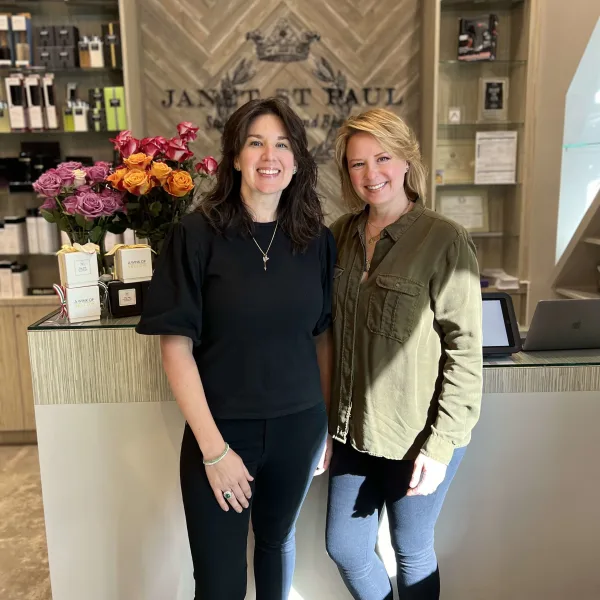
At Janet St. Paul Studio for Hair and Beauty, Director of Operations Natasha McMillen helps bring her wife Janet St. Paul's vision to life, elevating every system from education to operations.