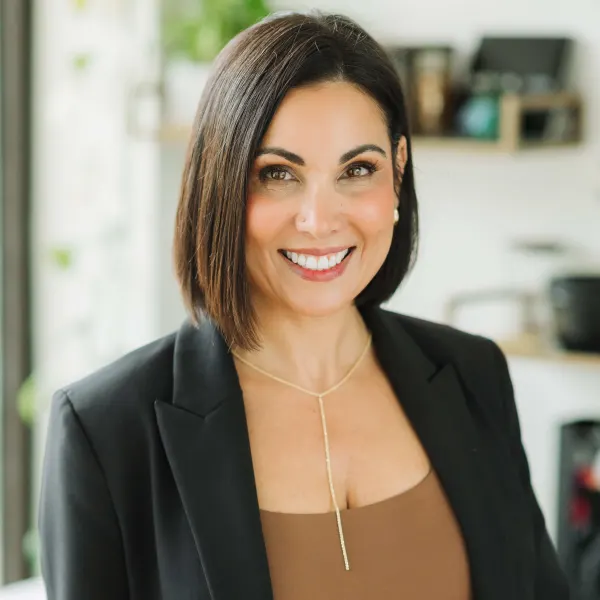
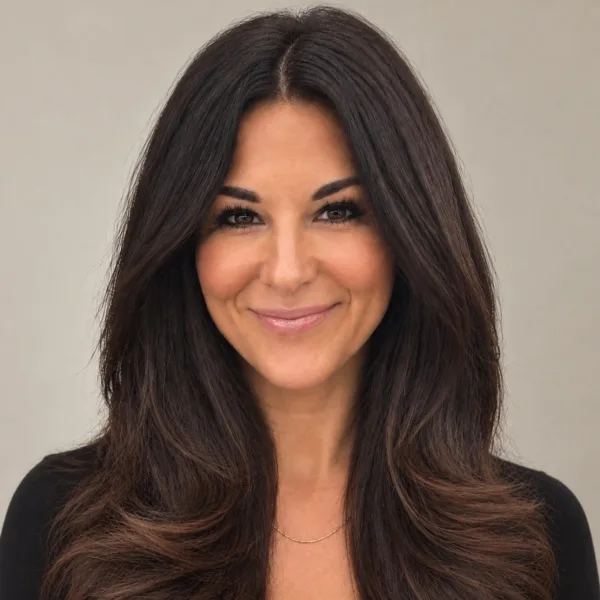
Sandra Humphries
Vice president of education, Kao Salon US, Goldwell and KMS California
Sandra Humpries’ passion for education and teaching is evident throughout her career. Prior to assuming the role of vice president of education for Kao USA, Goldwell, and KMS California, Humphries worked as Kao’s director of field education. Her vision as an educator is influenced by the many roles she’s filled over the years--Humphries has worked for another manufacturer in both education and sales roles, worked for a distributor as an educator, managed salons, managed a cosmetology school, taught in a cosmetology school and worked as a stylist.
Where did your entrepreneurial drive originate?
I think it came from my parents. My father owned a small business in a farm community, and I watched him build a successful life for his family.
As you grew your company/brand, what “ah-ha” moments of clarity helped you shape its future course?
I realized growing a brand is like raising a child. Structure is essential, as is organization and over communication. Then you create an open, safe environment to play or be creative. Creativity without structure doesn’t deliver. I think sometimes I went to either extreme. Finding a balance was the key.
As you shaped your company, what have been some of the biggest stumbling blocks?
For me, there is a point in a company or brand when you have to shift to a new direction in order to remain innovative and current. It can go off course quickly if you don’t have a plan that looks beyond the actual transition. How will you keep current clients comfortable while moving in a new direction to attract new customers? I think that challenge is universal to any business.
How would you describe your management style?
I believe in hiring people with strengths that complement my shortcomings. I try to create an open environment that is collaborative—and I trust them!
What do you think makes you a good leader, and in what areas would you like to improve?
I try to be an active listener. I work very hard to remove my emotions and help others to depersonalize work-related conflict. Some days are better than others, of course. My biggest area for improvement is taking the time to explain and teach the “why” of a decision or strategy vs. dictating the actions to take. That is fundamental in growing your team to become leaders themselves. It requires more time, and I find that is sometimes where I fail—not enough time for my staff on the “why.” I beat myself up at the end of every day over it and start over the next morning with that as my number-one goal.
How do you set goals for yourself? For example, do you prefer more small, accomplishable goals or fewer large goals?
I like a potpourri of goals, both small and large. I like having smaller accomplishments that I can check off quickly. That keeps me motivated for the marathon goals that can take three to five years to develop.
Throughout your professional history, what’s the best lesson you’ve learned after making a mistake?
That it was okay! I have had the good fortune to work for mentors that taught me to welcome mistakes and learn from them. They allowed me the safety to make mistakes and own them, to discuss how to improve going forward, and walk away with a light heart. We learn so much more from mistakes than we do when everything is perfect. None of us wants to fail, but when it happens, own it, learn from it, and try not to do it again.
From whom or what do you draw your strength, courage, vision?
From my parents. My dad taught me the value of integrity and to look for laughter in every situation to help you carry through. My mother taught me strength and courage.
As you grew your company, what, if anything, has held you back?
I had a need to be right. Things were either black or white—never gray. Well, that didn’t work, but it took me a long time to learn that! One mentor made my only goal for a year “to be flexible.” That was my ONLY goal. Finally I got it, with practice. Now others feel valued, and I learn from other perspectives.
What is the number-one quality you look for when hiring employees, and how do you evaluate if they possess that trait?
Ability is number one, of course, then I look to character traits and general personality. Many of my interviews include the candidate doing a formal presentation on a topic other than the job. For example, a 15-minute presentation on a hobby. You find out a lot about a personality that way. It really works.
What’s the best thing an employee/colleague ever said about you?
When they have been promoted or moved to another company, they have thanked me for helping them achieve their goals. That is the best feeling.
If you were training another woman to take over your job, what’s the most important advice you would offer her?
Feel with your heart, speak from your brain and act with integrity. Be proud of your abilities, because you’ve earned the right to be here.
If you were to look at scrapbook of your professional career, what would be your favorite page? Which page would you like to remove?
First off, I’d remove any page with a photo of me from the 1980s, because that was just wrong! My favorite page, on the other hand, would contain a collage that captured every hug I have ever received from stylists, artists and co-workers. That would be it.
If someone were to write a book about your life, what would be an appropriate title?
Growing up, my mother and father used to say every time I left the house, “Remember who you are.” I didn’t really understand that for a long time. But it was their message to me that you create the person you are every moment, and you carry with you all your experiences to that point—the people, the happy, the sad. Remember Who You Are—I think that is the title.
If you weren’t in the beauty industry, what would you be doing?
I would like to think I would be an actress or singer. Oh yes, and of course, working on world peace!
What are you working on now? What’s your next professional step?
In the spring of 2014 Goldwell and KMS California will open our new global academy in New York City, right in the Meatpacking District with a rooftop classroom to ignite creativity. So you can imagine that the entire education team is elbow deep in work. It takes a lot to launch a new business or expand your current business, and we are looking at the New York Academy as both. New curricula, an international artist series, and up-close and personal sessions with our artists—spring will be here before we know it, and there is much to do.
Right now I am all about developing our team of educators and artists to help them find their next steps. When I get that done, then I’ll think about my next step.
How would you like to spend your retirement?
I have traveled my entire career, about 80 percent of the time, so I will be the only person to retire and want to stay home! And I would love to work with Alzheimer’s patients. My mother suffered terribly from Alzheimer’s and I think I could do some real good working with those lovely souls.