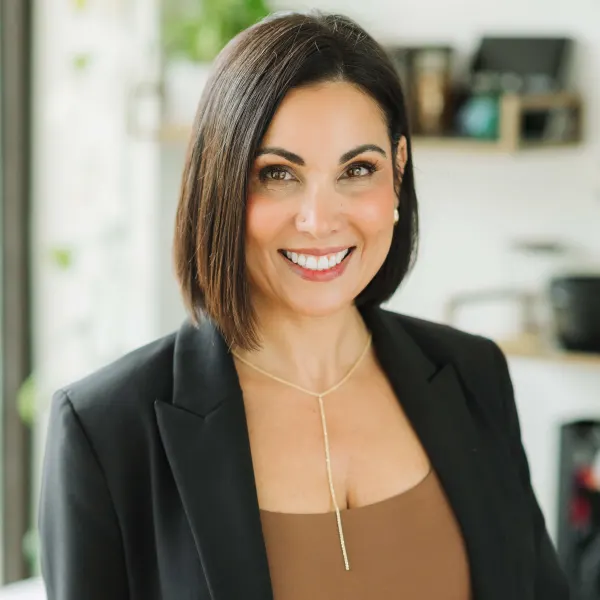
Allyson King took the helm of Dessange International earlier this year, after holding high-level positions at Color Works, Hair Cuttery, Ulta and Clarins USA.
Earlier this year, Allyson King took the helm of Dessange International, a company which includes Fantastic Sams Hair Salons, Camille Albaine Paris and Dessange Paris salon brands with operations throughout Europe and 40 countries worldwide. King, who is a licensed stylist and certified colorist, is also a graduate of George Mason University and holds a master’s degree in business from Strayer University. She joined Dessage after an illustrious career with global skin care product company Clarins USA, where she served as vice president of education. Prior to Clarins, King led the salon division of ULTA as vice president of salon operations and held major positions at Color Works and Hair Cuttery.
From where does your entrepreneurial drive originate?
My drive comes from seeing the difference I can make. I love making things better, and what I’ve learned and love about hairdressing is if I can make an impact on the lives of our stylists, I can grow a business and lead a company. Finding ways to make that difference is what gives me juice, whether it’s business systems to run the salons easier, technical training to make the stylist more confident, or marketing to make our brand stronger. Every day I wake up looking to make the lives of the people I touch more profitable for them.
As you grew your company/brand, what “ah-ha” moments of clarity helped you shape its future course?
There have been a lot along the way, but probably the most meaningful is to listen. Intimately knowing what your internal and external customer needs to be successful will allow you to create the right strategy to deliver retention of both clients.
As you shaped your company, what have been some of the biggest stumbling blocks?
I’m new to Dessange, but I’ll tell you over my entire career the secret is keeping things simple. Pick the three major initiatives to drive your business forward. Do those three better than anyone. Then move to what’s next. There is always so much to do and so many people to align, and as a leader clarity is the key.
How would you describe your management style? What do you think makes you a good leader, and in what areas would you to improve?
My management style is collaborative, but direct. It’s important to involve people in the decisions that affect their business. When your team is part of the solution they are passionate about delivering for you and the business. As part of that collaboration, I stretch my team to what’s possible. Developing talent is critical for the organization’s success and your talent to grow and develop with the business. I am honest with my feedback, yet at the same time I give everything I have to develop my team.
My style is to find out what people want in life and how through what they do can they get it. For example, in the salon when stylists do well, salons do well and companies do well. I had a stylist who was the youngest of nine kids, and all she wanted was her own place with her own room. We built a plan together that identified where she wanted to live and what she had to do behind the chair to get there. The key is it’s not just about the company, it’s about making peoples’ lives better, developing their confidences, teaching them calculated risk gives incredible reward, and as a team, extraordinary results is our everyday standard.
How do you set goals for yourself? For example, do you prefer more small accomplishable goals or fewer large goals? How do you hold yourself accountable?
As a CEO I think you have to do a bit of both. What are the big goals we have to achieve and by when? Then, what are the tactics that need to happen along the way? I can’t only focus on the small things—they make me feel good and often make me smile and live to fight another day, but my board of director expect the big things to happen fast. I hold myself accountable every day. My team is only as good as my leadership. If I’m clear, then what’s in their way? If nothing’s in their way, are they the right ones to be on our team? I demonstrate on a daily basis what’s acceptable. It’s the little things—do I e-mail or call, or even better, walk down the hall? I make their details just as important as mine.
Throughout your professional history, what’s the best lesson you’ve learned after making a mistake?
Listen first—I’ve always been a driver. Get it done and done fast. What I learned is when I listen and collaborate with the team it takes a smidge longer, but the results are amazing. Amazing because the team is so proud/honored to be a part of the solution, but also when you listen first you really get it. Get the business, the customer, the wins, the losses, and you build the credibility with your team to win and move forward. You’re only as strong as your team—they have to move with you, and pushing without gaining momentum together is short-lived. It doesn’t change behavior long-term, it doesn’t build culture and doesn’t build a company people LOVE.
From whom or what do you draw your strength, courage, vision?
I draw my strength and courage from my family, from the team and from the opportunity to make peoples’ lives better. My family because they give me everything—unconditional love, a smile everyday, inspiration that I can do anything I put my mind to and the challenge to make every day better (my husband is absolutely my equal and he knows exactly how to challenge me to be better every day). The team who together taught me the winning formula; their success inspires me every day. Stylists can make their dreams come true no matter how big they are. I help them build a plan and care enough to check in and celebrate their success. And for those I’ve had yet to touch, I wake up every day asking myself if this was my cash would I implement what we are working on? Whether you’re a stylist or franchisee you trust Fantastic Sams or Dessange International Inc. to make your life better, and I will fight everyday to deliver on that promise.
As you grew your company, what, if anything, has held you back?
I started with Dessange three months ago. But if I speak to all my years in business, I would say you have to make time to look forward—there is never enough time. I’ve also tried to never be afraid of something new—it’s so easy to keep doing what works, but as we’ve all seen during the economy shifts of the last few years, everyday tactics didn’t work. You’ve always got to be innovating, exploring and finding what’s next.
What is the number-one quality you look for when hiring employees, and how do you evaluate if they possess that trait?
Fight. I have always taken on start-ups or fixer-ups. I need people who love a challenge and want to win—people who have something to prove, but have their heart in the right place.
What’s the best thing an employee/colleague ever said about you?
I don’t know if I have specific words, but when two team members were recruited for their first vice president role or a stylist bought their first house or achieved a goal that meant the world to them. People say I gave them the feedback they needed to hear when they were ready to hear it. I pushed them beyond where they thought they could go, but when they came out on the other side they realized their potential. I want my team to have everything they dream. If they are willing to work for it, be honest with themselves and trust the process we make it happen.
If you were training another woman to takeover your job, what’s the most important advice you would offer her?
Listen, trust your instincts, and don’t stop doing what got you to where you are. Our success is in the total package: drive, smarts and compassion. If we trust the skills that got us ahead, and truly without fear pay it forward, our world and our business will reap the benefits.
If you were to look at scrapbook of your professional career, what would be your favorite page? Which page would you like to remove?
My favorite page would include the Paul Mitchell updo competition against other trainers (and my now husband—he won but I think it was fixed). He is a better finisher than me, but don’t tell him. My opening event at the first ColorWorks Salon was a good page. We built the most incredible brand we were one brand, one voice at every level. And the day I received the offer from Dessange. It was my dream to be a CEO of a company since I was a young child, and I wish my dad was here to see it. He passed in January.
If someone were to write a book about your life, what would be an appropriate title?
From Soccer Star to CEO: It’s All About Love and Go
If you weren’t in the beauty industry, what would you be doing?
I’d be an attorney or a racecar driver, I love to challenge everything and win.
What are you working on now? What’s your next professional step?
Leading and collaborating with people to help our stylists and franchisees have everything they want in life. I’m also enjoying the successes we’ve had in the last three months. We have a lot to do and an exciting journey ahead.
How would you like to spend your retirement?
Be on the beach with the man of my dream. I love you, Shannon—you make every day better.
All beauty professionals should know how to identify when a client may need some health guidance. Tracy Rado discusses some common questions that clients ask in the chair, how to advise them, and when to refer them to a specialist.
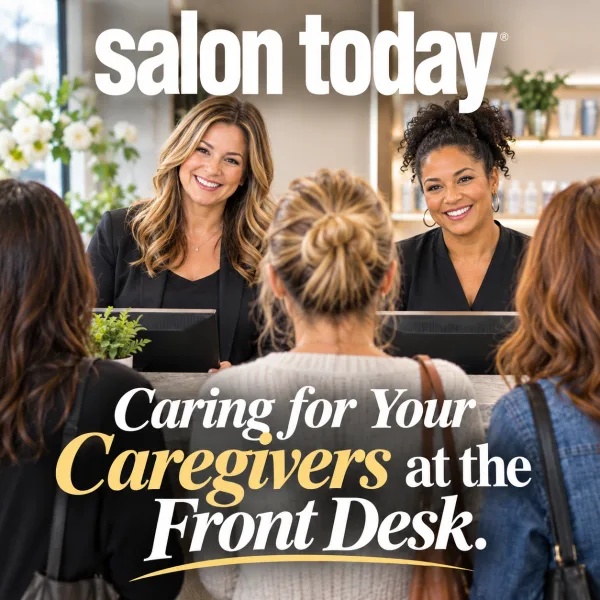
From managing air traffic on busy days to handling frustrated guests' complaints, your front desk team often serves as the salon's emotional shock absorber. From a customer service lesson from the DMV to a list of strategies for caring for your front line, our experts offer ideas for alleviating stress, celebrating wins, and setting goals.
According to the KIM Report, top-line salon revenue appears steady or slightly up, but that growth is driven primarily by service price increases. Beneath the surface, retail performance and client visit frequency (appointment drift) are under real pressure. In his latest blog, Alain Audet offers strategies for keeping your salon's retail sales strong.
Putting your family to work in the salon offers some real tax benefits, but you have you have to play by the rules of the tax code to claim them. Azarvand Tax Law's Leticia Skrabut, Esq., shows you how.
Discover how to create a true “WOW experience” for every client by first building a culture where your team feels engaged, empowered, and inspired. Drawing on Calvin Stovall’s Iconic Framework, this blog explores how salon, spa, and clinic leaders can strengthen culture, elevate customer experience, and build a business that stands out for the long term.
The wellness industry is growing fast, and salons and barbershops already are an important part of it. In her first blog, Tracy Rado shares where the wellness dollars are heading, and how salons can grow with this movement.
While salon sales are increasing, owners often feel they're working harder for the same or less profit. Leverage Q2 data from The KIM Report, Alain Audet reveals some of the structural changes that are dampening your growth and why your region and your salon size matters.
Weaknesses in your business are amplified during the Holiday Season. Spark Pro Global's Lucy Randall shows you five things to do now to have the strongest holiday season yet.
In Kati Whitledge's latest blog, she shares how salons have moved away from dress codes and embraced appearance standards. But by removing strict dress codes, some businesses may have unintentionally lowered their appearance standards. Whitledge helps you explain to your team why an appearance standard is important and how to smoothly implement a new appearance policy.
The Small Business Health Care Tax Credit is a non-refundable tax credit for for-profit businesses that provides a financial incentive for eligible employers who offer health insurance coverage to their employees. Leticia Skrabut, Esq., walks you through how to claim that credit.
Developing strong work habits early in one's career supports long-term success in the salon industry. Jesse Linares offers new stylists his top five tips.
Most salon owners have no idea what these numbers are.
You can hit record sales and still have a profit problem. The difference comes down to four numbers almost nobody was taught to track.
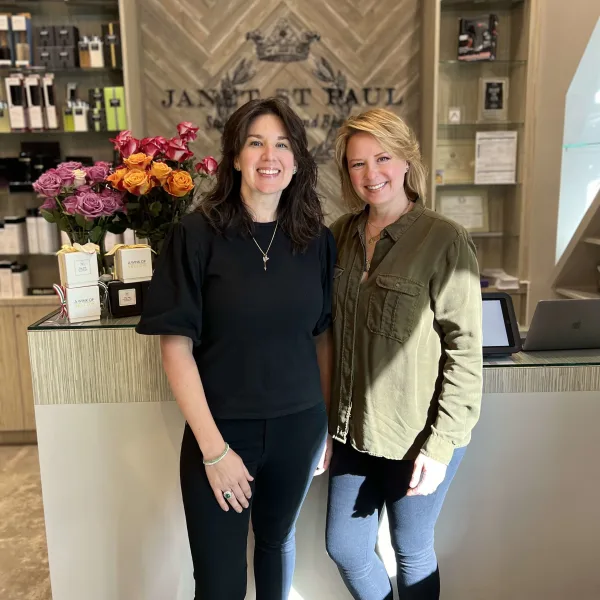
At Janet St. Paul Studio for Hair and Beauty, Director of Operations Natasha McMillen helps bring her wife Janet St. Paul's vision to life, elevating every system from education to operations.